
1. Home
  2. »
  3. Implants Knowledge
  4. »
  5. Can You Drink Coffee After Dental Implant Surgery?

Can You Drink Coffee After Dental Implant Surgery?

Coffee is a familiar part of many patients’ morning routine. However, after dental implant placement, it is common to wonder whether drinking coffee could affect healing and the stability of the implant fixture.

In this article, the dentists at Smilux Dental will answer the question, “Can you drink coffee after dental implant surgery?” and share essential precautions to support smooth healing and promote successful osseointegration.

Can You Drink Coffee After Dental Implant Surgery?

Can You Drink Coffee After Dental Implant Surgery?

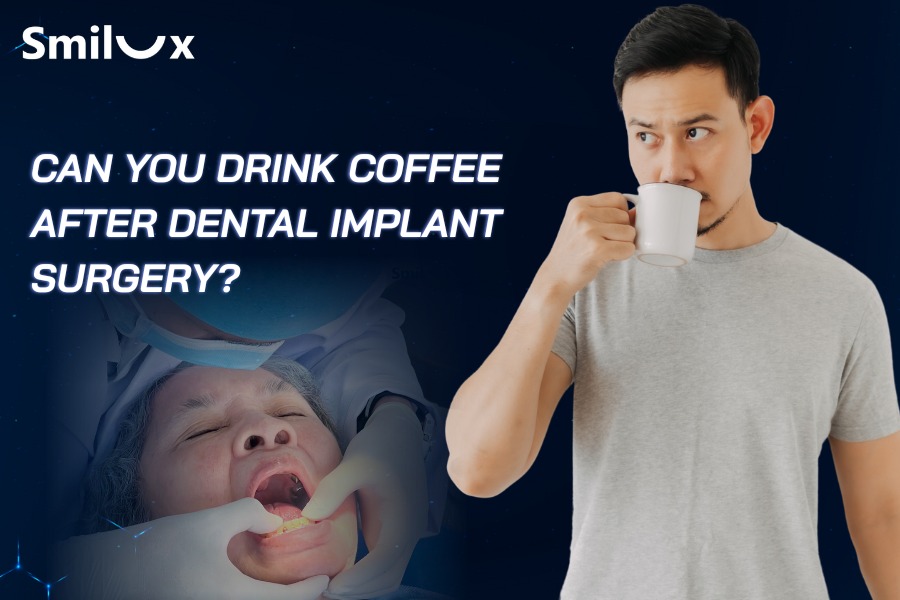
Can You Drink Coffee After Dental Implant Surgery? The answer is NO. According to the dentists at Smilux Dental, patients should avoid coffee for at least 1–4 weeks after implant surgery to ensure proper healing and protect the stability of the implant.

Once the surgical site has stabilized (typically after about one month), coffee may be reintroduced in moderation. However, patients should avoid excessive consumption and should not use a straw, as suction pressure may affect the healing area.

At this stage, the implant has begun the osseointegration process and has achieved initial stability. However, bone integration is not yet fully complete. Drinking coffee too frequently or too early may irritate the surgical site, leading to sensitivity, minor bleeding, or disruption of the implant’s early stability.

Sau trồng răng Implant nên kiêng cà phê trong thời gian đầu

In addition to coffee, smoking is another habit that should be strictly avoided during the implant healing period. Patients can refer to the related article, “Can You Smoke After Dental Implant Surgery?”, for more detailed information and post-operative care guidance.

Why Should Coffee Be Avoided After Dental Implant Surgery?

After dental implant placement, drinking coffee may cause several negative effects on the healing process and the long-term durability of the implant. These impacts are not only related to wound healing but may also affect esthetic outcomes and the patient’s overall oral health.


Direct Impact on the Implant Site

Caffeine in coffee can cause blood vessel constriction, reducing circulation in the gum area and slowing down tissue regeneration and wound healing.

In addition, coffee that is too hot or too cold may irritate the surgical site, leading to pain, minor bleeding, or damage to the soft tissues that are still recovering.

For milk coffee, the sugar and dairy content can create a favorable environment for bacterial growth, increasing the risk of inflammation around the implant (peri-implant gingival inflammation).

Trồng răng Implant ảnh hưởng trực tiếp đến vùng cấy ghép

Reduced Osseointegration Between the Implant and Jawbone

In the early stage, the implant requires time to integrate firmly with the jawbone.

However, caffeine may interfere with new bone formation and reduce calcium absorption, which can affect the stability of the implant.

Excessive coffee consumption may also lead to dehydration, causing dry mouth and weakening the oral cavity’s natural protective mechanisms.

Increased Risk of Infection and Aesthetic Concerns

After the implant crown is placed, frequent coffee consumption without proper oral hygiene may increase the risk of peri-implant inflammation.

In addition, the pigments in coffee can easily adhere to the surface of the dental crown, leading to discoloration, staining, and reduced aesthetic appearance.

Uống cà phê tăng nguy cơ viêm nhiễm và ảnh hưởng thẩm mỹ răng sứ

Advice from Smilux Dental

For patients who are used to drinking coffee daily, avoiding this beverage for a period after dental implant surgery may feel uncomfortable. However, to ensure proper osseointegration and minimize risks during the healing phase, it is important to strictly follow your dentist’s instructions.

During the early recovery period, coffee can be temporarily replaced with mild, low-caffeine teas to reduce cravings while keeping the implant site safe.

Once coffee is allowed again, patients should choose cool or lukewarm coffee and avoid drinks that are too hot or too cold, as high temperatures or sudden temperature changes may irritate the healing gum tissue.

In addition, coffee should be consumed in moderation, preferably no more than one cup per day. Patients should also rinse their mouth or maintain proper oral hygiene after drinking.

Controlling coffee consumption during the recovery period will support smooth healing, help the implant remain stable, and maintain long-term treatment results.

OTI Screw-Retained Dental Implants: Comfortable Treatment, Faster Recovery

Understanding patients’ concerns about prolonged dietary restrictions after implant surgery, especially with daily habits such as drinking coffee or enjoying preferred foods, Smilux Dental has pioneered the application of the next-generation OTI screw-retained implant system, helping reduce recovery time by up to 70%.

With this advanced solution, patients can return to normal daily activities and resume a near-regular diet sooner, while still ensuring safe and effective osseointegration.

The OTI restoration is a multi-layered connection system that includes the implant fixture, abutment, Ti-cylinder core, prosthetic crown, and SSE titanium screw. These components are secured using a dual-direction screw mechanism from top to bottom, forming a stable and tightly sealed structure.

This design minimizes microgaps, a common issue with traditional cement-retained restorations, thereby reducing the risk of peri-implant inflammation and improving long-term durability.

Key advantages of OTI Implant technology at Smilux Dental:

  • Healing time reduced to approximately 1–2 months instead of 3–4 months with conventional methods
  • Minimally invasive procedure with gentle surgical techniques, protecting bone and gum tissue
  • Genuine imported implant systems with high durability and long-term warranty support
  • Excellent osseointegration, allowing faster stabilization and lowering the risk of implant failure
  • Full restoration from root to crown, providing strong chewing function comparable to natural teeth
  • Screw-retained design for easy maintenance, cleaning, and future adjustments without affecting the implant fixture
  • Performed in a sterile surgical environment with strict infection control according to medical standards
  • Helps prevent jawbone resorption, gum recession, and shifting of adjacent teeth

SMILUX DENTAL
International Dental Implant Clinic

If you are looking for a dental implant solution that offers faster recovery, minimal dietary restrictions, and long-term durability, Smilux Dental is ready to provide detailed consultation and personalized care.

Fill out the registration form today to receive a comprehensive examination, an evaluation of your missing teeth condition, and a customized treatment plan from our dentists.

BOOK APPOINTMENT

    CONCLUSION

    Based on the information above, you now have a clear answer to the question, “Can you drink coffee after dental implant surgery?” In practice, patients should avoid coffee until the surgical site has stabilized to support proper healing.

    At Smilux Dental, patients receive comprehensive examinations, close monitoring, and personalized lifestyle guidance to ensure the restoration process is safe, comfortable, and delivers optimal functional and aesthetic outcomes.

    Call our Hotline: (+84) 866 251 379 or schedule your appointment today to evaluate your jawbone condition and receive the most suitable dental implant solution.

    This site is registered on wpml.org as a development site. Switch to a production site key to remove this banner.