To better understand this, let’s review the basic structure of a tooth. Tooth enamel is the outermost layer hard and translucent, responsible for protecting teeth from acids, bacteria, and daily chewing forces.
Once enamel is worn down or damaged, the body cannot regenerate it. This is why all dental procedures must be absolutely safe for enamel. Therefore, tooth gem bonding should only be performed by qualified dentists using professional dental adhesives, not ordinary glues available on the market.

Although non-drilling tooth gem bonding is inherently safe, enamel can still be affected if the following factors are ignored:
1. Poor Oral Hygiene
The area around the gem is prone to plaque buildup. If not cleaned thoroughly, bacteria can grow and release acids that erode enamel and cause cavities in that area.
2. Low-Quality Materials
Applying gems at home or using gems and adhesives of unknown origin can be harmful. Non-professional adhesives may contain chemicals that erode enamel, while poor-quality gems can discolor and attract bacteria.
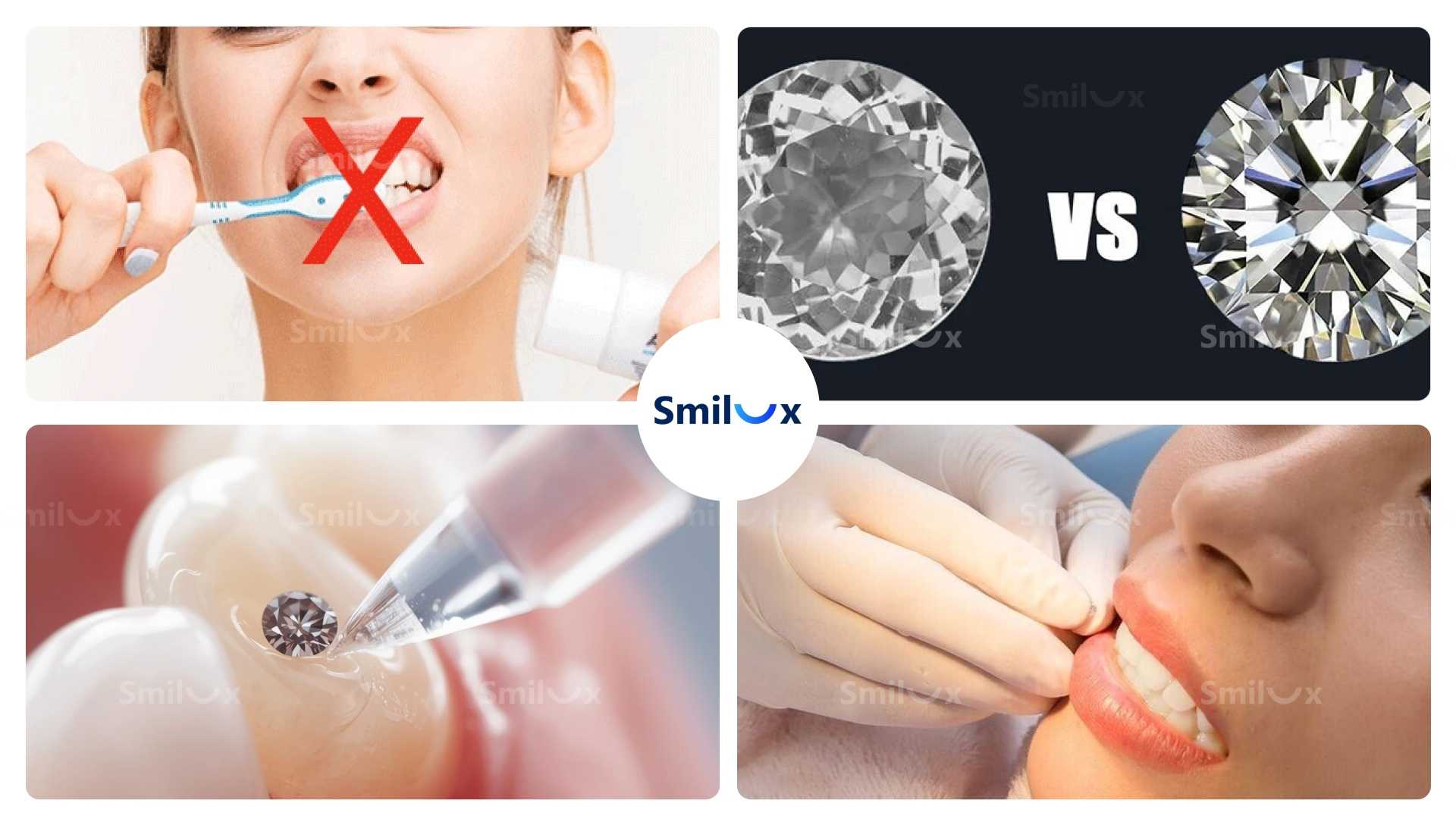
3. Dentist’s Skill Level
An inexperienced dentist may perform imprecise techniques, scratching the enamel surface during gem placement or removal.
4. Aesthetic Issues
Poor technique can make the gem appear dull and less transparent, reducing its elegance. Excess adhesive may overflow onto the tooth surface, creating an uneven and unnatural look. Over time, the adhesive may discolor, making the smile appear messy and less attractive.
According to internal surveys from customers treated at major dental clinic systems in Ho Chi Minh City, over 92% of users were satisfied and confirmed that their enamel remained healthy after months of wearing tooth gems. One customer shared:
“At first, I was worried that my enamel would be damaged, but after more than six months, the gem is still shiny, my teeth are not sensitive, and chewing feels normal. The most important thing is choosing a reputable clinic.”
These positive experiences not only build confidence for new customers but also reinforce the credibility of professional dental centers.