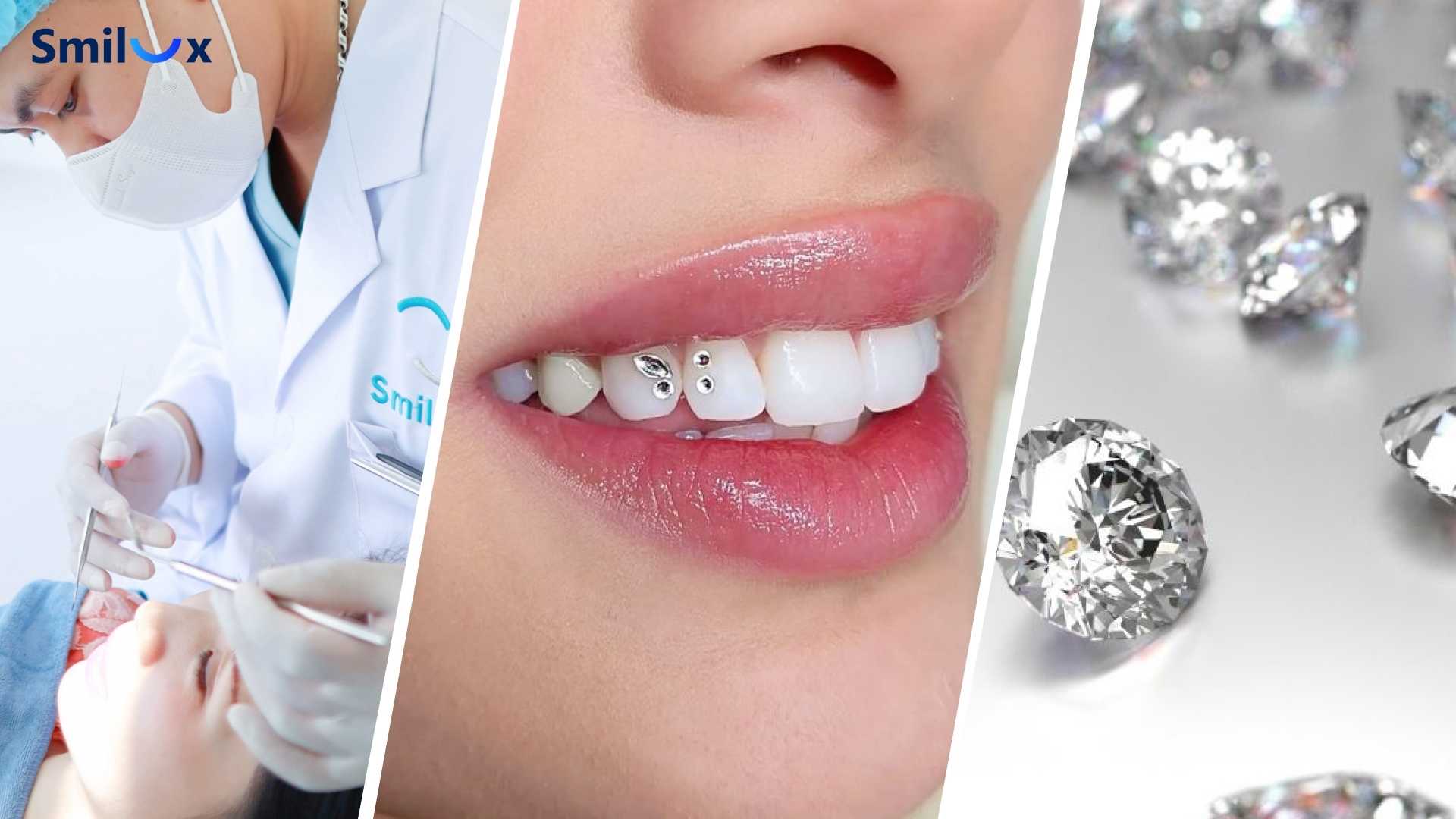
The idea of a sparkling gem accentuating your smile is always appealing. However, right after that, a common concern often arises: “Does tooth gem bonding hurt?” Images of dental instruments and drilling can make many people hesitate.
In reality, thanks to significant advancements in cosmetic dentistry, the fear of pain when enhancing your smile has become a thing of the past. This is no longer a complex or uncomfortable procedure. On the contrary, it has become a gentle, quick, and fully predictable experience.

Concerns about pain often come from outdated techniques used in the past. Today, there are two main methods, and the difference between them determines whether your experience will be comfortable or not.
Traditional method (Drilling into the tooth):
This is an older technique, usually applied to gemstones with pointed bases. The dentist must use a specialized drill to create a small hole in the enamel surface and then place the gem inside. This drilling step may cause mild sensitivity and, more importantly, results in permanent damage to the tooth structure. For this reason, this method is no longer recommended.
Modern method (No drilling):
This is the gold standard in modern cosmetic dentistry and the most preferred technique today. The dentist bonds the gem directly onto the tooth surface using a specialized dental adhesive and cures it with laser or halogen light. This method preserves 100% of the natural tooth structure, is completely non-invasive, and therefore ensures a painless, safe, and fast procedure.

Although modern techniques eliminate pain, there are still a few key factors to ensure the best possible experience:
Healthy oral condition: The tooth selected for gem bonding must be completely healthy, free from cavities, enamel erosion, cracks, or excessive sensitivity. Any existing issues should be treated beforehand.
Dentist’s expertise: An experienced dentist will perform precise and gentle techniques, ensuring the gem is placed in the most optimal position.
Material quality: Both the gem and the adhesive must be dental-grade materials with clear origins, ensuring safety, non-irritation, and long-lasting durability.
In summary, with advanced dental technology, tooth gem bonding to enhance your smile has become a gentle, fast, and completely painless cosmetic procedure. Concerns about discomfort are no longer a barrier.
However, besides pain, many people also worry about whether this procedure may cause long-term damage. To better understand this, let’s explore whether tooth gems can damage enamel.