When Is the Best Time for a Single Tooth Implant?
When you lose a tooth, choosing the right timing for a dental implant determines up to 80% of the success rate of the restoration


Dental implant treatment is widely recognized as the most optimal and durable solution for tooth loss in modern dentistry, allowing for near-complete restoration of both chewing function and natural aesthetics. Beyond replacing a missing tooth, dental implants help preserve jawbone volume, maintain facial structure, and enhance long-term quality of life.

At Smilux International Dental Clinic, the implant procedure is elevated through the application of advanced technologies, most notably the OTI screw-retained dental implant system with flapless placement and the MagSense™ magnetic positioning sensor. This combination enables a gentler, highly precise, and biologically safe implant process, while significantly shortening recovery time and minimizing pain or soft tissue trauma.
In the article below, Smilux provides a comprehensive overview of the single tooth dental implant procedure, analyzes factors affecting treatment costs, and explains why choosing dental implants at Smilux is not merely a treatment option, but a smart long-term investment in oral health and lasting functionality.
This foundational step determines the accuracy and long-term success of the entire dental implant procedure. Before treatment, patients undergo a comprehensive examination by an implant specialist and receive Cone Beam CT 3D imaging, which reconstructs the jawbone structure in three-dimensional space.
Based on the 3D CT data, the dentist can accurately evaluate:
Compared to traditional 2D X-rays that provide flat images, Cone Beam CT 3D allows implant planning based on each patient’s actual anatomical data. This enables precise determination of implant position, angulation, and depth. As a result, risks such as nerve injury, numbness, implant misalignment, or sinus perforation are effectively minimized, ensuring a safe, accurate, and clinically standardized procedure from the very first step.

Smilux pioneers the application of OTI screw-retained dental implant technology combined with MagSense™ magnetic positioning sensors, enabling implant placement without gum incision or flap elevation—completely different from conventional implant surgery.
Thanks to precise positioning based on the pre-established treatment plan, the implant is inserted into the jawbone at the correct position, angle, and depth, minimizing soft tissue trauma. This ensures a gentle, safe procedure with optimal risk control.
Key advantages of OTI technology at Smilux:
After implant placement, the body begins the osseointegration process, during which bone cells grow and firmly attach to the implant surface. This process typically lasts 2 to 6 months, allowing the titanium implant to become a stable and integral part of the jawbone, functioning like a natural tooth root.
Dental implants are made from medical-grade titanium, a material with 100% biocompatibility that does not trigger immune rejection and has been widely used in medicine for decades. Titanium implants meet stringent FDA (USA), CE (Europe), and ISO standards for medical implant devices, ensuring long-term safety and durability.
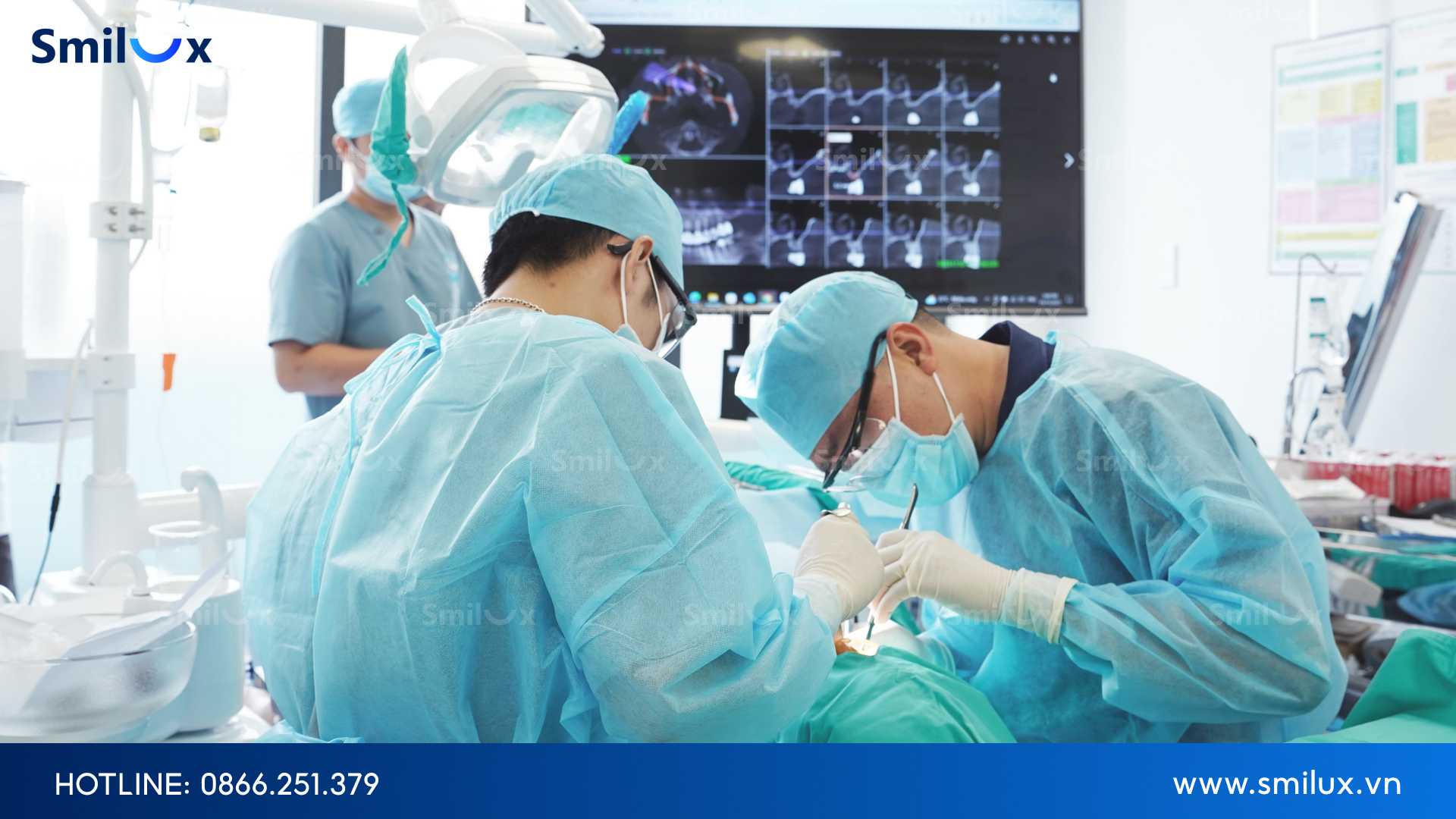
Once the implant has fully integrated with the jawbone and achieved optimal biological stability, the dentist proceeds with the final restoration step: taking digital impressions and fabricating a customized dental crown for each patient.
At Smilux, premium all-ceramic crowns are prioritized for their exceptional strength, excellent chewing resistance, and high biocompatibility. These crowns allow the gum tissue to naturally adapt around the implant neck, maintaining long-term aesthetics.
A key distinction in implant restoration at Smilux is the use of OTI screw-retained crowns instead of traditional dental cement. This approach offers multiple advantages:
After restoration, the implant-supported tooth closely matches natural teeth in shape, color, and feel, enabling patients to chew, communicate, and live confidently without concerns about durability or future complications.

The cost of dental implants depends on multiple factors, not just the implant fixture itself. Specifically:
Factors Affecting Implant Cost
Reference Price List for Single Tooth Dental Implant (All-Inclusive)
(Prices may vary depending on bone condition and promotional programs.)


When you lose a tooth, choosing the right timing for a dental implant determines up to 80% of the success rate of the restoration

Find out who should get a single dental implant, the types of implant posts, and key factors to choose the most suitable restoration solution.

Discover Smilux’s single dental implant options Korean, American, and Swiss. Compare features, benefits, and costs to find your perfect smile solution.
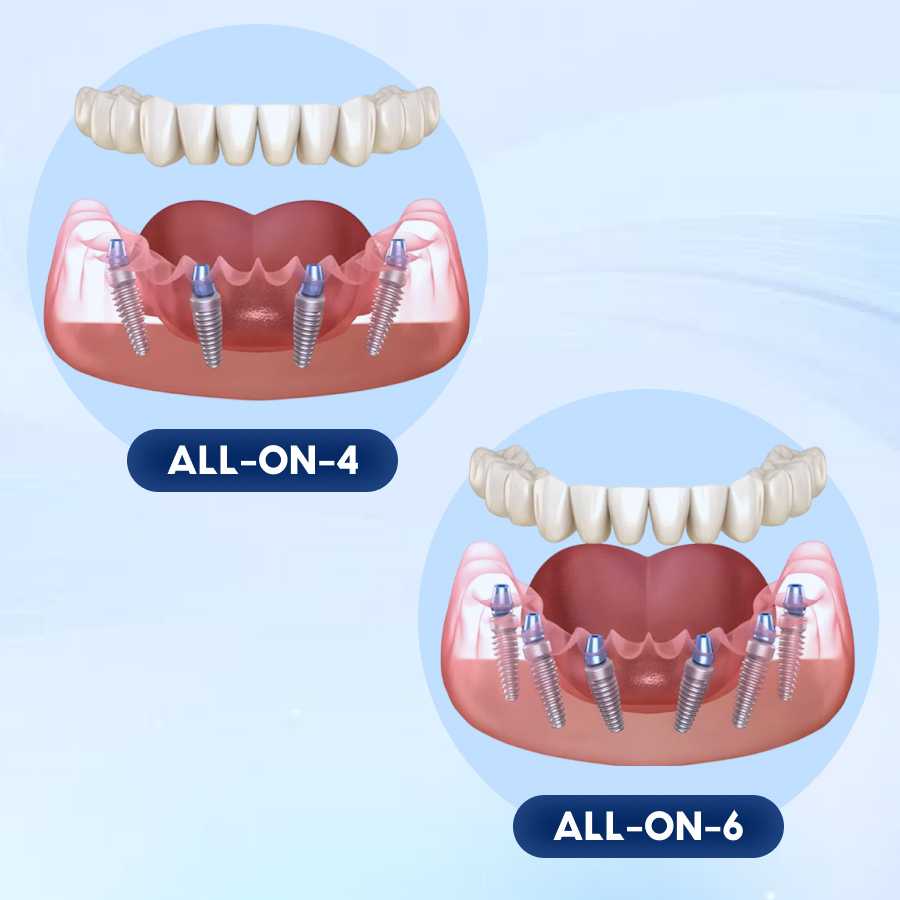
Analysis of 4 and 6 Implant Posts & Load-Bearing Capacity. Guide to choosing the right full-arch dental implant method.