1. Home
  2. »
  3. Implants Knowledge
  4. »
  5. What are the Potential Risks of Full Arch Dental Implants?

Deciding to restore an entire set of teeth is a significant journey, not just financially but also mentally. Everyone desires a strong, naturally beautiful smile, yet concerns about potential risks still linger.

Thorough research before the procedure will help you understand the process of full arch dental implant placement. Most importantly, choosing a reputable dental clinic is key to avoiding unnecessary risks.

Let Smilux guide you through the potential risks and, more importantly, the preventative measures to ensure your journey is safe and smooth.
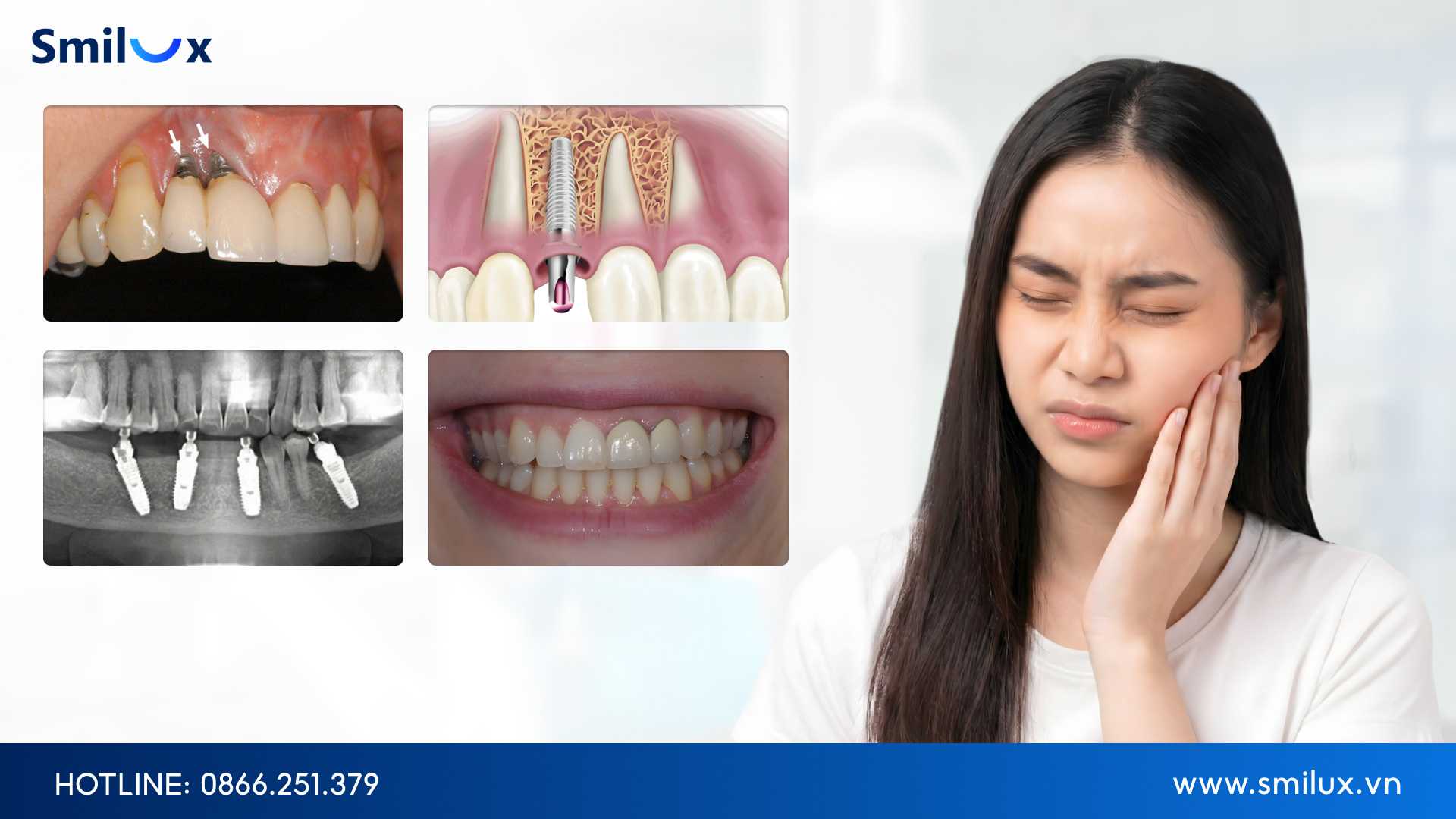
cách phòng tránh khi trồng răng implant toàn hàm How to prevent when planting full jaw implants

Risks During and Immediately After Surgery (Early Complications)

Any surgical procedure carries certain risks and implant placement is no exception. However, rest assured: when performed by an experienced dentist and adhering to strict sterilization protocols, most risks are very well controlled.

Mild Swelling and Pain:This is a very normal reaction after implant placement. Discomfort will significantly decrease within 1-2 days and is well-managed with the pain medication prescribed by your doctor.
Minor Bleeding:May occur within the first 24-48 hours. Simply bite down on the gauze as instructed to control the bleeding. If bleeding is heavier than normal or persists, contact the clinic immediately for examination.
Infection: This is a risk that requires special attention. Causes can include inadequate sterilization procedures or incorrect post-operative hygiene. Signs include prolonged swelling/pain, fever, or the presence of pus at the implant site.
Nerve Damage:Rare but serious, it can cause numbness in the lip, chin, or tongue. This complication can occur due to several reasons
Thin or Abnormal Jawbone: In some individuals, the lower jawbone is thin, and the nerve runs close to the surface, increasing the risk during implant placement.
Inaccurate Site Assessment:If only a 2D X-ray is used instead of 3D imaging (CT Cone Beam), the doctor may struggle to precisely determine the distance between the implant fixture and the nerve.
Lack of Detailed Treatment Planning:Failing to accurately measure the implant’s length, angle, or position.
Imprecise Placement Technique:The implant post may touch or put pressure on the nerve during drilling or insertion.

Rủi ro trong và ngay sau phẫu thuật trồng răng implant Risks during and immediately after dental implant surgery

Risks During the Healing Phase (Osseointegration Failure)

After placement, the implant fixture needs to integrate with the jawbone to form a stable foundation. If this process fails, the implant will become loose or be rejected. Causes can stem from:

Client’s Biological Factors:

  • Smoking (reduces the body’s healing ability).

  • Uncontrolled chronic conditions such as diabetes.

  • Poor bone density or significant bone loss.

  • Improper oral hygiene and care.

Surgical Technique Factors:

  • Non-genuine implant fixtures or insufficient initial stability.

  • Implant rejection due to a non-sterile placement environment.

  • Infected or unfavorable placement site.

The solution is to choose a center with a standardized, medical-grade implantation protocol and regular follow-ups after placement.
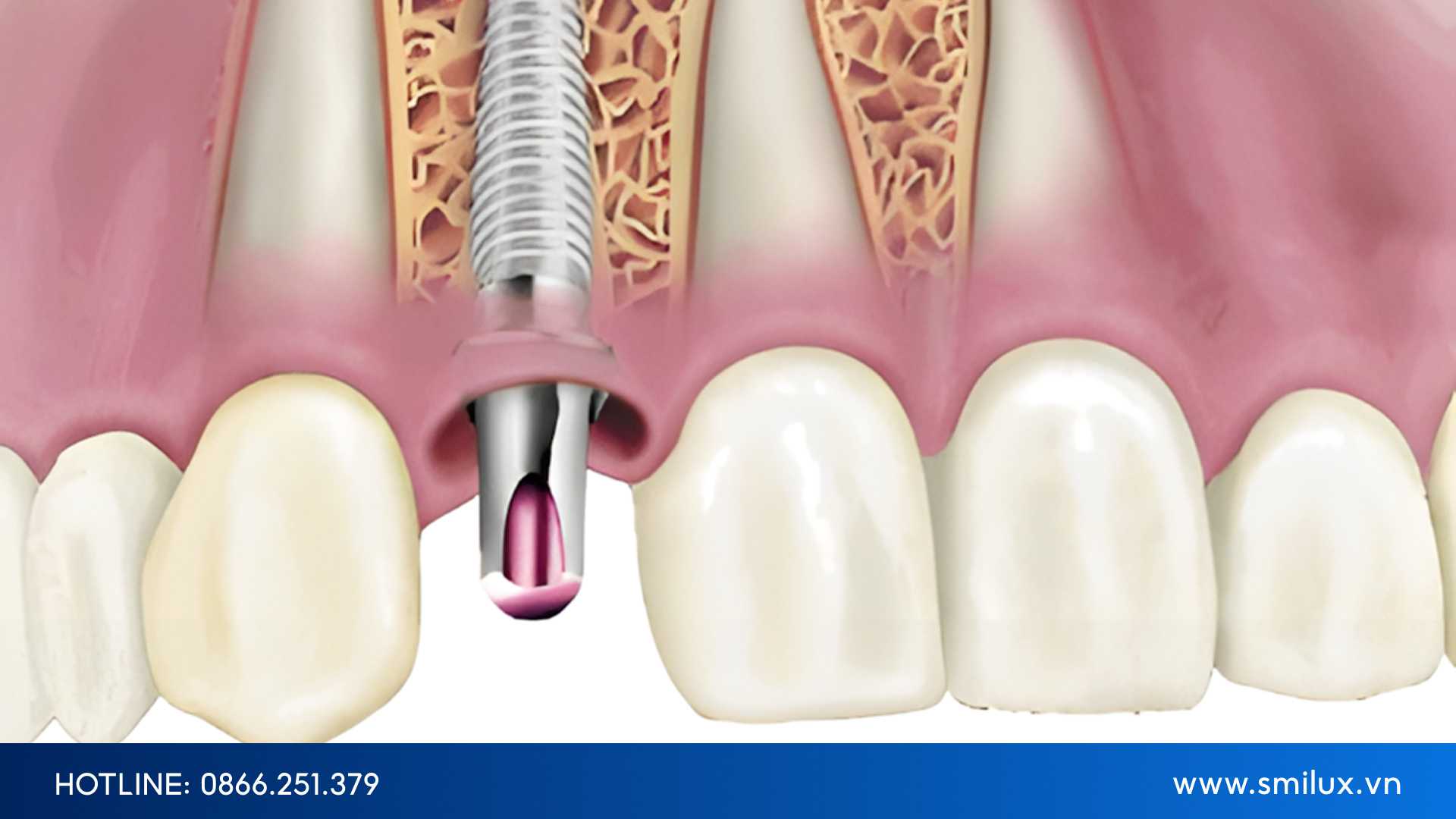
The risk of full mouth dental implants is failure of osseointegration during the healing phase

All-on-4 / All-on-6 Technique Risks

Improper Force Distribution: If the fixture placement or load-bearing axis is incorrect, the implants can be overloaded, leading to bone loss or loosening.

Loss of One Implant Affects the Whole Arch: In full arch restorations, the fixtures are closely linked. If one implant fails, the entire system can lose stability.

Requires Highly Specialized Clinicians: This is a complex technique that demands a surgeon with many years of experience in full arch implantation and a deep understanding of biomechanical chewing force distribution principles.

Experience and Simulation Technology: Clients should choose centers with a team of Implant specialists who have many years of experience and have successfully completed thousands of clinical cases, while also utilizing 3D implant planning software before surgery to ensure maximum accuracy and safety.
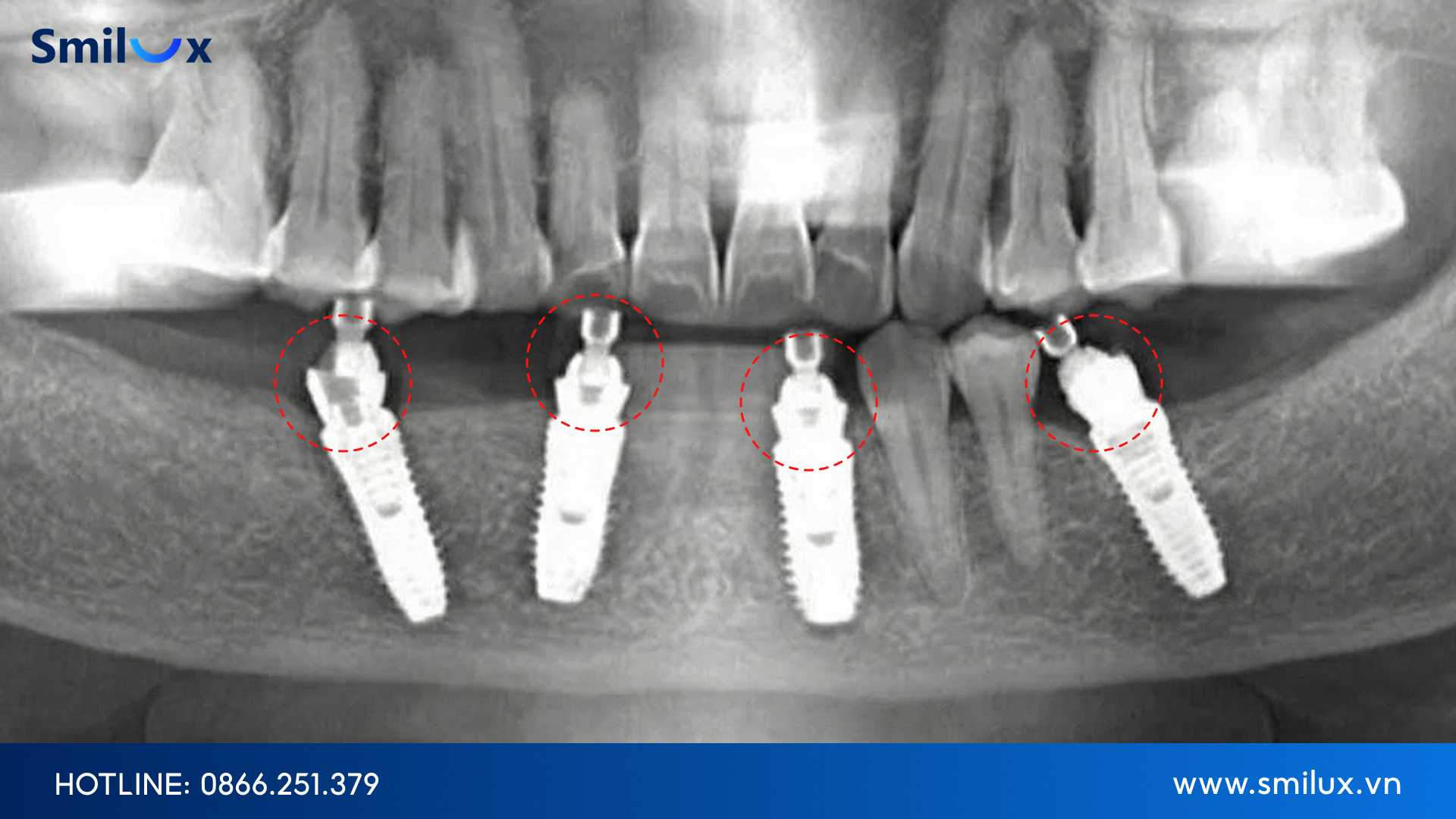
Rủi ro kỹ thuật trồng răng implant toàn hàm Technique risks of full-mouth dental implants

Risks Associated with Prosthetic Materials

1. Composite Teeth - Easy to Repair but Lower Longevity

  • This material is prone to wear and discoloration from frequent contact with coffee, tea, and turmeric…
  • Composite teeth can also chip or fracture if biting down on hard foods. However, the advantage is that they are easy to repair and cost-effective.
  • Average Lifespan: Approximately 5-7 years before needing replacement.

2. Chrome Cobalt Crowns - Strong for Chewing, Lower Aesthetics

  • Gum Line Darkening Risk: Over time, the metal framework can oxidize, causing the gum tissue around the tooth base to change color.
  • Less Natural Aesthetics: Due to the light-blocking metal core, the teeth often appear opaque white, lacking natural translucency.
  • Risk of Mild Allergy: Some people sensitive to metal may experience irritation.
  • Difficult to Repair When Chipped: If the external porcelain layer chips, the entire crown usually needs to be remade.

3. Zirconia All-Ceramic Crowns - Premium, Natural, and Extremely Durable

  • Superior Aesthetics: Possesses a translucency and light reflection very similar to natural teeth, ensuring harmony even under bright light.
  • High Durability: Does not wear down over time, does not cause gum line darkening, and is biocompatible (no risk of allergies).
  • Drawbacks: Higher cost than other types and requires precise skill from the dentist to adjust the bite (occlusion).

Rủi ro khi trồng răng implant toàn hàm là từ vật liệu phục hình The risk of full-mouth dental implants comes from the restoration materials

Each prosthetic material will have a different price point depending on its durability, aesthetics, and applied technology. If you are considering which type of teeth suits your needs and budget, find out the cost of full arch dental implants here to gain a clearer perspective before making a decision.

Book appointment with Dr. Smilux for a free consultation

    Comparison Table for Full Arch Dental Implants

    FeatureComposite TeethChorm CombaltZirconia All-Ceramic
    Main RisksWear, staining, short lifespan.Dark gum line, unnatural aesthetics, potential allergy.High cost, fracture (rare).
    AestheticsAverage, decreases over time.Fair, but prone to oxidation and gum line darkening.Very High, looks as natural as real teeth.
    Durability (Lifespan)Average (5-7 years).High (7-10 years).Very High (over 15-20 years).
    RepairabilityEasy, fast, low cost.Difficult, usually requires replacement.Must be replaced when chipped/fractured.
    Initial CostLowest.Moderate.Highest.

    To understand more about the treatment process and our team of experts, you can refer to the specialized full arch dental implant services at Smilux.

    FAQs

    Is full arch dental implant surgery life-threatening?

    Absolutely not. This is a safe surgery commonly used worldwide. When performed in a sterile environment by a highly specialized doctor, the risks are limited to the oral area and do not affect life safety. Serious complications are extremely rare.

    What if an implant fixture is rejected after many years?

    This is usually a consequence of peri-implantitis due to poor hygiene. If caught early, the doctor can provide conservative treatment. In cases of severe loosening, the doctor will remove the implant, clean the inflamed area, perform bone grafting (if necessary), and place a new implant after the area has healed. Therefore, regular check-ups are mandatory to maintain long-term results.

    Can the body be allergic to Titanium?

    Allergies to Titanium are extremely rare. Most cases of implant rejection are due to infection or overloading, not allergies. If you have a history of metal allergies, the doctor will conduct a thorough check and may suggest alternative options, such as non-metallic implants, which are absolutely safe.
    This site is registered on wpml.org as a development site. Switch to a production site key to remove this banner.