⇒ Learn more about tooth gem services at Smilux


Choosing the right tooth gem is not only a matter of aesthetics. It directly affects durability, enamel safety, and comfort during chewing. Each type of tooth gem has different properties in terms of brilliance, weight, and bonding ability.
If the wrong material is chosen, the gem may detach quickly, lose its shine, or cause discomfort during daily use. Therefore, before applying a tooth gem, it is essential to understand each option clearly in order to select a solution that is beautiful, durable, and safe for your teeth.

The primary purpose of tooth gem application is aesthetic enhancement, making brilliance and visual appeal extremely important. These qualities are determined by optical factors:
Refractive Index:
Simply put, this refers to the stone’s ability to capture and reflect light, determining how bright and eye-catching it appears when smiling or speaking. Natural diamonds have a very high refractive index (2.417), causing light to reflect multiple times within the stone, creating exceptional brilliance and sparkle compared to ordinary stones.
Cubic Zirconia (CZ) or dental zirconia has a slightly lower refractive index (around 2.15), resulting in softer light reflection while still offering attractive brilliance. This makes zirconia a popular choice in dentistry due to its balance of beauty, safety, and durability. In summary: the higher the refractive index, the brighter and more sparkling the gem appears.
Dispersion: Dispersion creates rainbow-like flashes when light passes through the stone. Some materials, such as Moissanite or Cubic Zirconia, exhibit strong dispersion, which can sometimes appear overly “artificial” compared to the balanced brilliance of diamonds.
Color Stability: A tooth gem must resist staining from coffee, tea, wine, and other pigmented foods to maintain its original appearance over time.

Cost is an important factor when choosing a tooth gem. However, rather than focusing solely on the initial price, you should consider durability, safety, and long-term experience. A high-quality gem maintains stable brilliance, adheres securely, and does not harm enamel throughout its lifespan.
Each gem type has its own advantages and suits different needs and budgets. The most important factors are proper consultation, safe materials, and treatment at a reputable dental clinic to ensure both aesthetics and long-term oral health.

If You Prioritize Prestige & Timeless Beauty:
Recommendation: Diamond (Natural or Lab-Grown): Nothing surpasses the brilliance, luxury, and timeless value of diamonds. This is an investment in a premium smile that reflects status and refined aesthetic taste.
If You Prioritize Absolute Safety & Medical Durability: Dental zirconia is ideal for those seeking long-term safety and peace of mind. Widely used in dental restorations, zirconia offers high strength, excellent biocompatibility, and zero irritation.
When applied to teeth, zirconia maintains stable color, resists scratches, adheres securely, and provides a natural, harmonious look, subtle yet elegant. It is perfect for clients seeking gentle, long-lasting enhancement.

If You Prefer Flexibility & a Reasonable Budget:
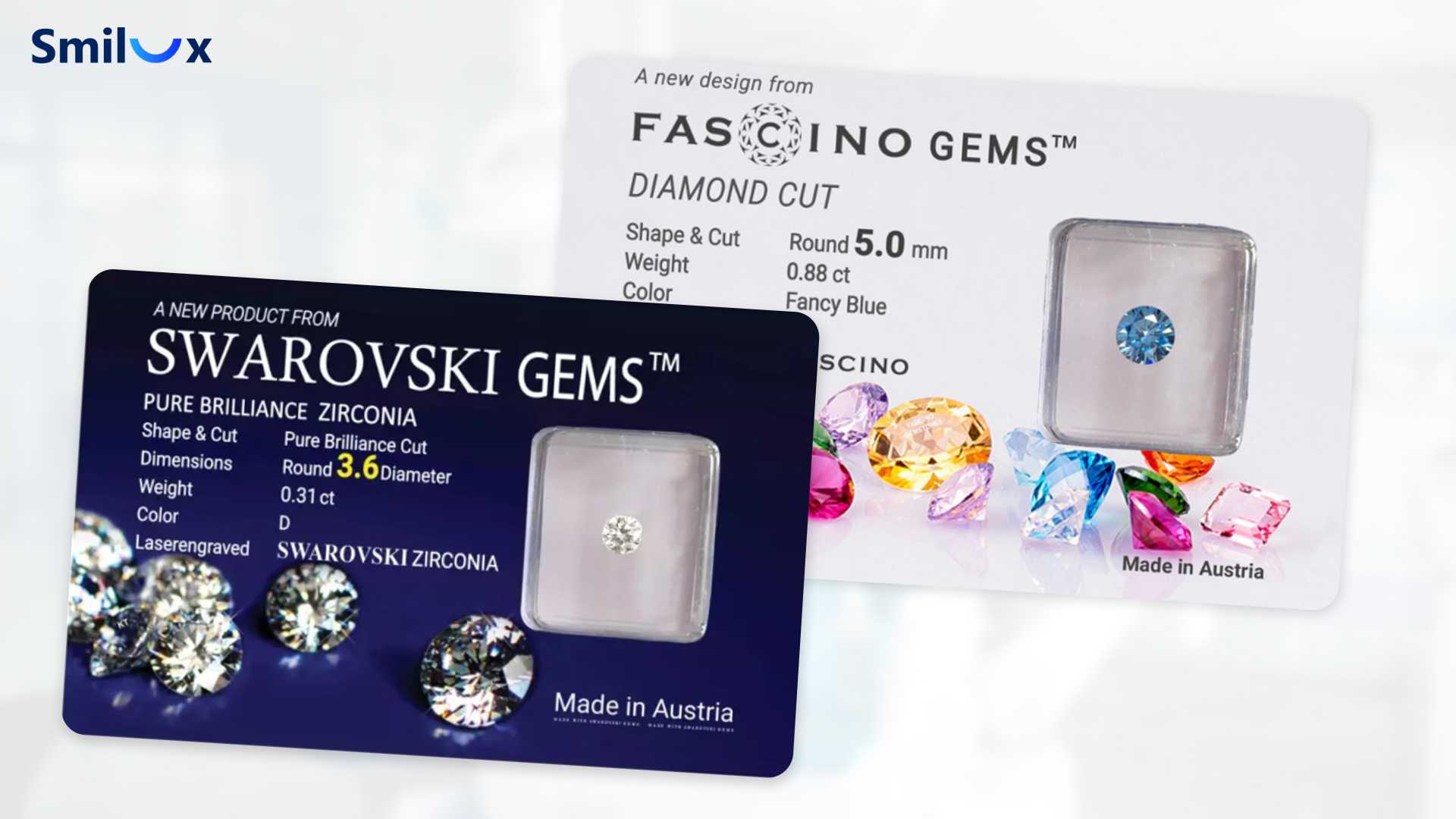
Swarovski crystal (CZ stones) is suitable for those who want a stylish smile accent, express personality, and follow trends at a moderate cost. These stones offer good brilliance and noticeable sparkle during conversation and smiling. This option is ideal for light cosmetic enhancement and style changes without significant investment, while remaining safe when applied at a reputable dental clinic.
Regardless of whether you choose diamonds, medical-grade zirconia, or fashion crystals, remember that a gem only truly shines when applied using proper dental techniques. Therefore, the quality of dental service, the dentist’s expertise, and the use of certified, safe adhesives determine up to 90% of success, durability, and safety in tooth gem application.
Once you’ve chosen the perfect gem, your next concern is likely its longevity. So, Is tooth gem application durable, and how long before it falls off? Let’s explore the detailed answer and expert care tips in the next article.