A Temporary crown on Implant is a provisional restoration used while the dental implant integrates with the jawbone. In the article below, Smilux explains its functions, types, and placement procedure.


Tooth extraction is usually the last option when a natural tooth has been severely damaged and can no longer be preserved. After tooth loss, dental implant placement is considered an ideal restorative solution because it helps restore chewing function similar to natural teeth while also preventing jawbone loss over time.
How Long After Tooth Extraction Can Dental Implants Be Placed? In the article below, dentists at Smilux Dental explain in detail the appropriate timing for dental implant placement. Please continue reading to learn more about this topic.

The timing of dental implant placement after tooth extraction varies depending on several factors, including the condition of the jawbone, the health of the gum tissue, and the healing process at the extraction site. Each stage of implant placement has its own clinical indications, which must be carefully evaluated by a dentist through a direct examination.
In most cases, the ideal time for dental implant placement is approximately 3 to 4 months after tooth extraction. However, some patients may be eligible for immediate implant placement right after the tooth is removed, while others may receive an implant within 1–2 months after extraction, depending on the healing condition and the quality of the surrounding bone.

Placing a dental implant immediately after tooth extraction is known as immediate implant placement. This technique involves inserting the implant fixture into the jawbone during the same appointment as the tooth extraction, once the socket has been thoroughly cleaned and the bone and soft tissues meet the required clinical conditions.
Indicated Cases
Procedure
Advantages
Limitations

Dental implant placement 3–4 months after tooth extraction is commonly recommended when the extracted tooth had extensive infection, significant damage to the alveolar bone, or large tooth roots that leave the remaining bone walls relatively thin.
Placing the implant at this stage allows the extraction site to heal more completely, which helps reduce the risk of infection and minimize gum recession. In addition, the improved healing conditions enable the dentist to place the implant more precisely, ensuring better implant stability and long-term aesthetic outcomes.

To determine how long after tooth extraction dental implants can be placed based on your individual condition, it is best to undergo a professional examination with a qualified dentist. Through clinical evaluation and diagnostic imaging, the dentist will assess the healing condition of the gum tissue, the status of the jawbone, and bone density to select the most appropriate timing for implant placement, ensuring both safety and long term effectiveness.
Immediate implant placement can only be performed right after tooth extraction. If the tooth was removed 1–2 months earlier, the dentist will reassess the bone density. If the jawbone remains in good condition, dental implant placement can still be carried out. However, when more than 3 months have passed since extraction, the risk of jawbone resorption is typically higher, and many patients may require bone grafting before implant placement.
According to the clinical experience of dentists at Smilux Dental, the success rate of dental implants is nearly comparable across different timing approaches, including immediate implant placement, early implant placement after 1–4 months, and delayed implant placement after 4–12 months. The most important factor is choosing the right timing based on the patient’s jawbone condition, which helps achieve long term stability and optimal aesthetic results.


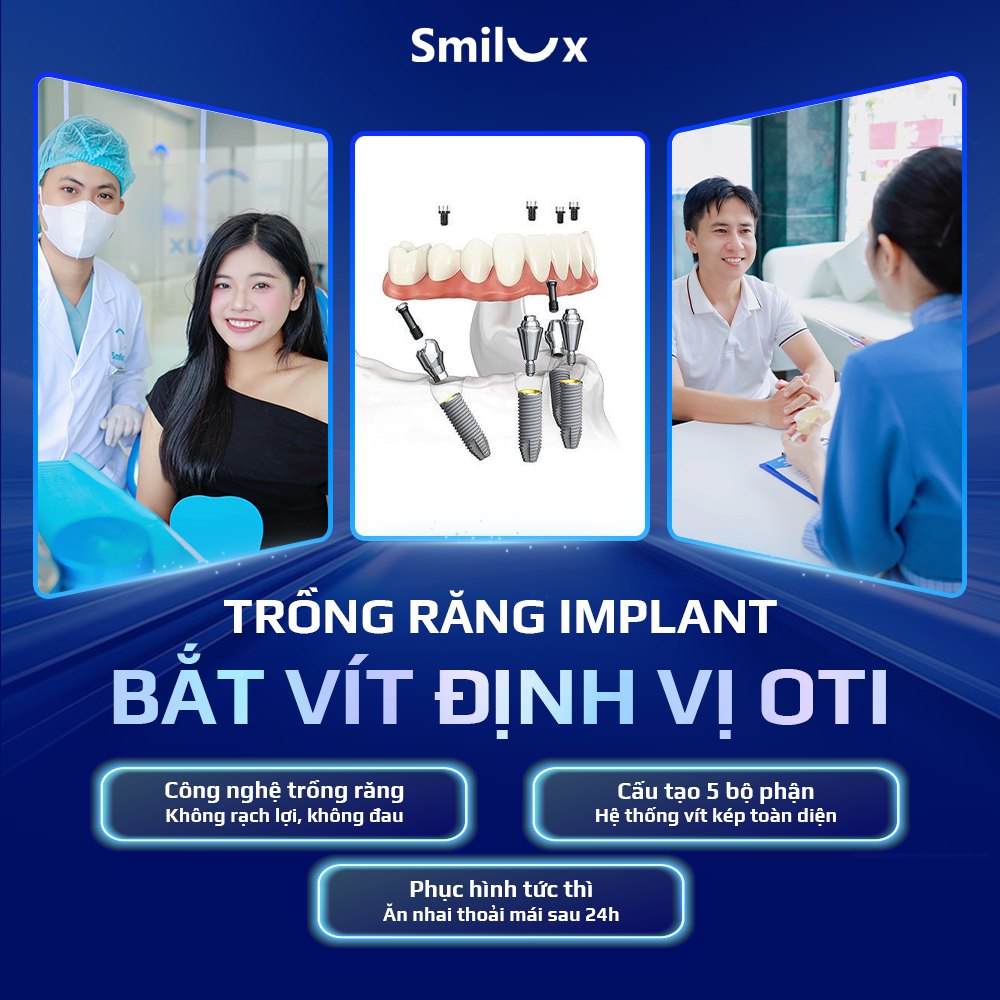

A Temporary crown on Implant is a provisional restoration used while the dental implant integrates with the jawbone. In the article below, Smilux explains its functions, types, and placement procedure.

An implant-supported removable denture is a restorative solution for patients who have lost multiple teeth or an entire arch, helping improve chewing function at a reasonable cost. Smilux dentists will explain what this treatment is, whether it is good, and how much it costs.

Learn with Smilux Dental about What Is an Implant Abutment?, including its structure, classification, placement procedure, and the latest implant abutment price list.

Learn about the structure of the dental implant, including its components and the role of each part. Smilux dentists provide detailed explanations to help patients understand clearly before getting dental implants.