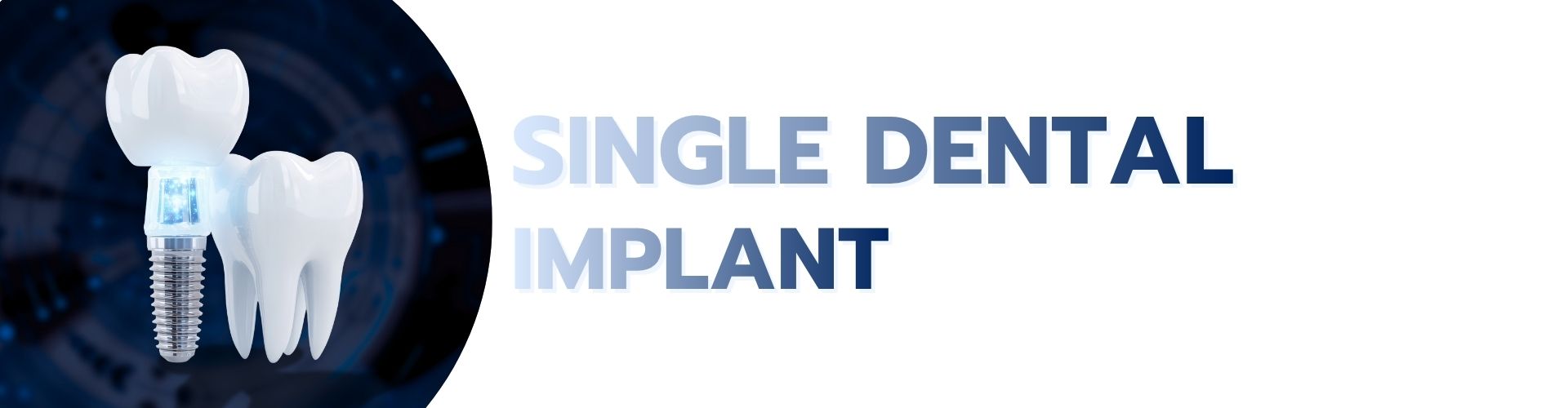
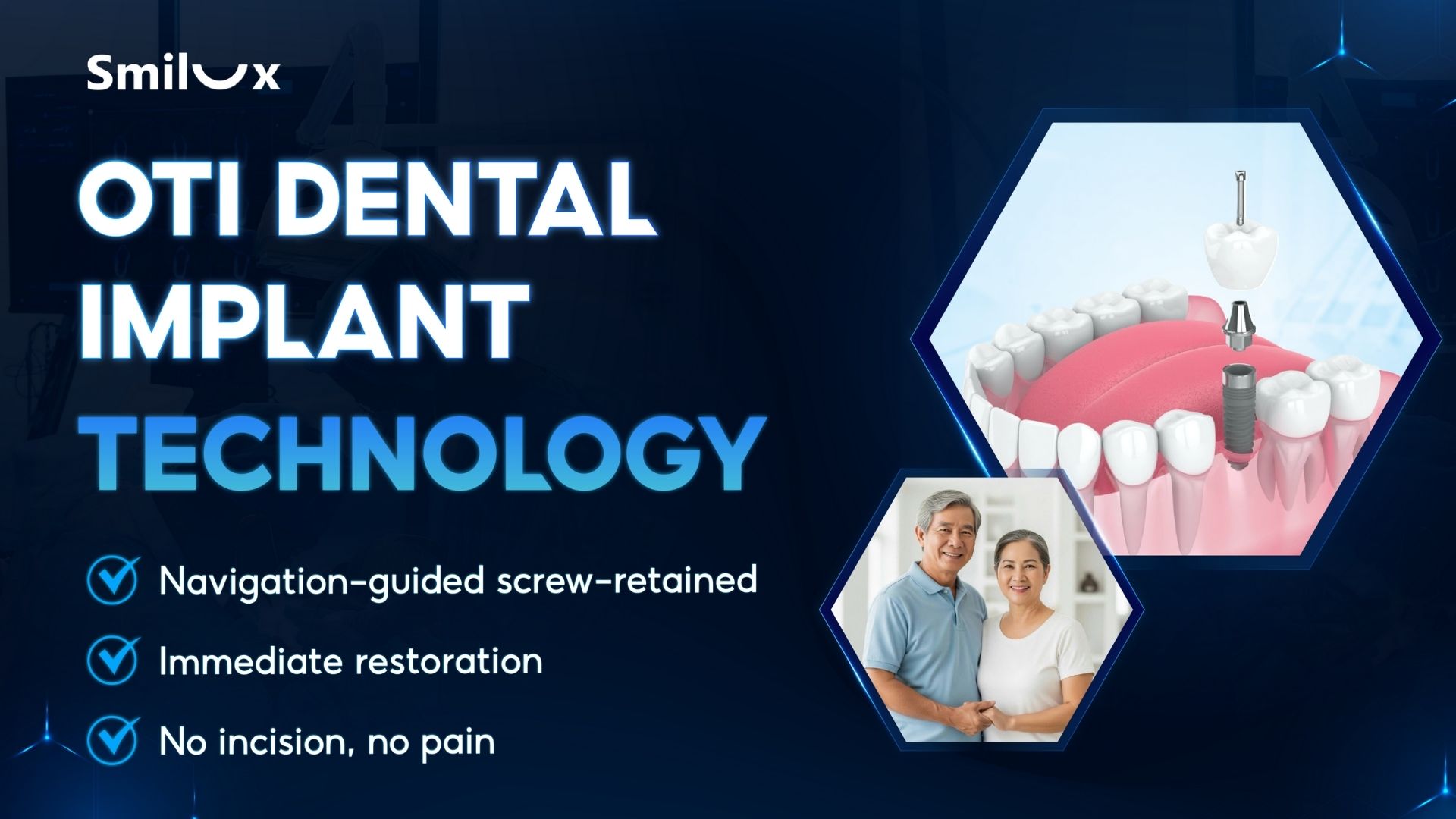
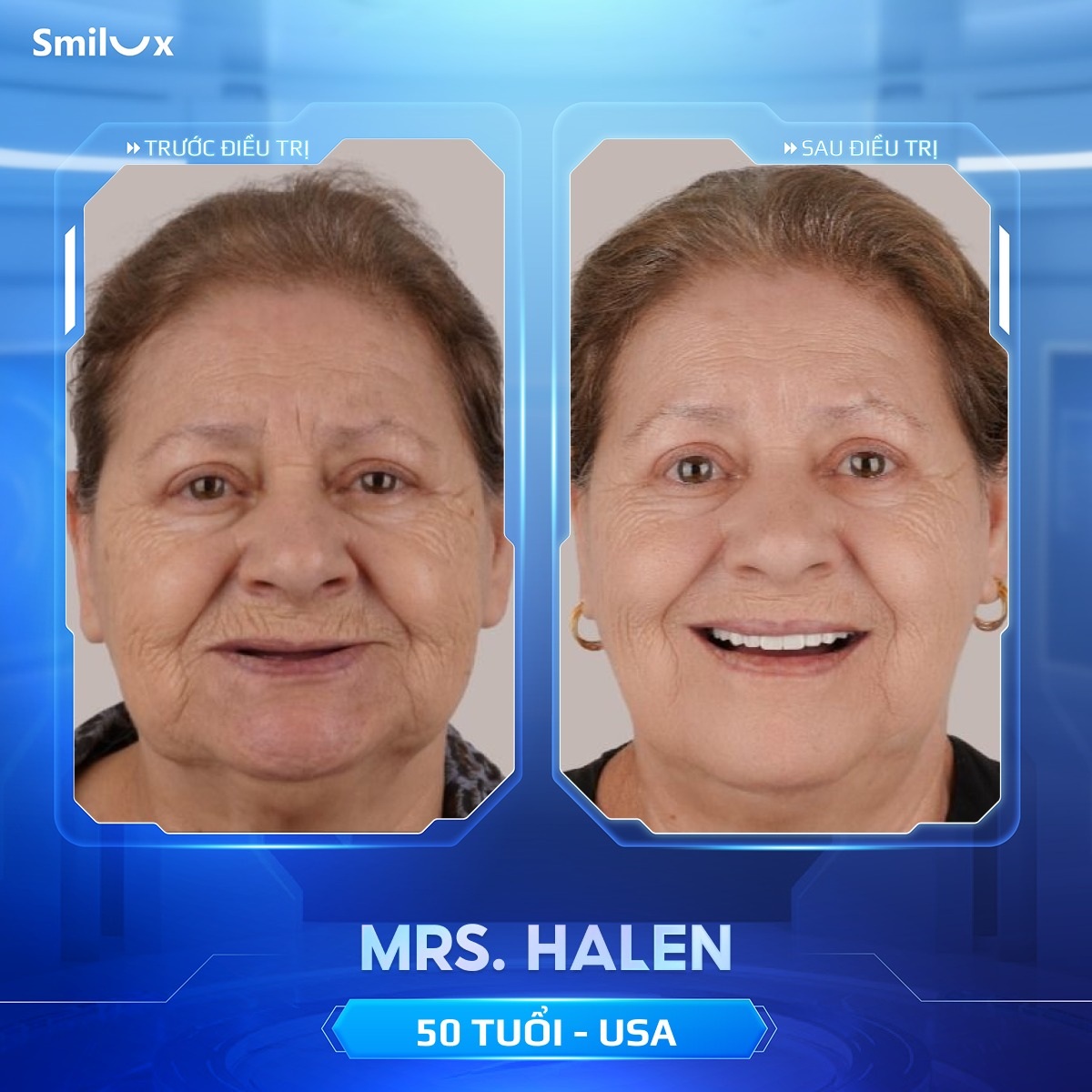
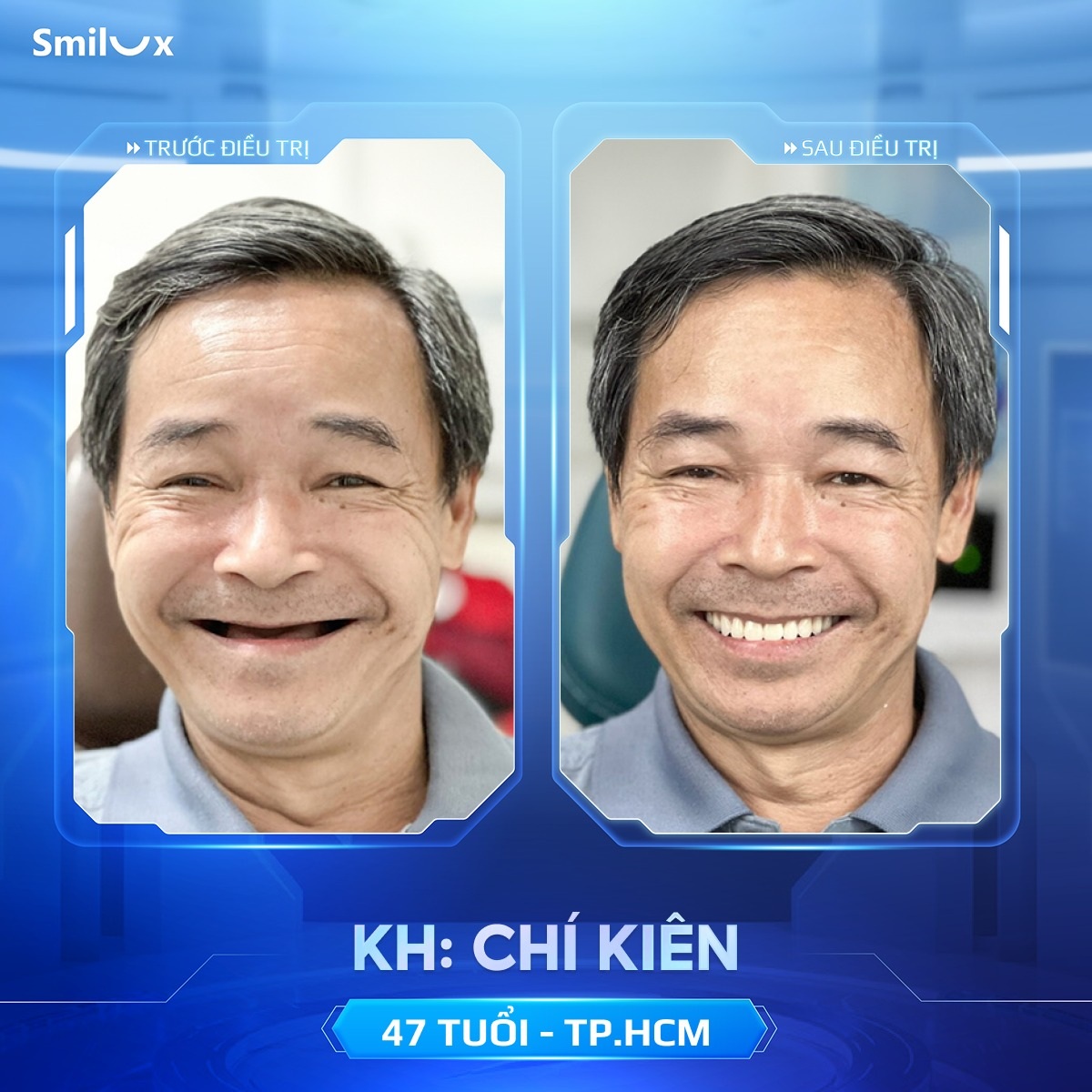
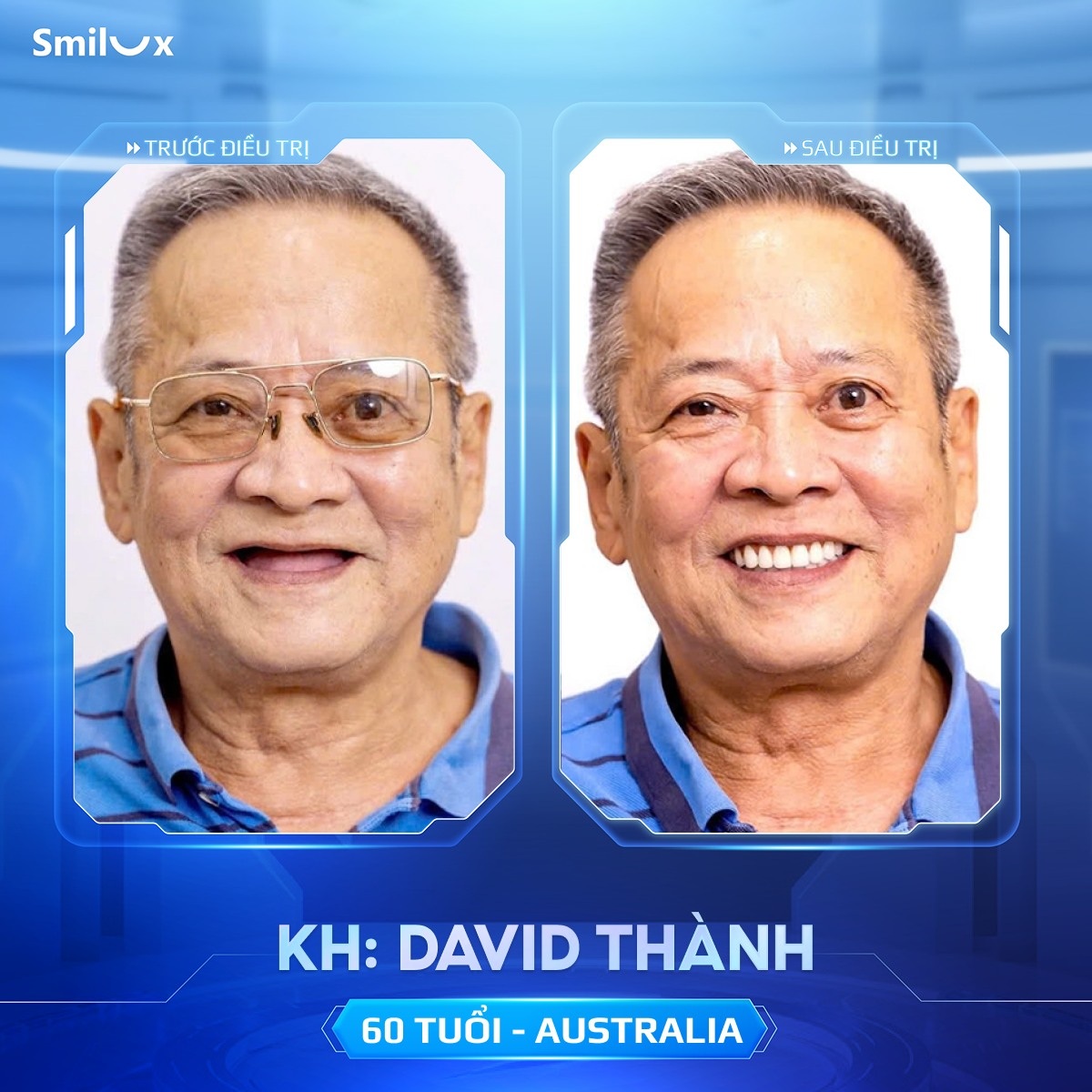
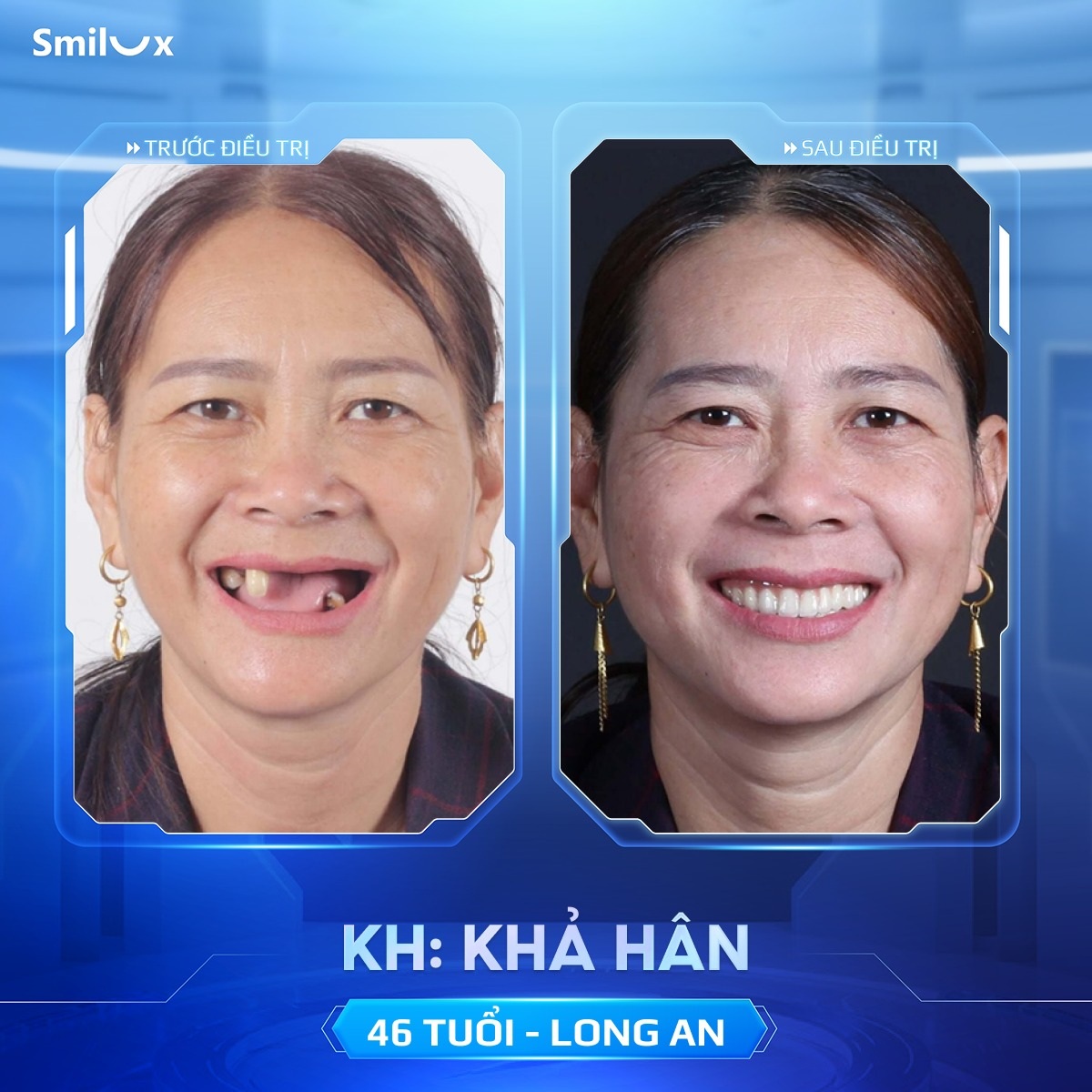
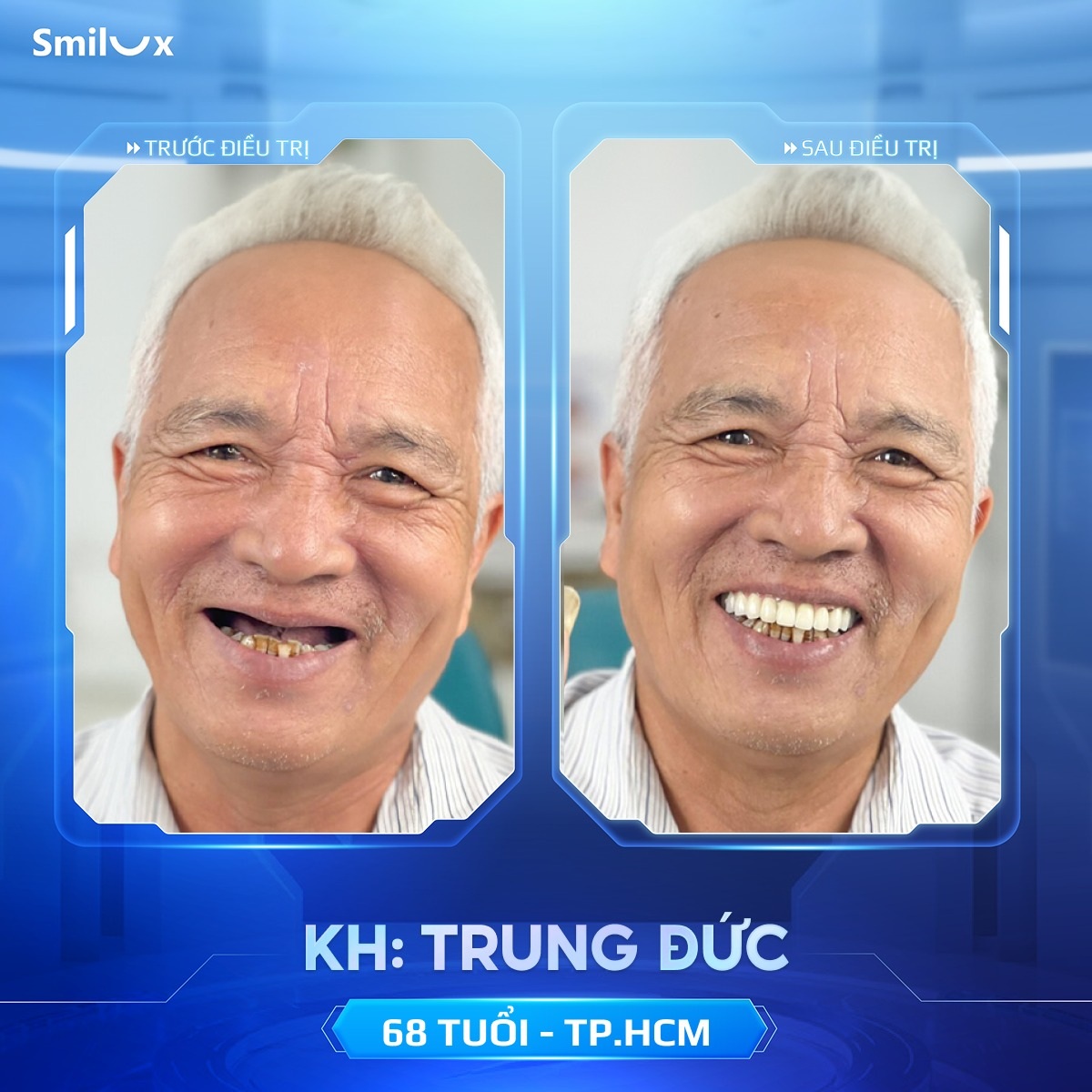
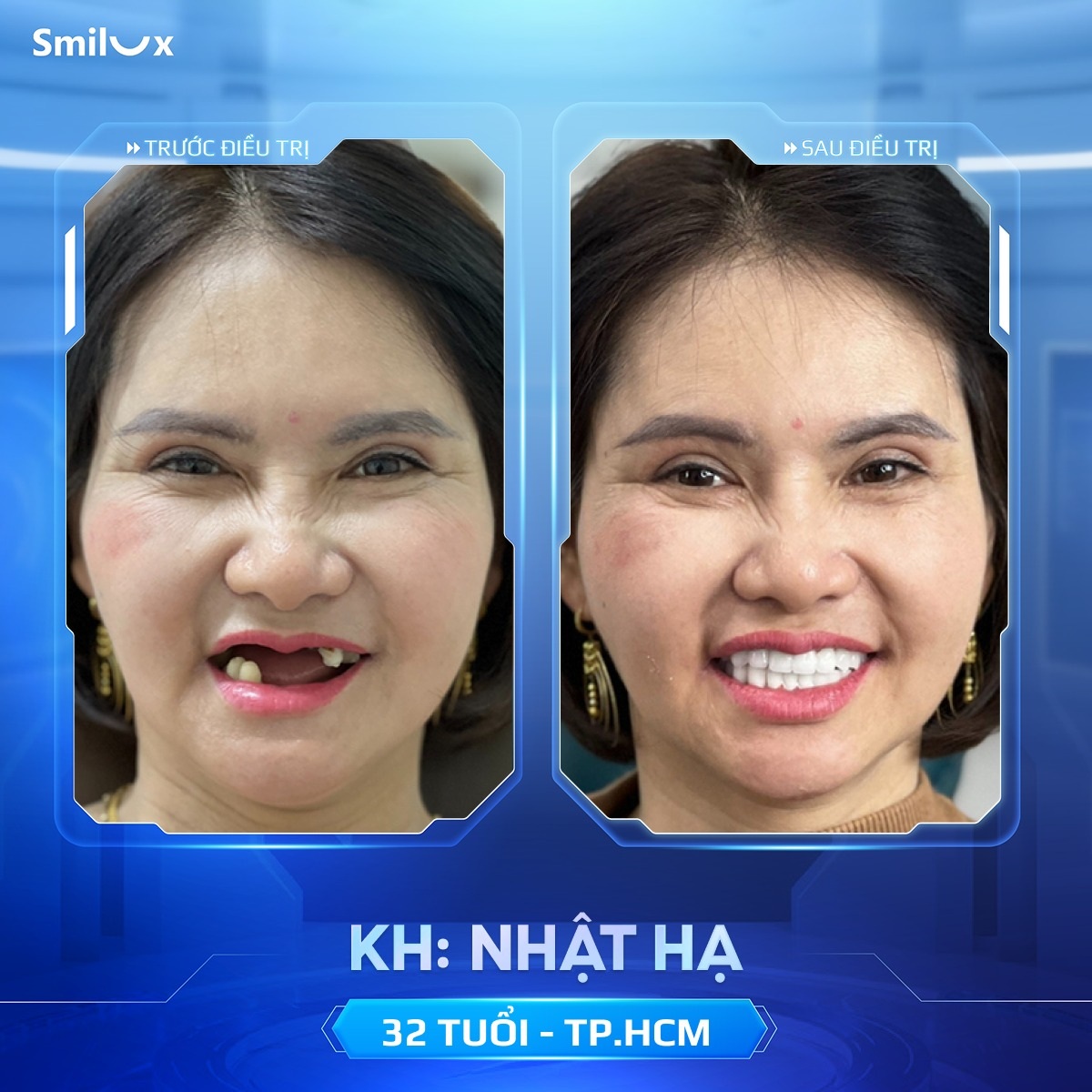
Dental Implants are a method of restoring missing teeth by placing a titanium post into the jawbone at the site of tooth loss, acting as a replacement for the natural tooth root. After the osseointegration phase, when the implant has stabilized, the dentist will attach the abutment and place a dental crown on top to complete the tooth structure.
Dental implant placement not only fills the gap in the dental arch but also restores chewing function and maintains the patient’s oral health. Once the implant has firmly integrated with the jawbone, the prosthetic tooth above can function nearly equivalent to a natural tooth, ensuring stable bite force and a realistic chewing experience.
DENTAL IMPLANT SERVICES AT SMILUX
Single Dental Implant Placement at Smilux Dental is a solution for replacing a single missing tooth independently, without affecting adjacent teeth, while ensuring stable chewing function comparable to a natural tooth.
Full-Arch Dental Implants at Smilux Dental restore all missing teeth with high stability, provide strong chewing function, and significantly improve facial aesthetics.
STRUCTURE OF A DENTAL IMPLANT
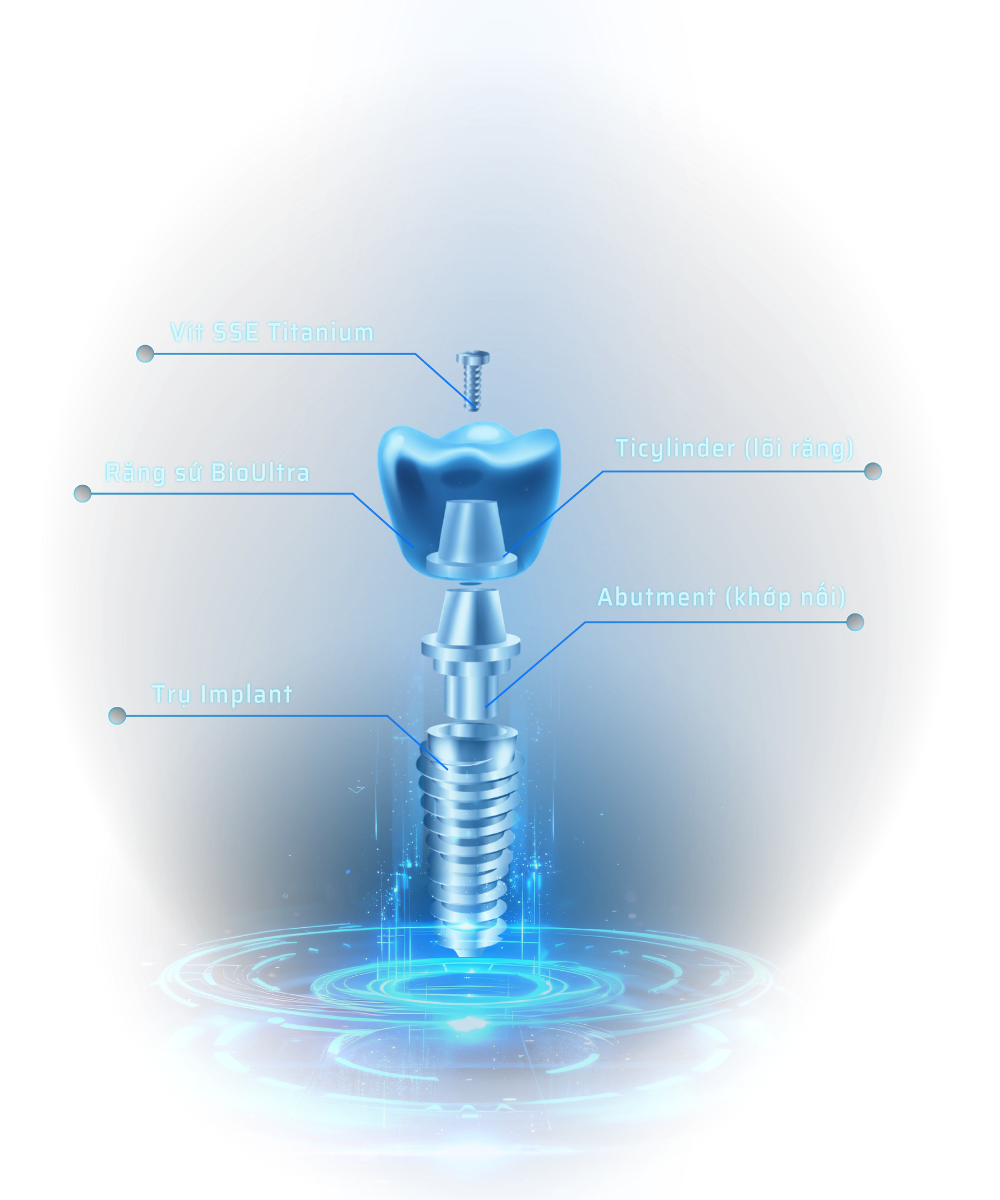
In traditional implant restorations, the structure typically consists of three main components: the implant fixture, the abutment, and the dental crown. However, with this conventional cement-retained technique, securing the crown may carry a risk of excess cement, which can affect the peri-implant tissues if not properly controlled. At Smilux International Dental Clinic, the implant system is applied using OTI screw-retained technology combined with a bar system, allowing for more precise and stable prosthetic control. The components of a dental implant include:
SSE Titanium Screw: Secures the dental crown using a screw-retained mechanism, allowing easy removal for inspection while minimizing complications associated with excess cement.
BioUltra Dental Crown: Provides high aesthetic value and excellent mechanical strength, restoring both the form and function comparable to a natural tooth.
Ticylinder: Acts as the core connector between the dental crown and the abutment, enhancing the stability and precision of the prosthetic restoration.
Abutment: Connects the implant fixture to the prosthetic restoration above, allowing occlusal forces to be transmitted along the physiological axis while protecting the surrounding gingival tissues.
Implant Fixture: Made from solid titanium, it integrates directly with the jawbone and serves as a long-term load-bearing foundation.
Bar (in full-arch restorations): Connects multiple implant fixtures into a unified system, allowing even distribution of occlusal forces and enhancing the overall stability of the full-arch prosthesis.
ADVANTAGES OF DENTAL IMPLANTS AT SMILUX
No Incision, Minimal Discomfort
Advanced techniques eliminate the need for large gum incisions, minimizing invasiveness, reducing swelling and pain, and ensuring a more comfortable experience for patients.
Immediate Restoration
Allows placement of a temporary prosthesis immediately after implant placement, enabling patients to have functional teeth right away while maintaining aesthetics and natural communication.
Reduced Healing Time
The healing period is shortened to approximately 1–2 months, compared to the conventional 4–6 months.
Genuine Imported Implant Fixtures
Authentic implant fixtures with clear origin, rigorously tested to meet strict quality standards.
Long-Term Implant Longevity
Implant fixtures can achieve stable osseointegration for up to 20 years or longer.
Post-Implant Function
Patients can begin chewing soft foods within a few hours after implant placement.
TEAM OF DOCTORS WITH OVER 15 YEARS OF EXPERIENCE
The team of dentists at Smilux International Dental Clinic has over 15 years of experience in the field of Oral and Maxillofacial Dentistry, with a proven track record of successfully treating thousands of cases ranging from basic to complex. Dentists directly examine patients and develop personalized treatment plans, ensuring clinical accuracy and safety in accordance with medical standards. With solid expertise and in-depth knowledge, Smilux Dental delivers stable outcomes, natural aesthetics, and a comfortable treatment experience.
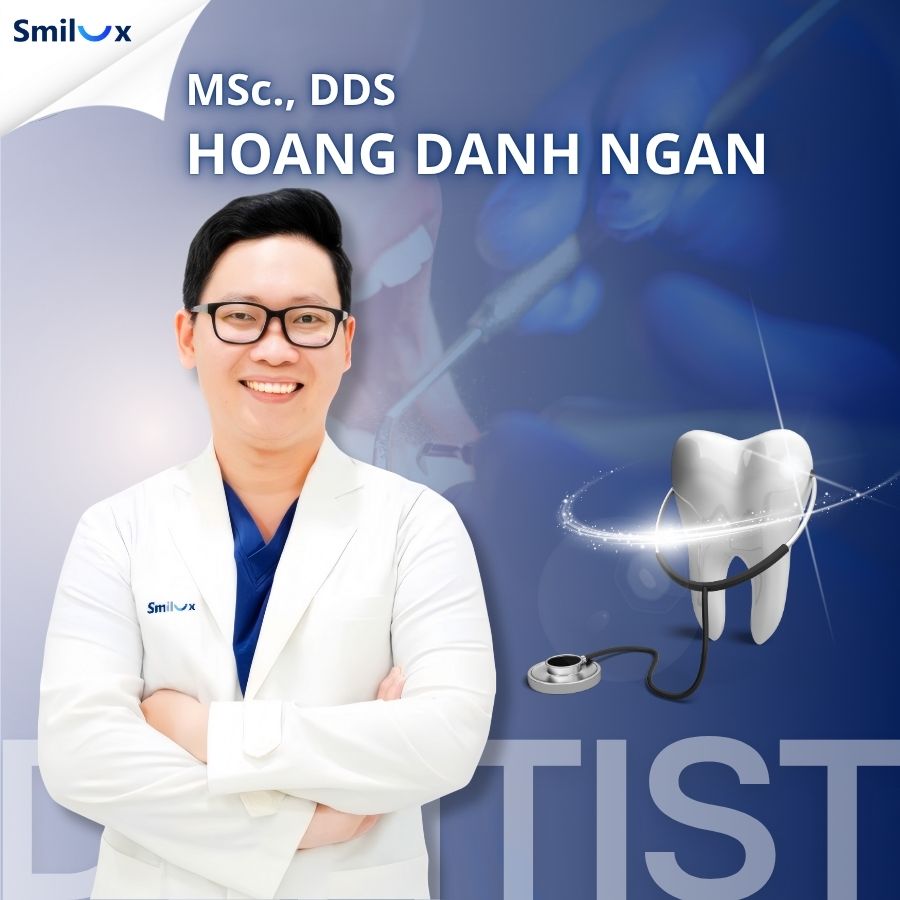
DOCTOR: HOANG DANH NGAN
(MSc., DDS)
Specialty
General Dentistry
DOCTOR: LE QUANG TUAN
(MSc., DDS)
Specialty
Implant Dentistry
MEDICAL PRACTICE LICENSE
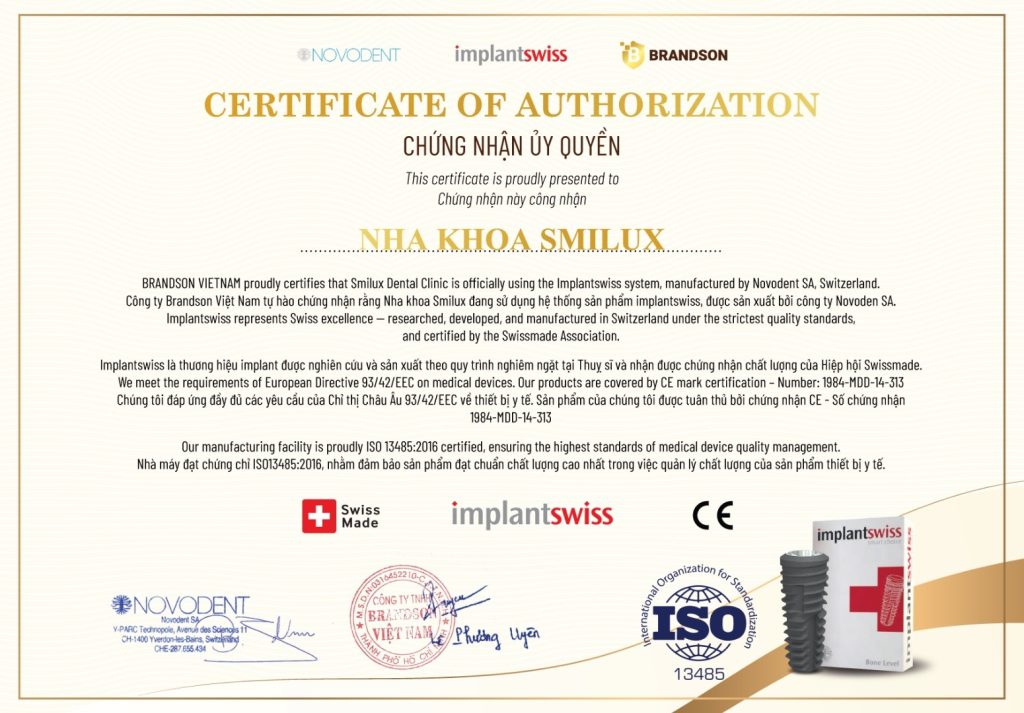
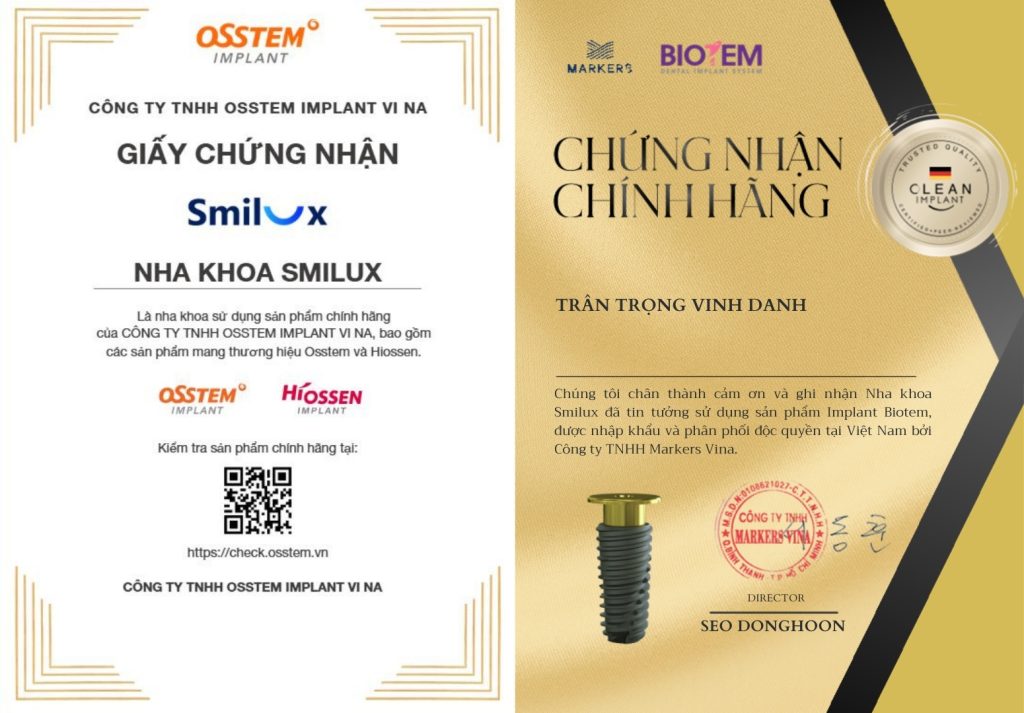
CERTIFICATE OF AUTHENTIC SWISS DENTAL IMPLANTS
CERTIFICATE OF AUTHENTIC U.S. AND SOUTH KOREAN DENTAL IMPLANTS
ADVANCED TECHNOLOGY
OTI Dental Implant Technology
OTI dental implant placement is an exclusive solution researched and applied at Smilux International Dental Clinic, designed to overcome the limitations and potential risks associated with conventional cement-retained implant techniques.
Bar-Supported Technique
The bar-supported technique connects multiple implant fixtures into a stable unified structure, enhancing overall stability and distributing occlusal forces more evenly. This helps reduce the risk of implant loosening and extends the longevity of the full-arch restoration.
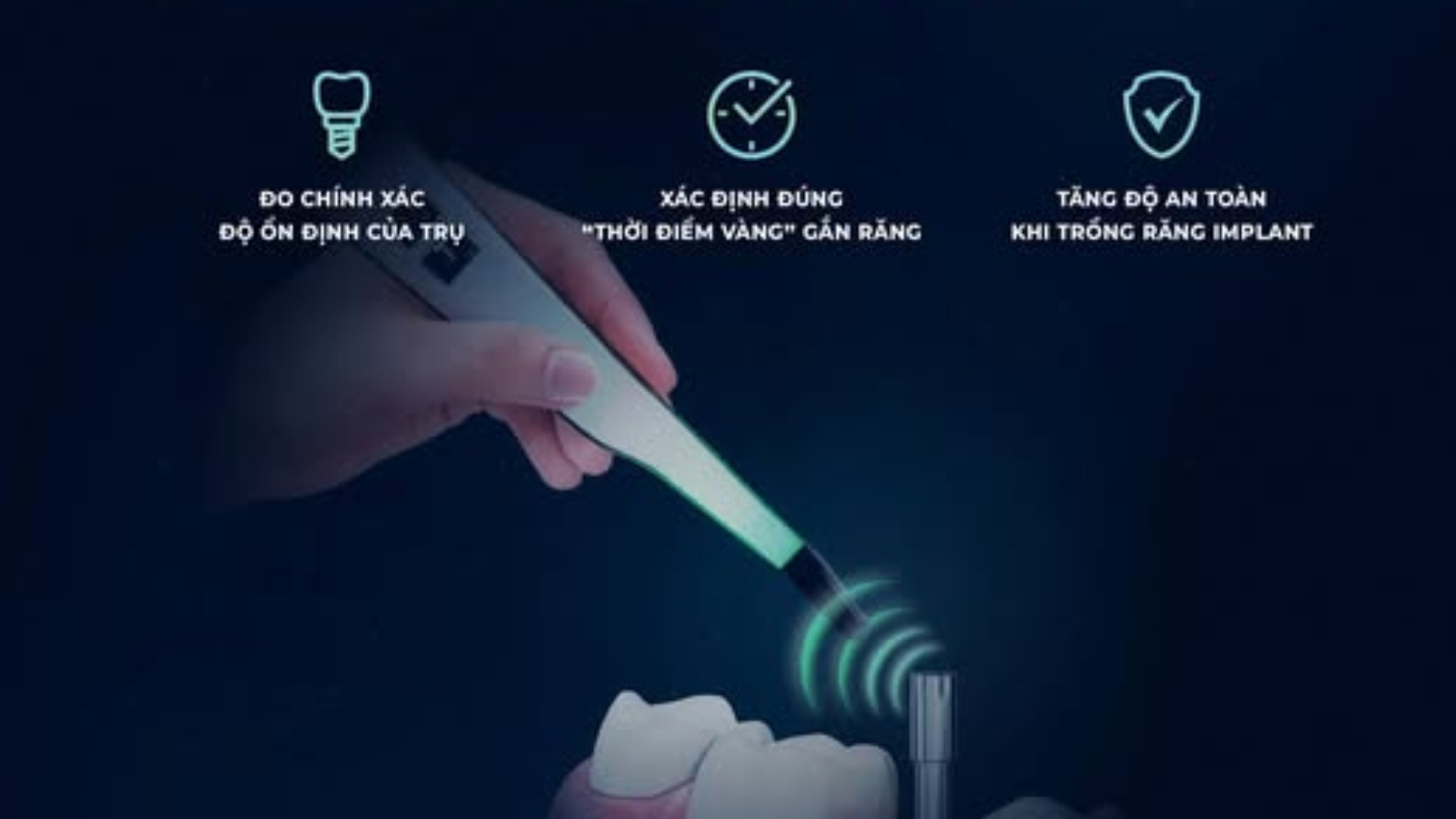
MagSense™ Sensor Technology
MagSense™ magnetic sensing technology, applied at Smilux, enables real-time measurement of implant stability. This allows the dentist to determine the optimal timing for prosthetic placement, minimizing risks and optimizing the osseointegration process.
STANDARD MEDICAL PROTOCOL FOR DENTAL IMPLANT PLACEMENT
The entire dental implant procedure at Smilux Dental is performed by a team of highly qualified dentists following standardized medical protocols, including the following steps:
Patients are directly examined by a specialist and undergo a 3D Cone Beam CT scan to accurately assess jawbone density, the position of missing teeth, and related anatomical structures.
Based on the imaging results, the dentist performs a detailed analysis, consultation, and develops a personalized treatment plan to ensure a suitable and safe restorative approach.
Step 2: Blood Tests and General Health Assessment
Medical tests are conducted to detect any underlying conditions, allowing the dentist to determine a safe anesthesia method and appropriate treatment plan.
Step 3: OTI Implant Placement
The implant placement procedure takes approximately 20–30 minutes, performed with gentle techniques to minimize invasiveness.
Step 4: Temporary Crown Placement
After 3–7 days, patients return for suture removal, X-ray evaluation of implant positioning, and impressions for the temporary restoration.
Step 5: Osseointegration Monitoring
The osseointegration process is monitored at each stage to assess implant stability and ensure optimal timing for the final restoration.
Step 6: Final Crown Placement
After approximately 15–30 days, the dentist places the permanent crown onto the implant to complete the restoration. Patients are then evaluated for chewing function with various types of food, including firm and hard textures, directly at the clinic.
Step 1: 3D Cone Beam CT Scan
Patients are directly examined by a specialist and undergo a 3D Cone Beam CT scan to accurately assess jawbone density, the position of missing teeth, and related anatomical structures.
Based on the imaging results, the dentist performs a detailed analysis, consultation, and develops a personalized treatment plan to ensure a suitable and safe restorative approach.
Step 2: Blood Tests and General Health Assessment
Medical tests are conducted to detect any underlying conditions, allowing the dentist to determine a safe anesthesia method and appropriate treatment plan.
Step 3: OTI Implant Placement
The implant placement procedure takes approximately 20–30 minutes, performed with gentle techniques to minimize invasiveness.
Step 4: Temporary Crown Placement
After 3–7 days, patients return for suture removal, X-ray evaluation of implant positioning, and impressions for the temporary restoration.
Step 5: Osseointegration Monitoring
The osseointegration process is monitored at each stage to assess implant stability and ensure optimal timing for the final restoration.
Step 6: Final Crown Placement
After approximately 15–30 days, the dentist places the permanent crown onto the implant to complete the restoration. Patients are then evaluated for chewing function with various types of food, including firm and hard textures, directly at the clinic.
REAL PATIENT CASES
SMILUX IN THE MEDIA
FAQs
Is Dental Implant Placement Dangerous?
Dental implants are highly safe and rarely cause serious complications when performed at a reputable clinic like Smilux, where experienced dentists follow standardized medical protocols.
How Long Does Dental Implant Treatment Take?
Dental implant treatment typically takes between 3 to 6 months to complete, including the implant placement phase and the time required for stable osseointegration. However, the surgical placement of each implant usually takes only about 7 to 30 minutes, performed quickly and gently.
Is Dental Implant Placement Painful?
Dental implant placement is not as painful as many people may think, as the procedure is performed under local anesthesia or sedation. After surgery, patients typically experience only mild swelling or slight discomfort for the first 1 to 3 days, which gradually subsides and stabilizes quickly.
This site is registered on wpml.org as a development site. Switch to a production site key to remove this banner.