
Hear from Smilux Dental’s dentist in the article below to better understand Do You Need Tooth Extraction for Braces? and which cases may require tooth extraction during orthodontic treatment.
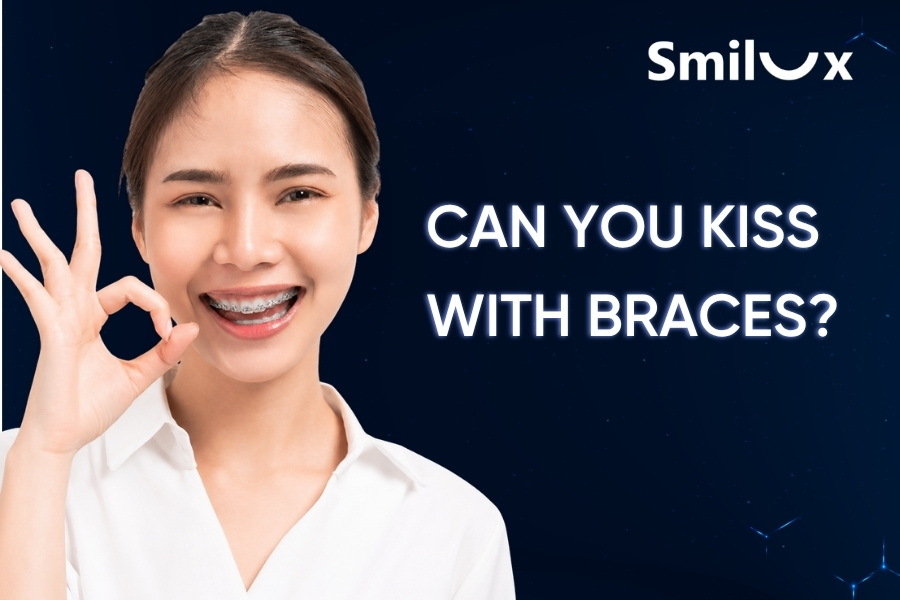
“Can You Kiss with Braces?” is a rather sensitive question, but in reality, many people wonder about it before starting orthodontic care. However, not everyone feels confident enough to ask their dentist directly.
Understanding this concern, in the article below, the dentists at Smilux Dental will provide a detailed explanation and share helpful advice to help you feel more comfortable with braces while staying confident in communication and your romantic life.

MỤC LỤC (TABLE)
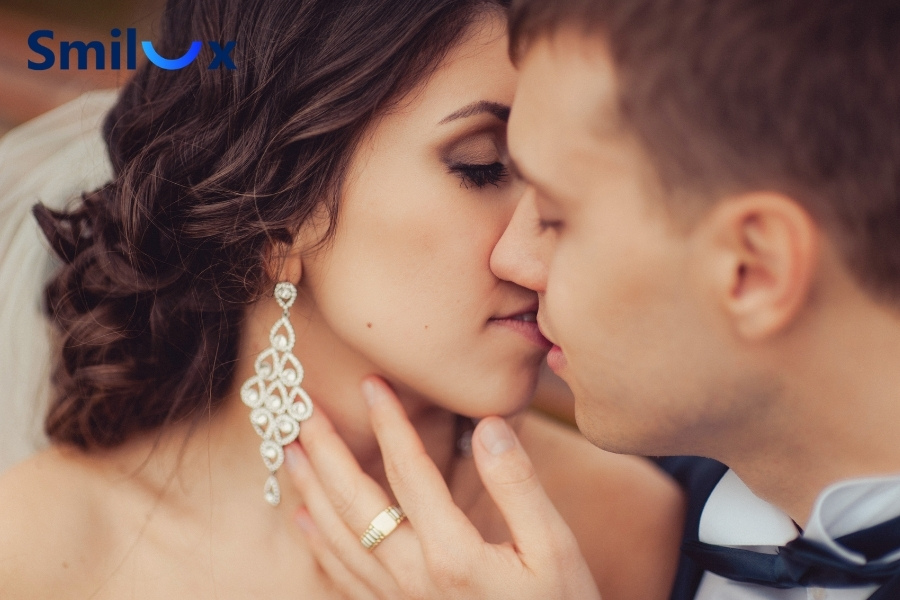
Toggle“Can You Kiss with Braces?” or “Can you kiss someone while wearing braces?” is a common question many patients have before starting orthodontic care. According to the dentists at Smilux Dental, people with braces absolutely CAN kiss as usual.
However, during the first stage after getting braces or after each adjustment, the teeth and lips may become more sensitive. You may feel slight discomfort, bulkiness, or mild soreness.
At this point, you should kiss gently to avoid strong contact that may cause discomfort for both of you. After about 10 to 14 days, the mouth will gradually adapt to the braces, making kissing feel more natural and comfortable.
>>> READ MORE: Do You Need Tooth Extraction for Braces? Who Needs Tooth Extraction Before Braces?
The type of braces you choose is one of the factors that can affect Can You Kiss with Braces? Depending on the orthodontic appliance used, the level of comfort when kissing may vary, as follows:
Metal braces are a popular orthodontic option chosen by many patients because of their reasonable cost and reliable results. However, metal brackets can feel slightly bulky, especially in the early stage, which may cause a sense of discomfort or obstruction when kissing.
If there is strong contact, the brackets may rub against the lips or the oral mucosa, causing discomfort for both partners. This is especially common right after the braces are first placed or after an adjustment, when many people may feel mild soreness and are not yet used to having orthodontic appliances in their mouth.
Advice from Smilux Dental’s dentist:
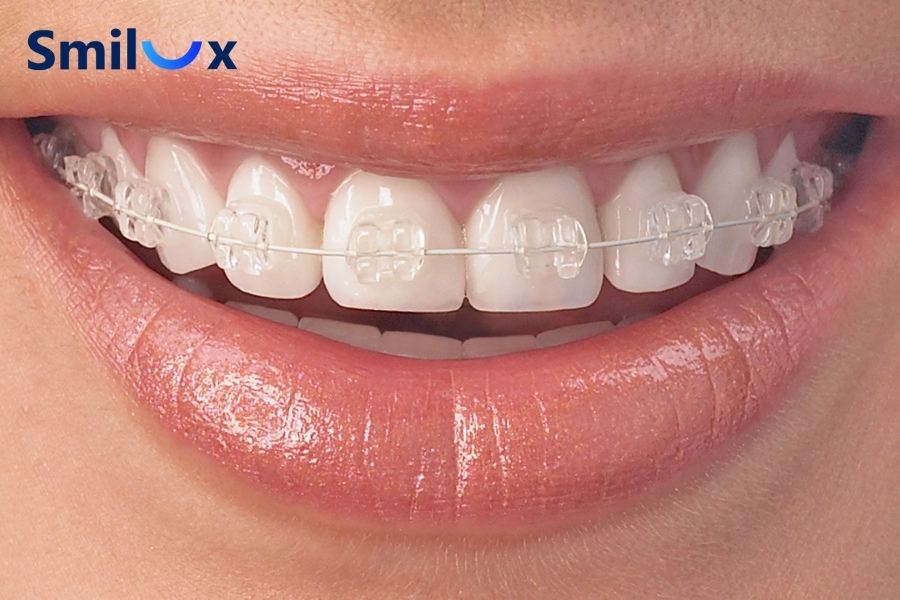
Ceramic braces have a compact design and a tooth-colored appearance, helping your smile look more natural during communication and close contact. Compared with metal braces, this type of braces usually causes less bulkiness or discomfort when kissing.
However, during the early stage after getting braces or after an adjustment, you may still feel slight soreness and may not feel completely comfortable with intense kissing. After a period of adaptation, most patients can kiss and go about daily activities as usual.
Advice from Smilux Dental’s dentist:
Lingual braces are attached to the back surface of the teeth, making them almost invisible when smiling, talking, or kissing at close range.
However, because the appliance is positioned close to the tongue, it may cause a bulky feeling, speech difficulty, or friction inside the mouth during the early stage.
Advice from Smilux Dental’s dentist:
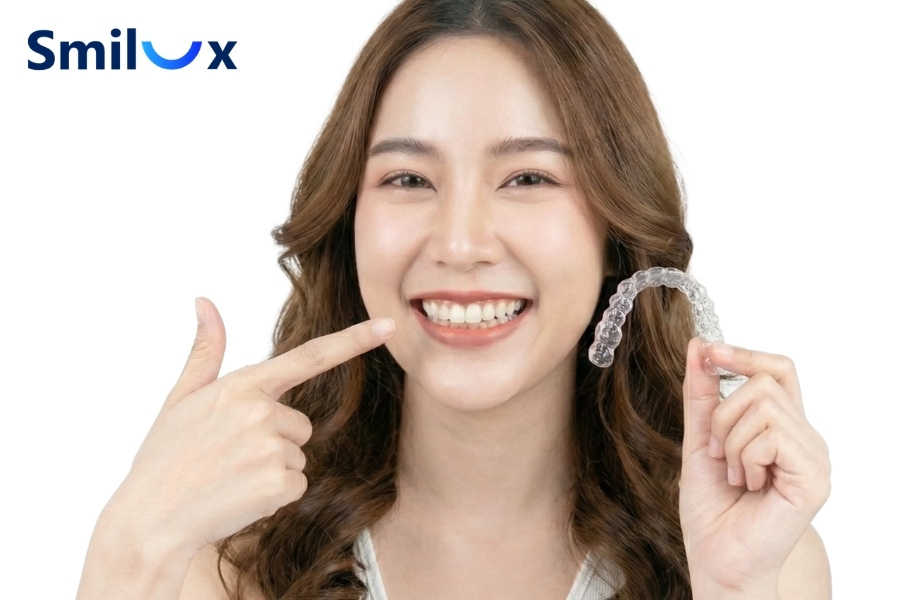
Clear aligners use custom-made trays that fit closely over the teeth and are designed to be almost “invisible,” helping wearers feel more confident. Since there are no brackets or archwires, this option helps reduce the feeling of rubbing, bulkiness, or discomfort when kissing.
In addition, the aligners can be removed flexibly when eating, cleaning your teeth, or in situations where you want to feel more comfortable during close contact. For this reason, clear aligners are considered one of the options that have less impact on your romantic life during orthodontic care.
Advice from Smilux Dental’s dentist:
Below are some helpful tips to help people with braces feel more comfortable, confident, and safe when kissing.
If you are wearing bracket braces, you should prioritize gentle lip kisses instead of deep kisses or excessive tongue movement. This helps limit strong contact between the teeth and reduces the risk of discomfort or irritation to the lips, gums, and soft tissues inside the mouth.
In addition, kissing too forcefully or without control may cause the brackets and archwires to rub against the lips or inner cheeks, or even affect the orthodontic appliances.
After getting braces or after an adjustment, your mouth is often quite sensitive. You may feel soreness, bulkiness, or not yet used to the orthodontic appliances. Therefore, you should not rush during this stage.
A better time to kiss is when you have gradually adapted to your brackets or aligners and can eat, talk, and clean your teeth comfortably. Usually, after about 1 to 2 weeks, the feeling of discomfort will reduce significantly, and kissing will become more natural.
During orthodontic care, the teeth and gum tissues are under shifting pressure from the orthodontic appliances, so they are often more sensitive than usual. Therefore, when kissing, both partners should keep things gentle to reduce strong contact between the teeth, lips, and brackets, helping prevent pain or discomfort.
If you want deeper and more emotional kisses, start slowly so your body can gradually adapt. Then, you can increase the level of contact once you feel comfortable and safe.
Your mindset can also greatly affect your kissing experience while wearing braces. Many people worry too much about their brackets touching their partner or making the moment feel less natural, which can make them feel tense during close contact.
In reality, when both partners stay relaxed and comfortable, every gesture will feel much more natural. Try not to feel pressured or think that braces will get in the way of your emotions. After a short period of adaptation, most people can kiss and enjoy daily activities as usual.
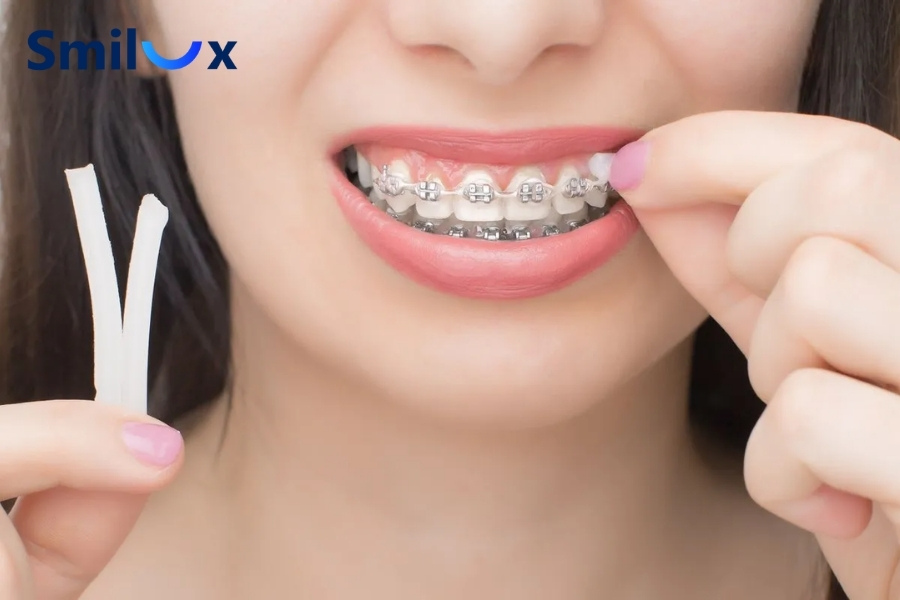
If your brackets or archwires are rubbing against the inside of your mouth and causing discomfort, you can use orthodontic wax to cover sharp or high-friction areas. This helps reduce irritation to the lips and oral mucosa when kissing or during close communication.
Besides creating a more comfortable feeling, orthodontic wax can also help you feel more confident on dates, especially during the early stage after getting braces or after an adjustment.
Always Keep Your Breath Fresh
Whether you have braces or not, maintaining good oral hygiene before kissing is always essential. For people undergoing orthodontic care, food particles can easily get trapped around brackets or archwires, increasing the risk of bad breath if oral care is not done properly.
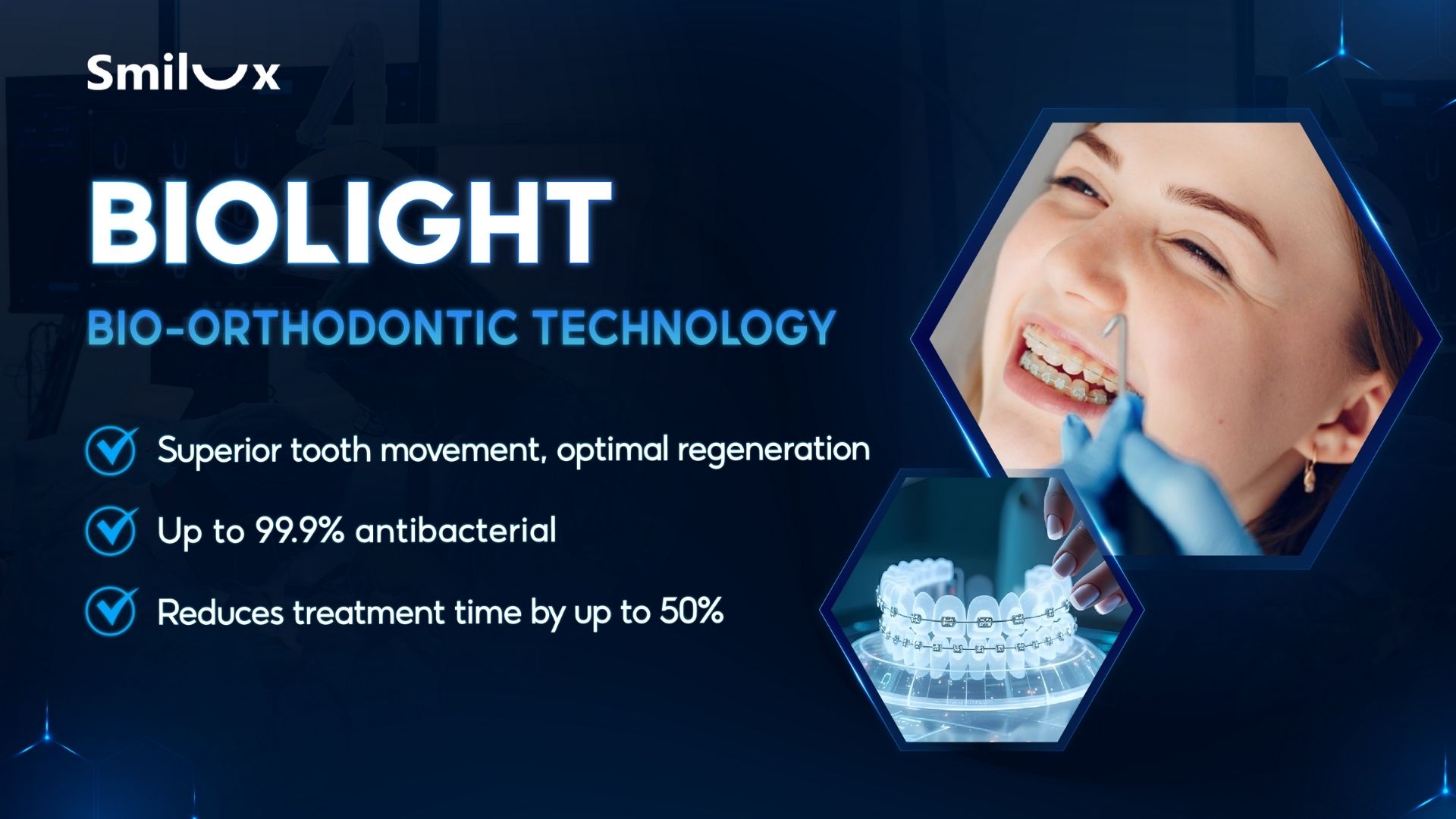
When it comes to wearing braces while still feeling comfortable when kissing, communicating naturally, and reducing the sense of bulkiness in daily activities, BioLight braces technology at Smilux International Dental Clinic is definitely worth considering.
At Smilux Dental, BioLight braces technology is developed with a modern orthodontic approach that prioritizes comfort, safety, and an optimized patient experience throughout the braces journey.
The highlight of this technology is its application of biological orthodontic principles combined with biolight technology to support gentler and more stable tooth movement. Instead of creating excessive pulling force that may cause prolonged soreness, BioLight focuses on a tooth movement mechanism that works in harmony with the natural biology of the bone and periodontal tissues, helping reduce discomfort during the braces process.
In addition, each patient receives a personalized orthodontic plan based on their specific dental condition, bite alignment, and facial structure. This allows better control of orthodontic force, helping reduce lip irritation and discomfort when eating, talking, or kissing while wearing braces.
In particular, the dentists at Smilux Dental closely monitor every stage of tooth movement to ensure that the orthodontic process is safe, progresses at the right pace, and minimizes issues such as prolonged pain, gum inflammation, or bite misalignment after braces.
If you are looking for a braces option that offers both aesthetics and comfort when communicating, dating, and going about your daily life, BioLight braces technology at Smilux International Dental Clinic is a choice worth considering on your journey to transform your smile.
Feel free to leave your information in the registration form below for a free consultation with our dentists. We will assess your dental condition, recommend a suitable orthodontic plan, and answer all your questions in detail before you get braces.
BOOK APPOINTMENT
Through the information shared above, you now have the answer to the question “Can You Kiss with Braces?” In reality, braces do not prevent you from kissing or significantly affect your romantic life, as long as you choose the right orthodontic option and maintain proper oral care.
If you want to get braces but still worry about pain, discomfort, or feeling less confident when communicating, contact Smilux International Dental Clinic today via Hotline +84 866 251 379 for a free, detailed consultation with our dentists about your dental condition.
PROFESSIONAL CONSULTATION: DR. HOANG DANH NGAN
Dr. Hoang Danh Ngan, MSc., DDS., CHUWS, is one of the leading dental professionals at Smilux Dental, with over 15 years of clinical experience.
---------- Braces Knowledge ----------
Hear from Smilux Dental’s dentist in the article below to better understand Do You Need Tooth Extraction for Braces? and which cases may require tooth extraction during orthodontic treatment.
Can You Kiss with Braces? In the article below, Smilux Dental’s dentist will explain this in detail and share helpful tips to help you feel more confident and comfortable when kissing with braces.
Can Braces Change Your Facial Shape? According to the dentists at Smilux Dental, properly planned orthodontic care can help improve the facial profile, correct the bite, and create a more balanced and harmonious appearance after braces.
The Worst Stage of Braces and how to overcome it is a common concern for many people before starting orthodontic treatment. This article from Smilux will help you better understand the common changes during braces treatment and how to effectively improve aesthetics.
CONTACT