A Temporary crown on Implant is a provisional restoration used while the dental implant integrates with the jawbone. In the article below, Smilux explains its functions, types, and placement procedure.
Many patients often think that a Dental Implant is simply “a screw” placed into the jawbone. In fact, a complete Dental Implant restoration consists of several different components, designed to replace both the lost tooth root and the visible part of the tooth.
In this article, Smilux dentists will explain in detail the structure of the Dental Implant, the materials used, and how these components connect with each other to restore missing teeth in a way that closely resembles natural teeth.

MỤC LỤC (TABLE)
ToggleDental Implant placement, also known as Implant surgery or Implant insertion, is a method of restoring missing teeth by placing an artificial tooth root into the jawbone at the site of the missing tooth, where it serves as a replacement for the natural tooth root. After a period of time, once the Implant has firmly integrated with the bone, the dentist will attach the abutment and dental crown on top to complete the new tooth.
The key difference of a Dental Implant is that the restored tooth functions independently, without the need to grind down the two adjacent teeth as in a dental bridge. At the same time, because the Implant post is placed inside the jawbone to replace the lost tooth root, it helps maintain chewing forces transmitted to the bone, thereby reducing jawbone resorption after tooth loss.
A complete Dental Implant restoration typically consists of three main components, designed to replace both the lost tooth root and the visible part of the tooth. Each component has its own role, helping the Dental Implant remain stable in the jawbone, withstand chewing forces effectively, and achieve a shape that closely resembles a natural tooth.
Below are the details of the structure of the Dental Implant for your reference:
The Implant fixture, also known as the Titanium Implant fixture, is the part placed directly into the jawbone at the site of the missing tooth. This component acts as an artificial tooth root, helping support the dental crown above and withstand chewing forces.
The Implant fixture is usually made of Titanium or Titanium alloy because these materials have high biocompatibility, cause minimal irritation, and integrate well with the jawbone. After being placed into the bone, the fixture needs a certain period of time to bond stably with the surrounding bone tissue, creating a solid foundation for the future dental restoration.
In terms of shape, the fixture is designed like a small screw, with a tapered body and spiral threads. This design helps increase the contact area between the fixture and the jawbone, allowing it to anchor more firmly. The surface of the fixture is also specially treated using technologies such as sandblasting, acid etching, or bioactive coating to support the healing process and promote osseointegration.
Depending on the position of the missing tooth and the quality of the jawbone, the dentist will calculate and select a suitable Implant fixture for each patient. This helps the fixture achieve stability within the jawbone, properly support the dental crown above, and ensure long-term stable chewing function.
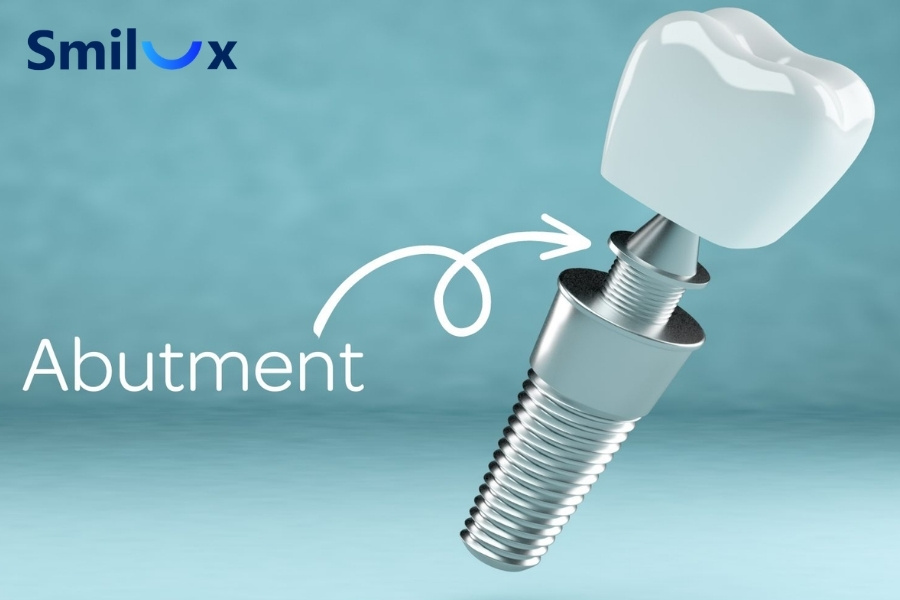
The Abutment is the intermediate component that connects the Implant fixture and the porcelain crown. Simply put, if the Implant fixture replaces the tooth root, the Abutment functions similarly to a prepared tooth core, helping support and securely fix the porcelain crown above. After the fixture has stably integrated with the jawbone, the dentist will attach the Abutment.
The Abutment is usually made of Titanium to ensure durability, good biocompatibility, and minimize irritation in the oral environment. For teeth in the aesthetic zone, such as the front teeth, the dentist may recommend a Zirconia Abutment to achieve a more natural color, avoid metallic show-through through the gums, and help the Dental Implant blend harmoniously with the surrounding natural teeth.
The porcelain crown is the part fixed onto the Abutment to complete the Dental Implant restoration, replacing the lost tooth crown.
The porcelain crown is custom-designed based on each patient’s dental impression, so its size, shape, and color match the remaining teeth on the dental arch. As a result, once completed, the Dental Implant blends harmoniously with the natural teeth and does not appear mismatched in color or noticeably different when eating, speaking, or communicating.
In terms of material, porcelain crowns on Dental Implants commonly include two types:
>>> READ MORE: What Is a Temporary Crown on Implant? Functions, Types, and Procedure
In addition to the basic structure of the Dental Implant, which includes the Implant fixture, Abutment, and porcelain crown, at Smilux Dental, Dental Implants using OTI positioning screw-retained technology are also designed with additional supporting components to improve accuracy and stability during restoration.
The five main components of a Dental Implant at Smilux include: SSE Titanium screw, BioUltra porcelain tooth, Ticylinder also known as the tooth core, Abutment, and Implant fixture.
The SSE Titanium screw helps secure the porcelain tooth to the Implant system underneath. With a screw-retained design, the dentist can remove the tooth when examination, cleaning, or maintenance is needed, without requiring excessive intervention in the restoration structure.
The BioUltra porcelain tooth replaces the natural tooth crown and is designed according to each patient’s tooth shape, tooth color, and bite. As a result, the restored tooth provides both aesthetics and stable chewing support in daily activities.
The Ticylinder is the component located between the porcelain tooth and the Abutment, helping the upper components connect more precisely. The role of the tooth core is to increase the stability of the porcelain tooth and reduce looseness during use.
The Abutment is the connector between the Implant fixture and the porcelain tooth above. This component helps support the tooth crown, transmit chewing forces to the Implant fixture, and protect the gum area around the restoration.
The Implant fixture is the artificial tooth root placed into the jawbone. After it has stably integrated with the bone, the fixture creates a firm foundation to support the entire restoration, helping patients chew better and reducing bone loss at the missing tooth site.
In addition to its outstanding structure, OTI Dental Implant technology at Smilux also helps the implant placement process become more precise and gentler, with the following key advantages:
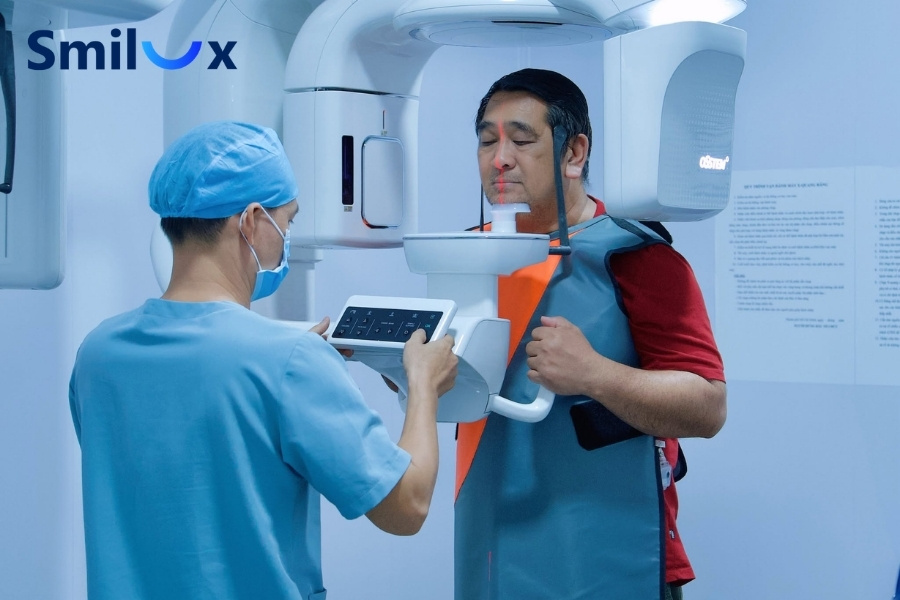
In addition, each OTI Dental Implant case is examined by the dentist, supported with CT Cone Beam 3D imaging, and planned according to each patient’s jawbone condition, missing tooth position, and oral health. As a result, the restored tooth is not only naturally aesthetic but also stable, secure, and suitable for long-term chewing function.
If you are learning about the Structure of the Dental Implant and would like a consultation on OTI positioning screw-retained Dental Implant technology, please contact Smilux Dental International Clinic through the FORM below.
BOOK APPOINTMENT
We hope this article has helped you clearly understand what the Structure of the Dental Implant includes and the role of each component in restoring missing teeth. If you are considering Dental Implant placement, visit Smilux Dental for a dental examination, jawbone assessment, and consultation on the most suitable treatment plan. Contact HOTLINE (+84) 866 251 379 for detailed support.
Note: The content in this article is for reference only and does not replace a dentist’s diagnosis or clinical recommendation. For accurate advice based on your oral condition, you should visit a dental specialist directly.
---------- Implant Knowledge ----------
A Temporary crown on Implant is a provisional restoration used while the dental implant integrates with the jawbone. In the article below, Smilux explains its functions, types, and placement procedure.
An implant-supported removable denture is a restorative solution for patients who have lost multiple teeth or an entire arch, helping improve chewing function at a reasonable cost. Smilux dentists will explain what this treatment is, whether it is good, and how much it costs.
Learn with Smilux Dental about What Is an Implant Abutment?, including its structure, classification, placement procedure, and the latest implant abutment price list.
Learn about the structure of the dental implant, including its components and the role of each part. Smilux dentists provide detailed explanations to help patients understand clearly before getting dental implants.

CONTACT
ABOUT SMILUX
DENTAL KNOWLEDGE