- Home
- »
- Implants Knowledge
- »
- Dental Implants for Elderly Patients
Dental Implants for Elderly Patients
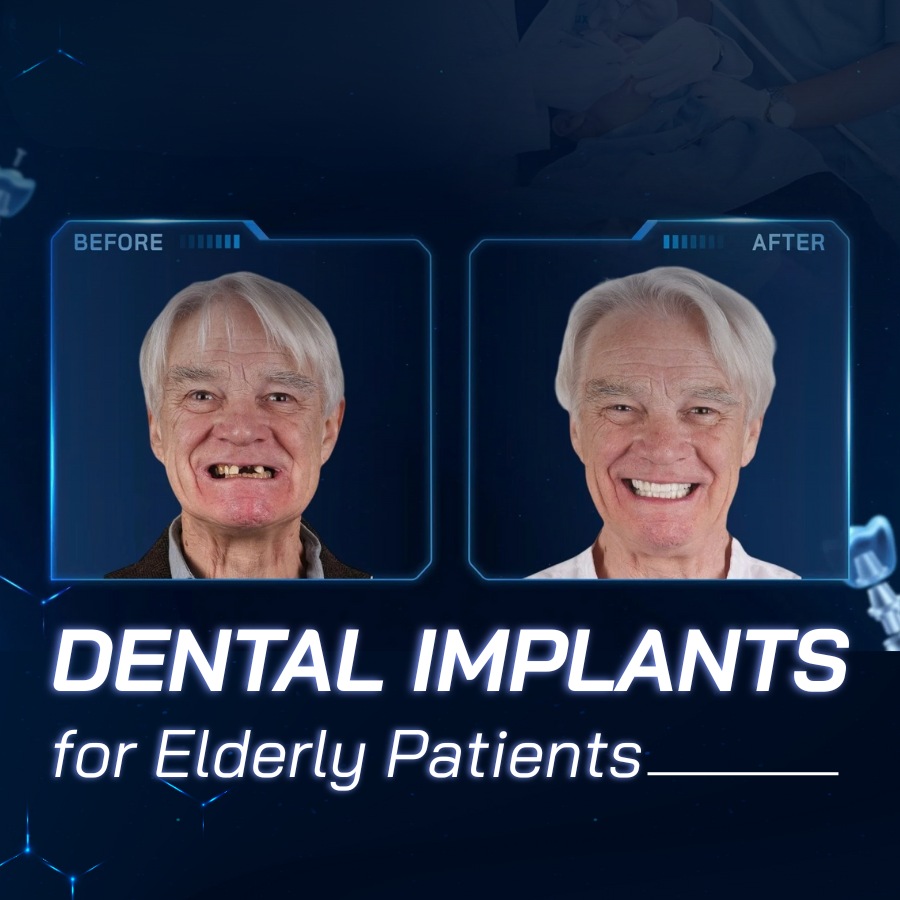
As tooth loss becomes more common with the body’s natural aging process—negatively affecting chewing function and overall quality of life—more and more older adults are choosing dental implant treatment at Smilux to restore missing teeth.
In the article below, Smilux Dental’s dentist will provide clear and comprehensive guidance on dental implants for elderly patients, including eligibility criteria, a safe treatment protocol, and essential aftercare instructions following implant placement.
What Are Dental Implants for Elderly Patients?
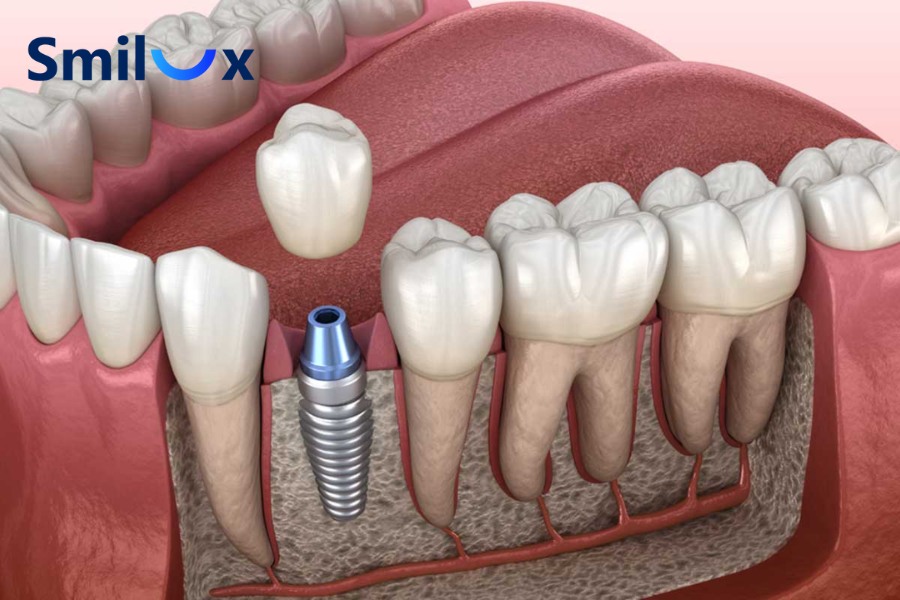
Dental implant for elderly patients is a method of restoring missing teeth by creating a “new tooth root” (the implant fixture) that is placed directly into the jawbone, followed by the attachment of a prosthetic tooth (dental crown) on top.
Thanks to this artificial tooth root, the restored tooth is firmly anchored, provides stable chewing function, and does not shift or fall out like removable dentures.
Unlike traditional tooth replacement methods, dental implants not only restore the visible part of the tooth but also replace the missing tooth root, helping maintain jawbone structure and long-term oral function.
Can Elderly Patients Receive Dental Implants?
Elderly patients can still undergo dental implant treatment to restore chewing function, whether they are missing a single tooth or an entire arch, as long as they meet the health conditions prescribed by the dentist.
In practice, many patients aged 70–80 have safely received dental implants at Smilux, provided their overall health is stable and any underlying medical conditions are well controlled.
Benefits of Dental Implants for Elderly Patients
From a clinical perspective, dental implant placement for elderly patients is considered an effective and long-term restorative solution, helping to restore chewing function to a level close to that of natural teeth.
This treatment offers multiple outstanding benefits, including:
- Restoration of chewing function and improved nutrition: Dental implants are firmly anchored in the jawbone, allowing elderly patients to chew stably and efficiently, which supports better digestion and overall nutritional intake.
- Prevention of jawbone resorption: By directly replacing the missing tooth root, implants transmit chewing forces to the jawbone, helping maintain bone density and reducing the risk of facial collapse and premature aging.
- Natural aesthetics: Implant-supported crowns are designed to closely resemble natural teeth in both shape and color, creating a more harmonious facial appearance and enhancing confidence in daily communication.
- Comfort during use: Unlike removable dentures, dental implants do not cause irritation, gum pain, or looseness, allowing elderly patients to feel more comfortable in daily activities.
- High durability: With proper care and maintenance, dental implants can function reliably for 20 years or even longer.
- Preservation of natural teeth: Implant treatment does not require grinding down adjacent teeth, as in the case of dental bridges, thereby helping preserve the remaining natural teeth.

Key Differences in Dental Implant Treatment for Elderly Patients
Dental implant treatment for elderly patients requires a higher level of caution due to factors such as significant jawbone resorption, slower healing capacity, and the presence of systemic conditions like diabetes, cardiovascular disease, or hypertension that must be carefully controlled.
Therefore, during treatment, the dentist’s role goes beyond placing the implant itself and includes a comprehensive evaluation of the patient’s overall health to ensure long-term safety and success.
- Jawbone condition: In older adults, the jawbone is often resorbed, osteoporotic, or associated with a lowered maxillary sinus. This requires precise determination of implant positioning and a preference for treatment options that minimize the need for complex bone grafting or sinus lift procedures.
- General health status: Underlying medical conditions such as diabetes (HbA1c levels), cardiovascular disease, or high blood pressure must be well controlled before and throughout treatment to reduce the risk of infection and improve osseointegration.
- Healing capacity: Due to slower tissue regeneration, the osseointegration period in elderly patients is often longer than in younger individuals, requiring close monitoring and strict adherence to the prescribed treatment protocol.
- Early provisional restoration: In many cases, immediate implant placement with early provisional crowns may be applied, allowing elderly patients to chew lightly and maintain normal daily activities while waiting for the implant to fully integrate with the bone.
Dental Implant Methods Suitable for Elderly Patients
For elderly patients, the dental team at Smilux always prioritizes minimally invasive treatment approaches, aiming to limit complex surgical procedures while ensuring effective chewing function, natural aesthetics, and long-term health.
Based on the extent of tooth loss, jawbone density, and the patient’s overall health condition, the dentist will conduct a thorough assessment and recommend an appropriate treatment plan, ensuring safety throughout the entire course of care.
OTI Dental Implant Treatment
OTI dental implant treatment is a proprietary implant technique developed exclusively at Smilux. It applies an advanced screw-retained system during implant placement, effectively addressing and minimizing common risks associated with conventional implant techniques.
Key advantages include:
- No gum incision – minimal pain: The procedure does not require large gum incisions or sutures. With the support of 3D digital navigation, the implant is placed with high precision, significantly reducing pain, swelling, and soft-tissue trauma.
- Immediate chewing after placement: OTI implants achieve strong primary stability immediately after insertion. Because the gingival tissue is minimally affected, patients can begin chewing soft foods just a few hours after the procedure.
- Up to ~70% shorter healing time: Thanks to bio-nano surface treatment technology, osseointegration occurs faster than with conventional implants, typically within 1–2 months instead of the usual 4–6 months.
- Easy removal and adjustment: The exclusive dual-thread screw design allows the dental crown to be easily removed for inspection or prosthetic adjustments without disturbing the implanted fixture, ensuring long-term flexibility and maintenance convenience.
All-on-4 Dental Implant Treatment
All-on-4 dental implant treatment is an advanced and optimized restorative solution for elderly patients who have lost all teeth in one or both arches. This technique restores chewing function and aesthetics using only four implants per arch.
Key advantages include:
- Minimally invasive with faster healing: By using fewer implants and less traumatic surgical techniques, All-on-4 reduces postoperative discomfort and shortens overall treatment time.
- No complex bone grafting required: The technique maximizes the use of available jawbone, making it especially suitable for patients with severe bone loss, without the need for sinus lifting or extensive bone grafting procedures.
- Natural aesthetics: Implant-supported prosthetic teeth are designed to closely match natural teeth in shape and color, providing a realistic and harmonious appearance.
- Early fixed teeth: After implant placement, patients may receive a fixed provisional prosthesis, allowing light chewing and normal daily activities while waiting for complete healing and osseointegration.
All-on-6 Dental Implant Treatment
In addition to the All-on-4 option, elderly patients with full-arch tooth loss may also choose All-on-6 dental implant treatment.
With this technique, the dentist places six titanium implants into the jawbone to create a strong and stable foundation, then restores a fixed full-arch prosthesis consisting of approximately 10–14 ceramic crowns on top.
Key advantages include:
- Restoration of chewing function: All-on-6 helps elderly patients eat more comfortably and chew food more effectively, supporting better digestion and nutrition.
- Reduction of jawbone resorption: The implants are firmly anchored in the jawbone, helping maintain jaw structure and reducing facial collapse or bite shortening caused by long-term tooth loss.
- Improved facial aesthetics: The restored teeth help support facial tissues, reduce sunken cheeks, and create a fuller, more youthful facial appearance.
- Minimally invasive approach:
Only six implants are required for a full arch, which shortens treatment time and allows for a smoother and more predictable healing process.
Dental Implant Procedure for Elderly Patients
The entire dental implant procedure for elderly patients at Smilux is performed in strict compliance with the regulations of the Ministry of Health, ensuring safety at every stage of treatment. Below is the detailed treatment workflow:
- Step 1: Comprehensive examination and health assessment
The dentist conducts a thorough evaluation of oral health, occlusion, and medical history, including cardiovascular disease, diabetes, and hypertension, to identify and eliminate potential risks prior to implant placement.
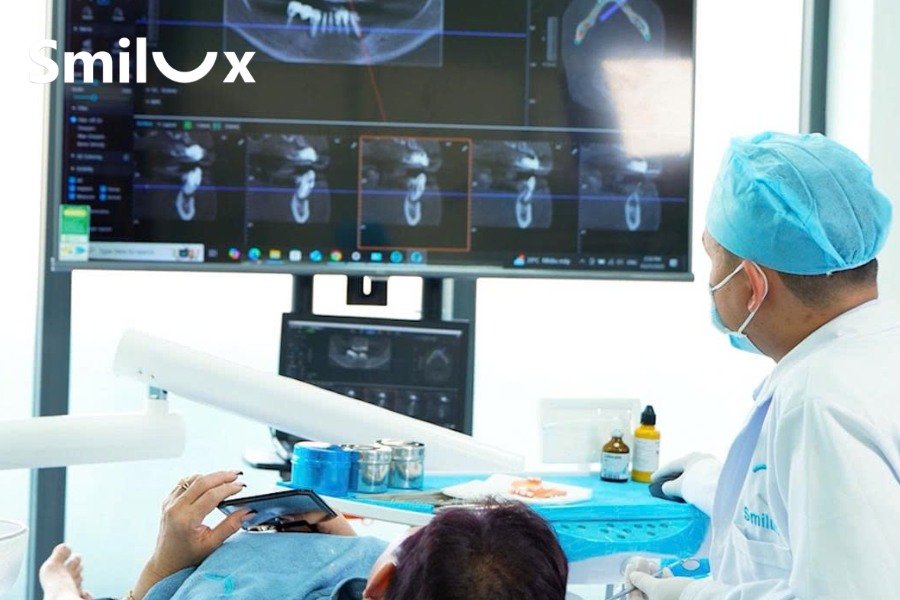
- Step 2: 3D Cone Beam CT scan
Three-dimensional imaging allows precise assessment of bone density, nerve positioning, and sinus anatomy, enabling the dentist to develop an optimal and accurate implant plan.
- Step 3: Personalized treatment planning
Based on clinical findings, the dentist determines the appropriate implant type, placement position and angle, as well as the timing of prosthetic restoration tailored to each individual case.
- Step 4: Strict infection control
The surgical room and all instruments are sterilized according to medical standards to minimize the risk of infection.
- Step 5: Implant placement and stability measurement
By applying pain-free, flapless OTI technology in combination with Magsense magnetic resonance sensors to measure the ISQ value, the dentist accurately determines the ideal timing for immediate or early restoration.
- Step 6: Osseointegration monitoring
Patients return for scheduled follow-up visits so the dentist can monitor healing progress and promptly address any abnormalities if they arise.
- Step 7: Final prosthetic restoration
Once the implant has fully stabilized, the dentist places the ceramic crown with precise occlusion, natural aesthetics, and long-lasting chewing function.
Smilux Dental – A Specialized Dental Clinic for Implant Treatment in Elderly Patients
In today’s dental market, many clinics offer tooth replacement services. However, for elderly patients, the most important factor is not the number of services provided or the treatment cost, but the level of safety throughout the entire procedure.
Dental implant treatment requires dentists to have extensive hands-on clinical experience, the ability to comprehensively assess a patient’s overall health, and strong risk management skills at every stage of treatment.
At Smilux Dental, all dental implant cases for elderly patients are directly examined and treatment-planned by a team of dentists with over 15 years of clinical experience. Patients with underlying conditions such as diabetes, cardiovascular disease, or hypertension are carefully evaluated and managed with personalized treatment protocols tailored to their physical condition.
In addition to clinical expertise, Smilux Dental has invested in advanced, internationally imported equipment that meets strict standards for implant dentistry.
The clinic also provides patient transportation support and comfortable resting areas for out-of-town or international patients, ensuring a convenient and stress-free treatment experience.
To have your dental condition assessed and receive a personalized dental implant treatment plan from our dentists, please fill out the form below with your information.
Schedule an appointment with Smilux dentists to receive a free consultation
CONCLUSION
When patients undergo a thorough examination and receive a treatment plan tailored to their overall health condition, dental implant treatment for elderly patients can deliver long-term results—significantly improving chewing function and overall quality of life.
At Smilux Dental, the entire implant process for elderly patients is designed with a strong focus on safety and risk control. Minimally invasive OTI technology is applied to help reduce postoperative discomfort, minimize swelling, and shorten recovery time.
For detailed consultation and personalized guidance on the most suitable dental implant solution, please contact our HOTLINE: +84 866 251 379 for free support.
Bác sĩ: Hoàng Danh Ngân
FAQs
Is Dental Implant Treatment Dangerous for Elderly Patients?
Can Elderly Patients with Underlying Medical Conditions Receive Dental Implants?
Dentists closely monitor all necessary medical indicators before and throughout the implant procedure, ensuring that treatment is carried out safely and predictably—allowing patients to undergo dental implant treatment with confidence and peace of mind.
Is dental implant treatment recommended at age 70?
---------- KIẾN THỨC IMPLANT ----------
Reputable Dental Implant Clinic in Ho Chi Minh City – Experienced Implant Dentists
Trang chủ Reputable Dental Implant Clinic in Ho Chi Minh City – Experienced Implant Dentists […]