How Long Does Tooth Sensitivity Last After Teeth Whitening?

Teeth whitening helps improve tooth color, giving you a brighter smile and greater confidence. However, after the procedure, some patients may experience temporary sensitivity, especially those with sensitive teeth or a relatively weak tooth structure.

So, How Long Does Tooth Sensitivity Last After Teeth Whitening? And how should you care for your teeth to reduce discomfort? Let’s learn more with Smilux Dental dentists in the article below.
How Long Does Tooth Sensitivity Last After Teeth Whitening?

Does Teeth Whitening Cause Tooth Sensitivity?

Teeth whitening may cause tooth sensitivity, but this is a normal reaction and is usually not a cause for concern. In essence, whitening agents only act on the enamel layer on the outer surface of the teeth to break down molecules that cause discoloration. They do not invade the internal tooth structure or affect the dental pulp.

This sensitivity comes from the mechanism of action of whitening agents, usually hydrogen peroxide or carbamide peroxide. As these active ingredients penetrate the enamel to brighten the tooth color, they may pass through tiny dentinal tubules and temporarily stimulate the nerves inside the teeth. This is why many people experience brief sensitivity, sometimes in short episodes, and this sensation usually disappears once the enamel returns to its normal state.

However, if the sensitivity lasts for a long time, becomes more severe, or is accompanied by unusual tooth pain, it may no longer be a normal physiological reaction and could be related to some of the following causes:

Due to Weak Tooth Structure or Existing Oral Health Conditions

To achieve a brighter smile, whitening agents need to penetrate the enamel to remove molecules that cause tooth discoloration. During this process, the enamel may be affected to a certain extent by chemical agents.

For people with strong tooth structure, thick enamel, and well-protected dentin, this reaction usually does not cause any significant effects. In contrast, if the teeth are already sensitive, such as in cases of thin enamel, exposed dentin, or worn tooth necks, the nerves inside the teeth are more easily stimulated, causing patients to experience sensitivity.

In addition, if you have existing oral health conditions such as periodontal inflammation, gingivitis, enamel erosion, or tooth decay that have not been fully treated, the teeth whitening process may also make the sensitivity more severe.

Những người có nền răng nhạy cảm thường dễ bị ê buốt hơn sau khi tẩy trắng

Improper Whitening Technique

The dentist’s technique and the quality of the whitening agent are two important factors that directly affect the level of sensitivity after treatment.

Before applying the whitening agent, the dentist needs to carefully isolate the gums and surrounding soft tissues to prevent the chemical from coming into direct contact with these areas. If the isolation is not performed properly, the whitening agent may touch the gums, causing sensitivity around the tooth roots and making many people mistake it for sensitivity coming from inside the teeth.

In addition, using a whitening agent with too high a concentration or exposing the teeth to the activation light for too long can also cause the enamel to lose moisture quickly, increasing tooth sensitivity and prolonging the recovery time.

Whitening Agent Concentration Exceeding Safe Limits

Using whitening products of unknown origin or with an inappropriate concentration may cause tooth sensitivity after whitening. In principle, a higher concentration can deliver faster whitening results, but in return, the teeth are exposed to greater irritation, becoming more sensitive and accompanied by more intense sensitivity.
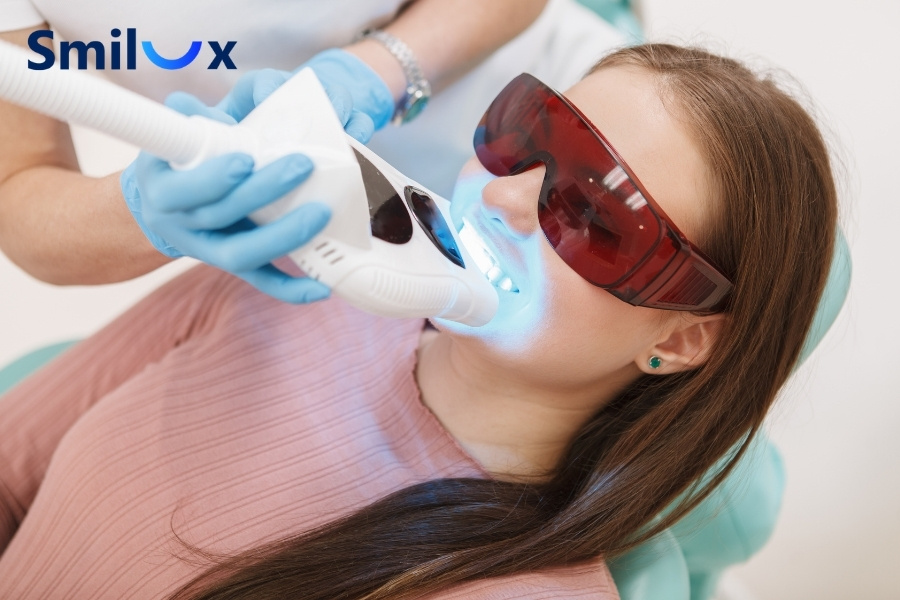
Thuốc tẩy trắng không rõ nguồn gốc hoặc nồng độ quá cao có thể khiến răng nhạy cảm và ê buốt

How Long Does Tooth Sensitivity Last After Teeth Whitening?

How long tooth sensitivity lasts after teeth whitening depends on each person’s oral condition and level of sensitivity. In most cases, sensitivity only appears during the first few hours after whitening and gradually decreases afterward.

For cases with weak enamel, sensitive teeth, or a relatively weak tooth structure, sensitivity may last for about 1–2 days before gradually improving and disappearing completely. If the sensitivity lasts for several days, becomes significantly painful, or shows no signs of improvement, patients should contact their dentist for timely examination and treatment.

How to Quickly Reduce Tooth Sensitivity After Teeth Whitening

To minimize sensitivity after teeth whitening, patients should pay attention to how they care for their teeth during the first few days. A few small changes in oral hygiene and eating habits can help the teeth stabilize more quickly while reducing the risk of prolonged sensitivity.

Below are 6 ways to reduce tooth sensitivity after whitening that you can refer to:

Use Medication or Desensitizing Gel as Prescribed by Your Dentist

If you experience significant sensitivity or discomfort when eating and drinking after teeth whitening, speak directly with your treating dentist. The dentist will examine your teeth and recommend the appropriate medication, topical gel, or desensitizing product based on the level of tooth sensitivity.

You should not buy or use desensitizing medication or gel on your own without a dentist’s prescription. Each dental condition requires a different approach to care, so using the wrong dosage or applying too much gel may irritate the gums, make the teeth more sensitive, and prolong the sensitivity.

Brush Your Teeth Properly

When your teeth are sensitive, you need to pay more attention to your brushing force and the type of toothbrush you use every day. A hard-bristled toothbrush or the habit of brushing too aggressively can wear down the enamel, making sensitivity much worse.

You should choose a soft-bristled toothbrush and brush gently using vertical or circular motions on each area of the teeth to clean them effectively while limiting strong impact on the enamel and gums.
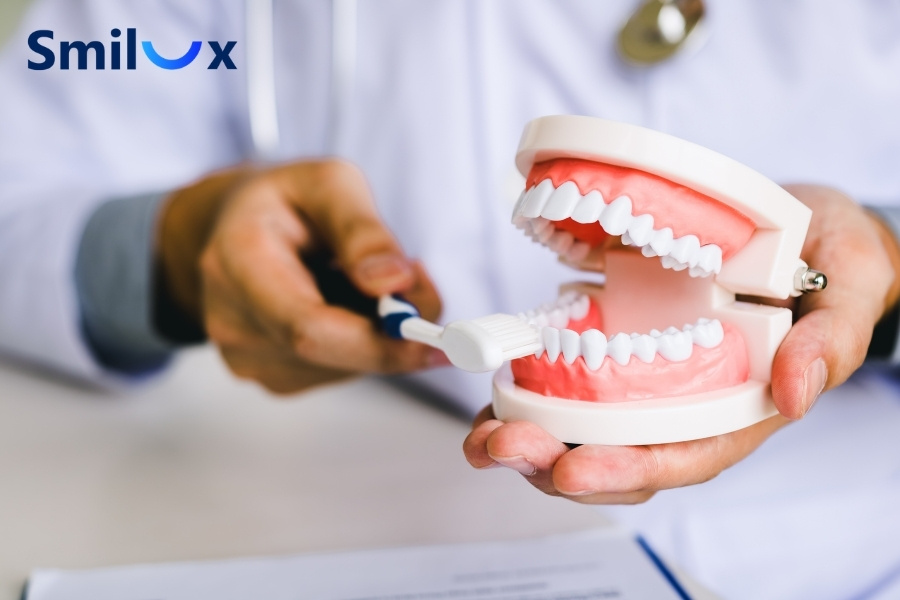
Chải răng nhẹ nhàng với bàn chải lông mềm giúp làm sạch răng hiệu quả và hạn chế cảm giác ê buốt tăng lên

Rinse Your Mouth with Physiological Saline

One of the quick ways to relieve tooth sensitivity after whitening that you can easily do at home is rinsing your mouth with physiological saline. This method helps clean the oral cavity, supports gum soothing, and reduces discomfort when the teeth are still sensitive.

You should choose 0.9% NaCl physiological saline from a pharmacy, as this solution has an appropriate concentration and is more hygienic than homemade salt water. When using it, gently hold and rinse your mouth for about 30 seconds to 1 minute, 2–3 times a day.

Note: Do not mix salt water that is too salty or rinse your mouth too many times, as this may dry out the oral mucosa and make the teeth and gums more easily irritated.

Adjust Your Diet

In the first few days after teeth whitening, you should prioritize soft, easy-to-chew foods such as porridge, soup, soft rice, or foods at a moderate temperature to limit pressure on the teeth. At the same time, you should avoid foods and drinks that are too hot, too cold, too sour, or acidic, such as oranges, lemons, grapes, carbonated drinks, and alcoholic beverages, as they may make the teeth more sensitive.

If you need to drink water or other colorless beverages, you can use a straw to reduce direct contact between the liquid and the tooth surface. However, you should still choose plain water and limit drinks that may irritate the teeth during this period.
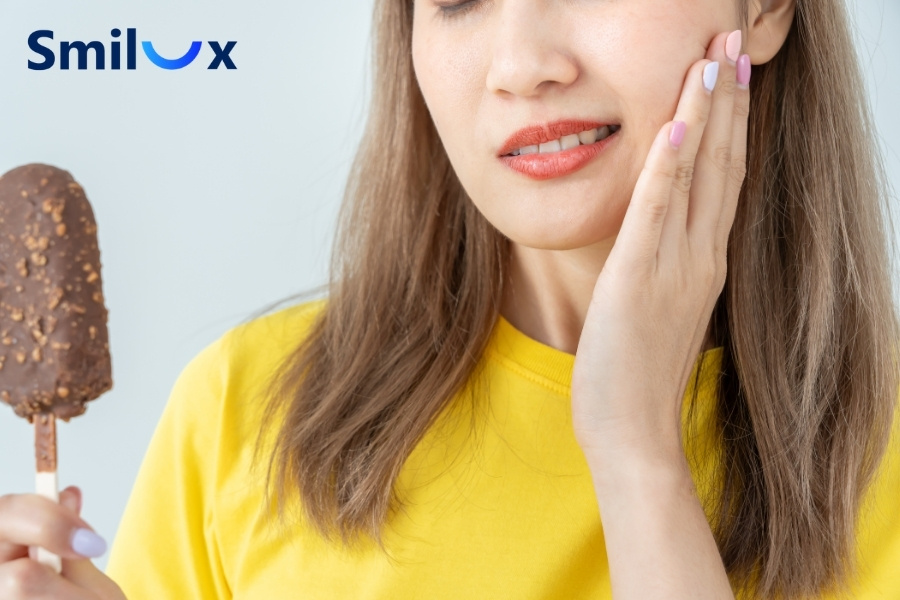
Nên hạn chế đồ lạnh vì có thể khiến răng nhạy cảm và dễ ê buốt hơn.

Use Toothpaste for Sensitive Teeth

If you experience tooth sensitivity after teeth whitening, you can prioritize using toothpaste for sensitive teeth during the first few days. These products often contain ingredients that help reduce sensitivity, making your teeth feel more comfortable when brushing and eating or drinking every day.

You should use it regularly according to the instructions on the packaging or as advised by your dentist. When brushing, combine it with a soft-bristled toothbrush to limit strong impact on the enamel.

Visit a Dentist If the Discomfort Persists

If you have cared for your teeth properly at home but still experience sensitivity, significant tooth pain, or difficulty eating and drinking, you should visit a dental clinic for an examination. This helps determine whether your teeth are only temporarily sensitive or if there is another issue that needs treatment.

Based on your actual condition, the dentist will provide more appropriate care instructions and may recommend additional desensitizing gel or specialized supportive products to help your teeth feel more comfortable and stabilize more quickly.

Răng ê buốt kéo dài là dấu hiệu bạn nên thăm khám nha khoa sớm.

Safe and Effective Teeth Whitening with Reduced Sensitivity at Smilux Dental

Prolonged sensitivity and tooth pain after teeth whitening are concerns that make many patients hesitant before undergoing the procedure. However, this discomfort can be significantly minimized when you choose teeth whitening at Smilux Dental International Clinic.

We have a team of dentists with more than 15 years of experience in the field of Dentistry, who directly examine patients and recommend a suitable treatment plan for each case. The dentist will consider the actual condition of the teeth, the desired level of tooth shade improvement, and each patient’s level of sensitivity to provide an appropriate teeth whitening solution.

Before the procedure, the dentist will evaluate the current tooth shade, enamel condition, gums, level of sensitivity, and any issues such as tooth decay, tooth neck abrasion, gingivitis, or gum recession, if present. This helps determine whether the teeth are suitable for whitening or whether oral health problems need to be treated first to ensure safety.

The teeth whitening procedure at Smilux Dental is performed in a sterile environment that meets medical standards. Throughout the treatment, the dentist controls important steps such as gum isolation, soft tissue protection, treatment time adjustment, and the use of whitening agents with an appropriate concentration. As a result, patients can improve their tooth color while reducing the risk of gum irritation or tooth sensitivity after whitening.

In addition, we also place great importance on transparency in treatment. The whitening agents used at the clinic are genuine products with clear origins, and patients can check them before the procedure.

After teeth whitening, the dentist will continue to accompany, monitor, and guide patients on proper oral care, diet, and hygiene habits to help the teeth stabilize better.
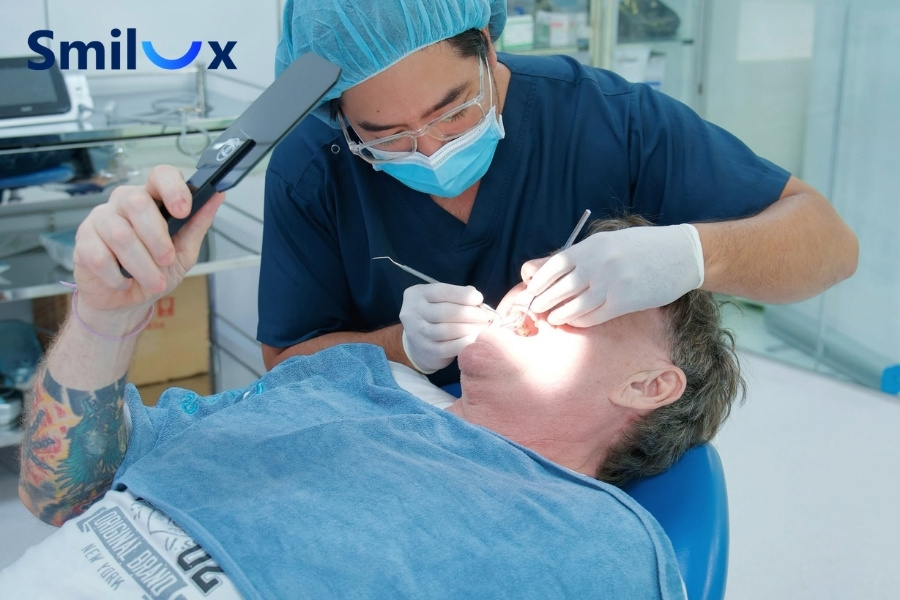
Tẩy trắng răng an toàn, hiệu quả, giảm ê buốt tại Smilux Dental

If you are worried about tooth sensitivity after teeth whitening or are unsure whether your teeth are suitable for whitening, please fill out the FORM below to receive detailed consultation from Smilux Dental International Clinic.

BOOK APPOINTMENT​

Error: Contact form not found.

CONCLUSION

We hope the information above has helped you clearly answer the question How Long Does Tooth Sensitivity Last After Teeth Whitening? and understand how to care for your teeth properly after the procedure. In most cases, sensitivity only lasts for a few hours to 1–2 days, depending on tooth condition, level of sensitivity, and the whitening process.

To minimize sensitivity, you should have a dental examination before whitening your teeth, choose a reputable dental clinic, and follow your dentist’s care instructions. If you need consultation on safe teeth whitening, please contact Smilux Dental via HOTLINE (+84) 866 251 379 for detailed support.

Note: The content in this article is for reference only and does not replace a dentist’s diagnosis or clinical recommendation. For accurate advice based on your oral condition, you should visit a dental specialist directly.

bs hoàng danh ngân mới nhất
PROFESSIONAL CONSULTATION: DR. HOANG DANH NGAN Dr. Hoang Danh Ngan, MSc., DDS., CHUWS, is one of the leading dental professionals at Smilux Dental, with over 15 years of clinical experience.

---------- Teeth And Gums Knowledge ----------

Do Teeth Turn Yellow Again After Whitening?
18Jun

Do Teeth Turn Yellow Again After Whitening? In the article below, Smilux dentists will explain the causes of tooth discoloration after whitening and proper oral care methods to help reduce staining.

1 2 3
This site is registered on wpml.org as a development site. Switch to a production site key to remove this banner.