What Is an Implant-Supported Removable Denture? Is It Good?

Among today’s restorative dental treatments, implant-supported removable dentures are preferred by many patients because they cost less than fixed implant dentures while still improving stability when chewing and providing long-term aesthetics.

So, what is an implant-supported removable denture, and who is it suitable for? Smilux Dental dentists will provide detailed answers in the article below. Read on to learn more.

What Is an Implant-Supported Removable Denture? Is It Good?

What Is an Implant-Supported Removable Denture?

An implant-supported removable denture, also known as an implant-supported false denture, is a type of denture used in combination with dental implants to restore missing teeth for patients who have lost multiple teeth or an entire arch of teeth.

During the procedure, the dentist will place at least 2 to 4 dental implants into the jawbone to serve as anchors. Once the implants have fully integrated with the bone, the denture above will be attached to the implants through a specialized attachment system.

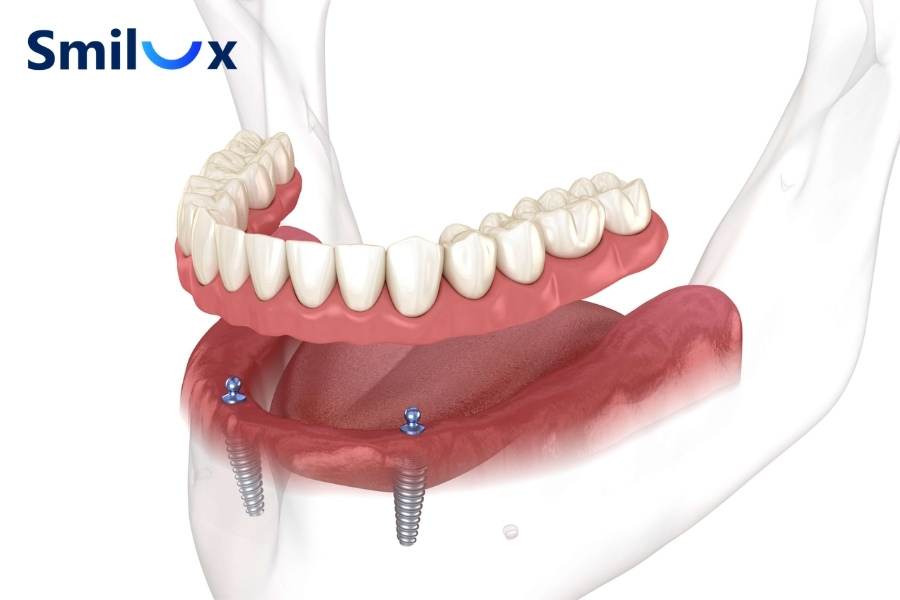
Hàm tháo lắp trên Implant là hàm giả được gắn trên trụ Implant, dùng để phục hình mất răng

Types of Implant-Supported Removable Dentures

Based on the connection mechanism between the denture and the dental implants, implant-supported overdentures are generally divided into two main types: bar-retained dentures and ball-retained dentures.

Ball-Retained Implant-Supported Removable Denture

A ball-retained implant-supported removable denture is a type of denture that is secured directly onto each dental implant with individual attachments, instead of using a connecting bar to link the implants together.

In this method, the dentist places dental implants into the jawbone to serve as anchors for supporting the denture. Each implant has an attachment component, usually in the form of a ball or Locator, which corresponds to the connector inside the removable denture. When the patient places the denture in position, these two parts fit together, helping the denture stay more firmly on the dental arch.

The advantage of this type of denture is that patients can remove and reinsert it by themselves for daily cleaning. At the same time, with implant support to help retain the denture, looseness, slipping, or painful pressure when chewing is also significantly improved compared to traditional removable dentures.

Bar-Retained Implant-Supported Removable Denture

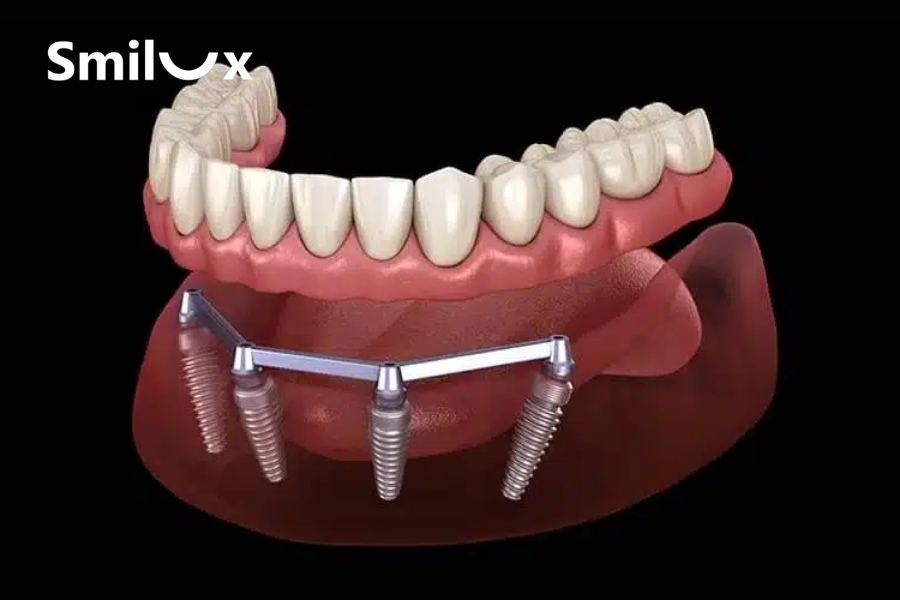
A bar-retained implant-supported removable denture is a type of denture supported by dental implants and a metal bar located beneath the denture. The bar connects the dental implants together and also provides support so the denture above can remain more stable when chewing.

Typically, the dentist will place 2 to 6 dental implants into the jawbone, depending on the patient’s tooth loss condition, bone density, and individual restoration plan. Once the implants are stable, the bar will be attached to the implants. The denture is then secured to the bar through a specialized attachment system, helping limit looseness, slipping, or movement during use.

For cases of full-arch tooth loss, the dentist may recommend restoration with All-on-4 or All-on-6 dental implants.

  • With the All-on-4 technique, each arch is usually supported by 4 dental implants and restores approximately 12 teeth.
  • With All-on-6, the dentist will place 6 dental implants in each arch to increase support, usually restoring approximately 14 teeth.

Hàm tháo lắp trên Implant có thanh bar

At Smilux Dental, the bar-retained implant-supported removable denture technique is applied to increase the stability of the denture, helping patients chew more firmly and feel more comfortable during use.

The bar is custom-designed based on each patient’s jawbone condition and implant position. This component is usually fabricated from materials that are highly durable, biocompatible, and suitable for long-term use in the oral environment. By connecting the dental implants together, the bar helps the denture stay more firmly in place and limits movement when eating, speaking, or performing daily activities.

Are Implant-Supported Removable Dentures Good?

Implant-supported dentures are considered an effective tooth restoration solution for patients who have lost multiple teeth or an entire arch of teeth. In fact, many patients who previously used traditional removable dentures have switched to implant-supported dentures because they feel more comfortable, experience less denture looseness, and feel more confident in daily activities.

However, like other dental restoration methods, implant-supported removable dentures also have certain advantages and limitations, including:

Outstanding Advantages

  • Reduced slipping and denture looseness: The denture is firmly retained by the dental implants, significantly reducing unwanted movement when chewing, speaking, or smiling.
  • Improved chewing function: With implant support, chewing forces are distributed more stably. Patients can eat more comfortably and experience fewer chewing difficulties compared to traditional dentures.
  • Improved pronunciation and communication: Because the denture is less likely to move, patients can speak more easily, pronounce words more clearly, and feel more confident in daily activities.
  • Reduced food accumulation under the denture: A more stable denture helps limit gaps and movement, thereby reducing food buildup underneath the denture.
  • No dependence on denture adhesive: With the support of dental implants, the denture has better retention and usually does not require denture adhesive like conventional removable dentures.
  • Reduced jawbone resorption: Dental implants act as artificial tooth roots, helping transfer chewing forces to the jawbone and providing physiological stimulation to the bone. As a result, patients may avoid bone loss after tooth loss.
  • Enhanced aesthetics: The overdenture is designed with a shape, color, and proportion that closely resemble natural teeth, helping restore a more natural-looking smile.
  • Greater comfort during use: The denture is designed to be more compact than traditional dentures, helping patients reduce the feeling of bulkiness when wearing it.
  • Longer lifespan: With proper care and regular follow-up visits, implant-supported dentures generally have a longer service life.

Hàm tháo lắp trên Implant giúp hàm giả chắc hơn, ăn nhai tốt hơn, ít lỏng trượt và hạn chế tiêu xương hàm

Disadvantages

Besides the advantages in terms of stability and chewing ability, implant-supported removable dentures still have some limitations that patients should consider before treatment:

  • Higher cost: Compared to traditional removable dentures, implant-supported overdentures are more expensive because dental implants must be placed and additional attachment components are required. However, this cost is usually lower than placing individual implants for each missing tooth.
  • More thorough daily cleaning is required: Implant-supported removable dentures still need to be removed for daily cleaning. However, patients must clean the denture, gum area, and the areas around the dental implants to help limit plaque buildup, gum inflammation, or bad breath.
  • Periodic replacement of components: After a period of use, components such as attachments, rubber rings, or retention-supporting parts may wear out and need to be replaced. The replacement time usually depends on the patient’s usage condition and the dentist’s instructions.
  • Chewing force is not equal to individual fixed implants: Although more stable than traditional removable dentures, implant-supported overdentures still do not provide optimal chewing force like individual dental implants or full-arch fixed restorations. Therefore, patients should still avoid chewing foods that are too hard to protect the denture and dental implants in the long term.

>>> READ MORE: What Is an Implant Abutment? Structure, Role, and Cost

When Should Implant-Supported Removable Dentures Be Used?

Implant-supported removable dentures are often indicated for cases of multiple missing teeth, nearly complete tooth loss, or full-arch tooth loss. This is a suitable option for patients who are not eligible for fixed implant placement for each individual tooth. Below are the specific candidates:

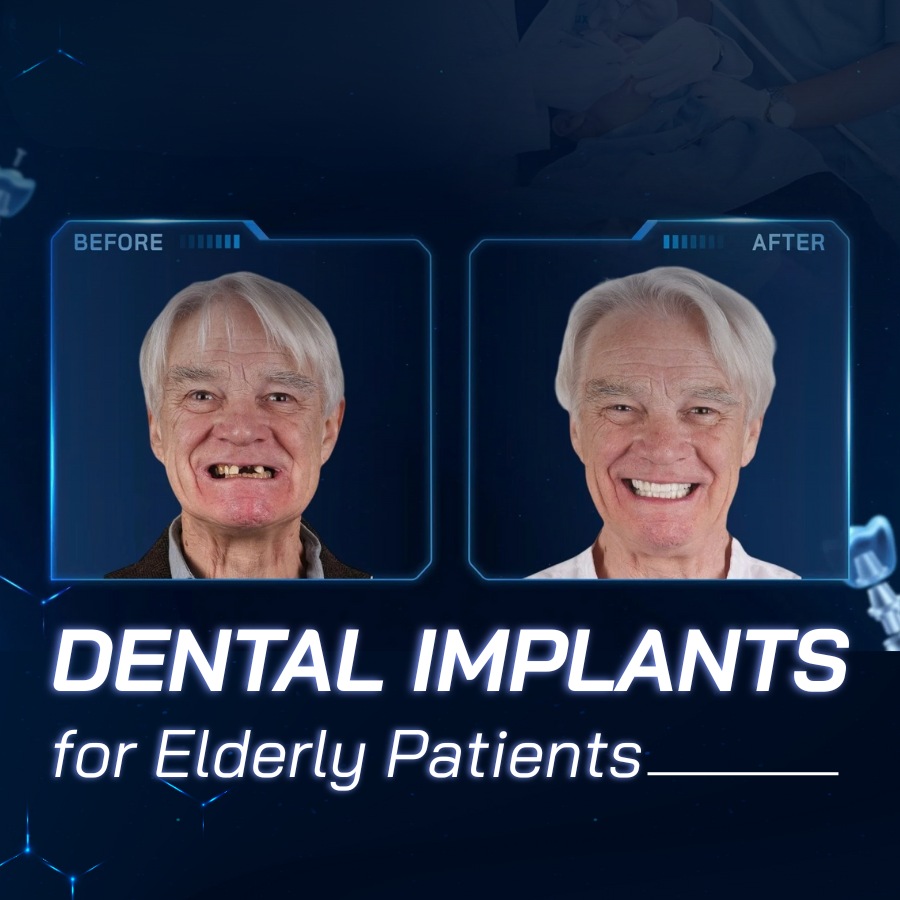
  • Older adults: Especially elderly patients whose health condition is not suitable for complex surgeries or prolonged treatment time.
  • Patients with long-term full-arch tooth loss: When teeth have been missing for a long time, traditional dentures often become loose, slip, or cause discomfort when chewing.
  • Patients with severe jawbone resorption: In cases where the jawbone is no longer suitable for placing multiple individual dental implants, the dentist may consider implant-supported removable dentures for restoration.
  • Patients who cannot undergo bone grafting or sinus lift procedures: For patients who are not suitable for bone grafting, maxillary sinus lift surgery, or do not want additional surgical intervention, implant-supported removable dentures can provide a gentler treatment experience.

Hàm tháo lắp trên Implant phù hợp với người mất nhiều răng, mất răng toàn hàm

To know whether implant-supported removable dentures are suitable, patients need to be examined by a dentist, undergo a Cone Beam CT scan, and have their jawbone condition evaluated in detail before treatment. Please fill in your information in the consultation form below. The Smilux Dental team will contact you for support, schedule an examination, and recommend a suitable restorative solution.

BOOK APPOINTMENT

Error: Contact form not found.

Complications of Implant-Supported Removable Dentures

Although the risks of getting an implant-supported removable denture are very low, some complications may still occur if the procedure is performed incorrectly or if the treatment is carried out at an unreliable dental clinic.

  • Infection around the implant site.
  • Soft tissue damage or trauma inside the oral cavity.
  • Nerve damage.
  • Impact on the maxillary sinus.

Most of these complications are usually caused by an inexperienced dentist, insufficient diagnostic equipment, or an inadequate treatment process. Therefore, to ensure safety, patients should carefully consider and choose a reputable dental clinic with dentists specialized in implantology, a 3D Cone Beam CT imaging system, and a clear treatment plan.

How Much Does an Implant-Supported Removable Denture Cost?

There is no fixed cost for implant-supported removable dentures that applies to all patients. The actual cost will be determined by the dentist after an examination, imaging, and a detailed evaluation of the patient’s oral condition.

This price difference exists because the treatment cost depends on many factors, such as the type of dental implant selected, the number of implants required, the denture material, the type of attachment used, and the dentist’s experience.

In addition, for patients who have had missing teeth for many years, severe jawbone resorption, and require bone grafting or a sinus lift before implant placement, the total treatment cost may be higher than in cases where the jawbone condition is still good.

Medical-Standard Procedure for Placing an Implant-Supported Overdenture

The procedure for making an implant-supported removable denture at Smilux International Dental Clinic is directly performed by a team of highly qualified dentists, ensuring proper indications and compliance with medical standards in dental implant placement.

  • Step 1: Examination and Treatment Planning

The dentist will perform a comprehensive examination of the patient’s oral condition, gum tissue, and general health, and take a 3D Cone Beam CT scan to assess bone density, bone volume, the position of the maxillary sinus, and nerves.

Based on this data, the dentist determines the number of implants required, the implant placement positions, the implant angulation, and whether bone grafting or sinus lift surgery is needed to minimize errors during treatment.

  • Step 2: Implant Placement and Temporary Denture Attachment

The dentist places approximately 2 to 4 dental implants into the jawbone. The implants are positioned at the correct location, depth, and load-bearing direction to ensure proper osseointegration with the bone.

In some cases, the dentist may use a surgical guide to increase accuracy during implant placement. After the implants are placed, the patient will receive a temporary denture to maintain aesthetics and support basic chewing function during the healing period.

  • Step 3: Impression Taking and Fabrication of the Overdenture

Once the implants have stably integrated with the jawbone, usually after about 3 to 6 months, the dentist will take impressions for the restoration to design a removable denture that fits the patient’s mouth.

If a bar is used, this component will be fabricated first to connect the dental implants, helping the denture gain more stable support. The dentist will then try in the wax denture to check aesthetics, fit, bite alignment, and speech function.

  • Step 4: Placement of the Final Removable Denture

Once the trial denture meets the required standards, the dentist will attach the final denture to the implant system through a bar or specialized attachments. Finally, the patient will be instructed on how to remove and insert the denture, clean it properly, and attend regular follow-up visits to check the dental implants, gum tissue, and fit of the restoration.

Quy trình lắp hàm phủ trên Implant chuẩn Y Khoa

>>> READ MORE: What Is a Temporary Crown on Implant? Functions, Types, and Procedure

Important Notes When Using an Implant-Supported Overdenture

To ensure that an implant-supported denture remains stable and maintains long-term aesthetics, patients need to take proper oral care after restoration. Below are some important notes:

  • Daily oral hygiene: Brush your teeth at least twice a day with a soft-bristled toothbrush, paying close attention to cleaning the areas around the dental implants and gums. Dental floss, interdental brushes, or mouthwash may be used as instructed by the dentist to help limit plaque buildup.
  • Proper chewing habits: During the initial period after denture placement, patients should prioritize soft, easy-to-chew foods. Avoid biting or chewing foods that are too hard or too chewy to prevent excessive force on the dental implants and restoration.
  • Avoid harmful habits: Do not bite your nails, chew on pens, use your teeth to open bottle caps, or grind your teeth while sleeping. These habits may cause the denture to wear down faster, become loose, or affect the dental implants.
  • Regular follow-up visits: Patients should have follow-up visits approximately every 6 months so the dentist can check the condition of the implants, denture, gum tissue, and provide professional dental cleaning when needed.

CONCLUSION

Overall, implant-supported removable dentures are a solution worth considering for patients who have lost multiple teeth or an entire arch of teeth, especially in cases where they want to improve chewing ability while still optimizing treatment costs.

However, whether this method is suitable depends on each patient’s jawbone condition, oral health, and restorative needs. For detailed consultation with Smilux Dental dentists, please contact HOTLINE (+84) 866 251 379.

Note: The content in this article is for reference only and does not replace a dentist’s diagnosis or clinical recommendation. For accurate advice based on your oral condition, you should visit a dental specialist directly.

References:

  1. https://my.clevelandclinic.org/health/treatments/24303-implant-supported-dentures
  2. https://pmc.ncbi.nlm.nih.gov/articles/PMC8874059/

---------- Implant Knowledge ----------

All-on-4 Dental Implants
04Feb

All-on-4 dental implants restore full arches with strong function, high esthetics, and chewing ability similar to natural teeth. Learn more about costs and the treatment process at Smilux.

Dental Implants for Elderly Patients
03Feb

Dental implant treatment at Smilux Dental helps elderly patients restore comfortable chewing similar to natural teeth, minimize looseness during daily use, and better protect overall oral and general health.

Home Do dental implants cause bad breath?​ “Do dental implants cause bad breath?” is a […]

Home Comparison between dental bridges and dental implants – Which option is better? Dental bridges […]

1 3 4 5 6
This site is registered on wpml.org as a development site. Switch to a production site key to remove this banner.