1. Home
  2. »
  3. Implants Knowledge
  4. »
  5. What Is an Implant Abutment?

What Is an Implant Abutment? Structure, Role, and Cost

To create a complete dental implant restoration, three main components must work together: the implant fixture, the abutment, and the dental crown. Among these, the abutment serves as an intermediate connector, helping complete the dental implant restoration process and playing an essential role in this restorative technique.

So, What Is an Implant Abutment? What are its structure and functions? Let the dentists at Smilux Dental International Clinic explain everything in detail in the article below.

What Is an Implant Abutment? Structure, Role, and Cost

What Is an Implant Abutment?

An implant abutment, also known as an abutment implant or implant connector, is an intermediate component that connects the implant fixture placed in the jawbone with the dental crown above. In simple terms, the abutment functions like the prepared natural tooth structure after tooth reduction. It is attached to the implant fixture with a small specialized screw, helping secure the dental crown firmly in place while supporting the durability, chewing function, and natural aesthetics of the final restoration.

In dental implant treatment, dentists commonly use two types of abutments: healing abutments and permanent abutments. A healing abutment, also known as a healing cap, is usually cylindrical in shape and is temporarily attached for about 1-2 weeks to shape the gum tissue around the implant site. Once the gums have stabilized, the dentist will replace it with a permanent abutment, which supports and connects the final dental crown placed above.

Implant Abutment là khớp nối trung gian giúp cố định mão sứ trên trụ Implant

Structure of an Implant Abutment

An implant abutment is usually cylindrical in shape and can be designed as either a straight or angled component to suit different implant positions, such as molars or front teeth. This connector sits above the gum line and has two connection ends.

  • The lower end of the abutment is securely attached to the implant fixture after the implant has successfully integrated with the jawbone. The upper end connects to the dental crown, helping support the restoration, minimize movement, and ensure comfortable chewing function.
  • The abutment acts as a replacement for the prepared tooth structure in a natural tooth, contributing to both the stability and aesthetics of the final dental implant restoration.

Abutment Implant có thiết kế thẳng hoặc nghiêng

The Role of an Implant Abutment in Dental Implant Treatment

Although small in size, the abutment is an essential component of a dental implant restoration and directly affects the final treatment outcome. Specifically, an implant abutment plays the following roles:

  • Securely connecting the implant fixture to the dental crown: The implant abutment helps the dental crown fit closely onto the implant fixture underneath, creating a stable structure during chewing. If this connection is inaccurate, the restoration may feel loose, bulky, or become less durable over time.
  • Supporting the final restoration: The abutment acts as a foundation for the dental crown. When the patient chews, biting forces are transferred more evenly to the implant fixture and jawbone, helping reduce excessive pressure on a single point that could cause crown fracture or affect the implant.
  • Adjusting the bite: Through the height, angulation, and contact position of the dental crown, the dentist can adjust the implant restoration so it occludes properly with the opposing teeth. This helps patients chew more comfortably and prevents discomfort, a bulky feeling, or pain when biting.
  • Affecting gum aesthetics: The shape, size, and material of the abutment directly influence the appearance of the gum line around the implant. These factors help determine whether the dental crown fits naturally against the gums and blends harmoniously with the adjacent natural teeth.

Abutment tuy nhỏ nhưng giữ vai trò quan trọng trong việc kết nối, nâng đỡ mão sứ

Types of Implant Abutments

Each tooth loss case requires a suitable abutment selection to ensure optimal results after restoration. Therefore, implant abutments are now manufactured in various types and are commonly classified into the following groups:

By Fabrication Material

Based on the material used, implant abutments can be classified into the following types:

  • Titanium Abutment: Titanium abutments have high strength, good load-bearing capacity, and excellent biocompatibility with the body. This type of abutment is commonly used for molars, where strong chewing forces are required. However, titanium has a metallic gray color, so in some cases where the gum tissue is thin, a dark shadow may appear around the cervical margin of the restoration.
  • Zirconia Abutment: Zirconia abutments have a white color that closely resembles natural dentin, providing a higher level of aesthetics. Zirconia is also less prone to plaque and bacterial accumulation compared to titanium, making it a preferred option for front teeth or areas that are visible when smiling. Its main disadvantage is that the cost is usually higher.
  • Hybrid Titanium-Zirconia Abutment: This type combines a titanium base that connects to the implant fixture with a zirconia collar that contacts the gum tissue. This design helps maintain the strength of titanium while improving aesthetics around the gum line. Hybrid abutments are often suitable for aesthetic areas that still require stable chewing function.

By Abutment Shape

In addition to material, implant abutments are also designed in different shapes to match each implant position along the dental arch.

  • Straight Abutment: This type of abutment has a straight design and good load-bearing capacity. It is commonly used in the posterior region, especially for molars.
  • Custom Abutment: A custom abutment is often indicated for front teeth or cases where the implant position is not ideally aligned. Its customized design helps the final implant restoration achieve a more natural contour and tooth angulation, allowing it to blend harmoniously with the surrounding natural teeth.

Abutment được thiết kế dạng thẳng hoặc tùy chỉnh, giúp phục hình Implant phù hợp từng vị trí răng

By Manufacturing Technology

In terms of fabrication technology, implant abutments are currently produced in two main ways: prefabricated according to standard molds or customized for each individual patient.

  • Stock Abutment: A stock abutment is prefabricated with a standard shape. Its advantage is that it is easy to use. However, because it is not individually designed according to each patient’s gum contour, its fit and adaptation may be limited.
  • Custom Abutment: A custom abutment is personalized using CAD/CAM technology. The dentist takes a 3D digital impression, then designs an abutment based on the patient’s tooth condition, gum tissue, and implant position. As a result, a custom abutment helps optimize the gum contour, reduce food impaction, and support a more precise, aesthetic fit for the final dental implant restoration.

By Crown Retention Method

When restoring a dental crown on an implant, the crown can be secured to the abutment either with a screw or with dental cement.

  • Screw-Retained Restoration: The dental crown is directly screwed onto the implant abutment. This method offers the advantage of easy removal when examination, repair, or cleaning is needed. In addition, because no cement is used, it can help reduce the risk of peri-implant gum inflammation caused by excess cement. However, the screw access hole on the chewing surface must be filled to ensure aesthetics.
  • Cement-Retained Restoration: The dental crown is attached to the abutment using specialized dental cement. The advantage of this method is better aesthetics because there is no screw access hole on the tooth surface. However, if excess cement is not thoroughly removed, the patient may experience gum inflammation around the implant.

READ MORE: What Is a Temporary Crown on Implant? Functions, Types, and Procedure

Implant Abutment Placement Procedure

After the implant fixture has successfully integrated with the jawbone, the dentist will attach the abutment following a standard clinical procedure:

  • Step 1: Exposing the Implant Fixture

The dentist performs a minor surgical procedure to open the gum tissue and access the head of the implant fixture hidden beneath the gums.

  • Step 2: Placing the Healing Abutment

A temporary healing abutment is attached to shape the gum contour around the implant. After approximately 1–2 weeks, the gum tissue will stabilize and be ready for the next step.

  • Step 3: Designing the Abutment and Dental Crown

The dentist takes a digital scan or a traditional dental impression, which serves as the basis for designing the abutment and dental crown according to each patient’s anatomical structure.

  • Step 4: Attaching the Permanent Abutment

Once the gums have fully healed, the dentist attaches the final abutment, then places the dental crown or implant-supported bridge to complete the restoration process.

Quy trình đặt Implant Abutment chuẩn Y Khoa tại Smilux Dental

How Much Does an Implant Abutment Cost?

The abutment is selected to match the corresponding implant fixture in order to ensure optimal compatibility between the two components. The lifespan of the abutment also depends directly on the type of implant system used. Therefore, the cost of an implant abutment may vary depending on the implant brand or system chosen by the patient.

To receive an accurate abutment cost estimate based on your tooth loss condition, please fill out the form below. The Smilux team will contact you and provide detailed consultation.

BOOK APPOINTMENT

    Which Abutment Brand Should You Choose?

    To ensure oral health safety, prevent irritation in the oral tissues, and maintain the stability of the dental implant fixture, patients should choose genuine abutments from reputable brands that have been quality-tested and certified by medical organizations.

    Some long-established implant brands known for high quality and long-term durability that patients may consider include MIS C1 implant abutments (Germany), Tekka implant abutments (France), Nobel Biocare implant abutments (Sweden), Straumann implant abutments (Switzerland), Korean implant systems, and others.

    Lựa chọn Abutment chính hãng từ thương hiệu uy tín giúp răng Implant bền chắc, an toàn

    Why Should You Choose Dental Implant Treatment at Smilux Dental?

    Smilux Dental is a trusted choice for many patients seeking dental implant treatment. At our clinic, all implant fixtures, abutments, and dental crowns are genuine products with complete certification records, legal import documents, and clear origins, giving patients peace of mind about quality and safety throughout the restoration process.

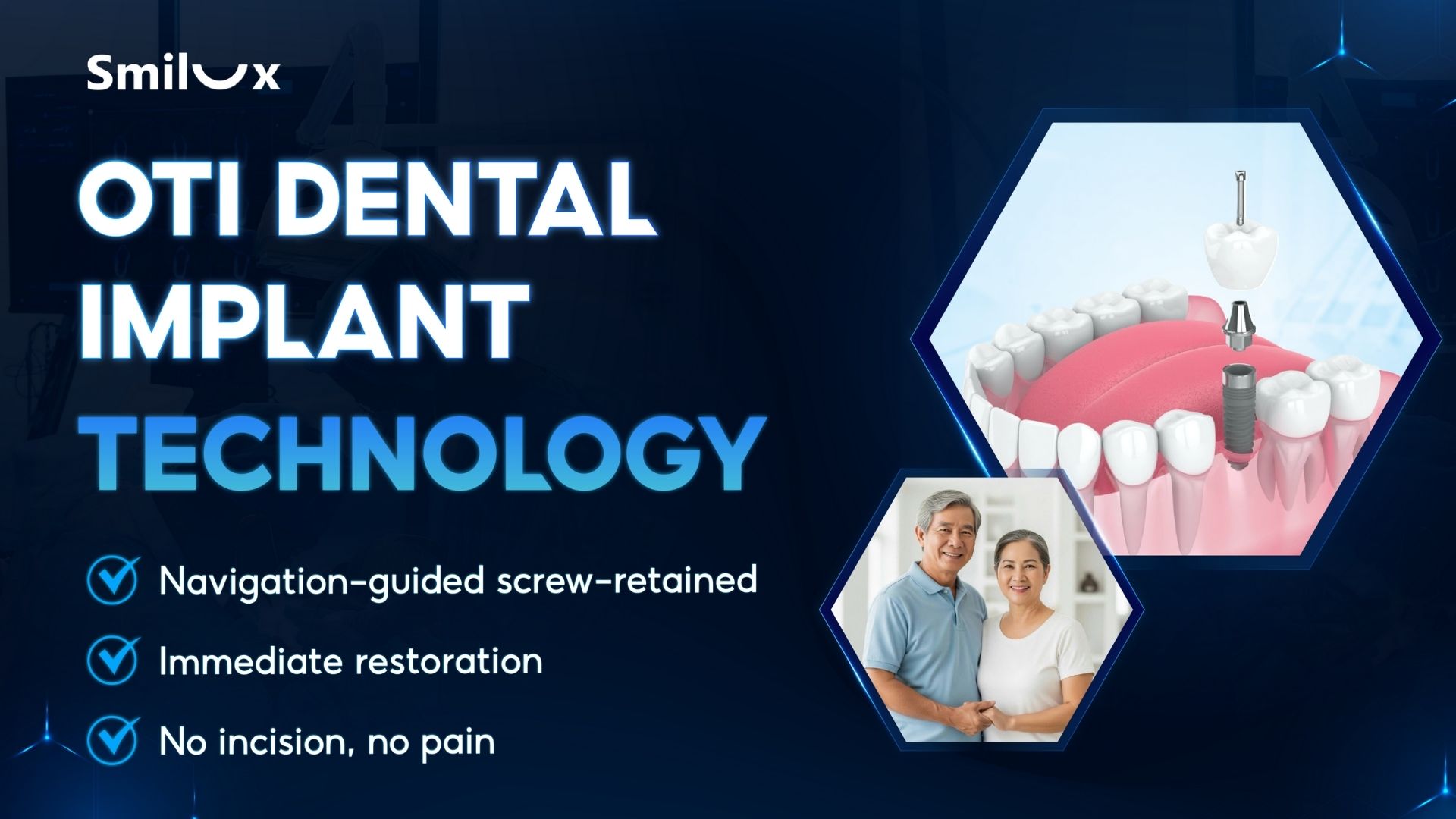
    In addition, Smilux Dental is among the pioneers in applying OTI positioning screw-retained technology, which helps overcome several limitations of traditional implant methods. This advanced approach provides a gentler, safer implant experience and supports faster recovery with many outstanding advantages:

    • Fast restoration, with some cases completed within the same day.
    • Easy removal and reattachment when examination or maintenance is needed.
    • No gum incision required, helping reduce pain and shorten healing time.
    • No risk of excess cement retention, reducing the risk of inflammation around the implant.
    • High durability, supporting stable chewing function similar to natural teeth.
    • Better long-term protection for gum tissue and jawbone health.

    At Smilux Dental, patients are examined and consulted directly by a team of dentists with more than 15 years of experience in dental implant treatment.

    All treatment costs are clearly and transparently listed from the beginning, with no hidden fees during the treatment process. This allows patients to plan their budget with confidence and peace of mind.

    OTI Technology
    OTI Technology

    CONCLUSION

    With the information about abutments shared in this article, Smilux Dental hopes to provide readers with useful knowledge and a clearer understanding of the role and structure of this important component in dental implant treatment.

    For detailed consultation on OTI dental implant technology, as well as guidance in choosing the most suitable abutment for your oral condition, please contact Smilux Dental via HOTLINE (+84) 866 251 379 for prompt support from our dental team.

    ---------- Implant Knowledge ----------

    How Long After Dental Implant Placement Can I Get a Crown?
    15Mar

    How Long After Dental Implant Placement Can I Get a Crown? Patients can receive the final dental crown once the implant has successfully undergone osseointegration and is firmly integrated with the jawbone. Follow the article below with Smilux to learn more detailed information about this process.

    What to Eat After Dental Implant Surgery
    12Mar

    Let’s explore what to eat after dental implant surgery with Smilux Dental to help build a suitable diet that supports faster healing and promotes a smoother recovery after implant placement.

    What foods should be avoided after dental implants?
    11Mar

    What foods should be avoided after dental implants? According to Smilux Dental, patients should avoid foods that are extremely hot or cold, as well as foods that are hard, chewy, or dry. In addition, very sour or overly spicy foods should also be avoided after dental implant placement.

    Can You Drink Coconut Water After Dental Implant Surgery?
    25Feb

    In the article below, Smilux Dental provides a detailed explanation to help you answer the question, “Can you drink coconut water after dental implant placement?” Follow along to better understand the appropriate timing, precautions, and professional recommendations for optimal post-implant recovery.

    1 2 3 4 5 6
    This site is registered on wpml.org as a development site. Switch to a production site key to remove this banner.