Can teeth with cavities be whitened? Learn more with Smilux Dental’s dentists to help reduce tooth sensitivity and effectively protect the dental pulp.


Teeth whitening is one of the cosmetic dental treatments many patients choose to improve tooth color and feel more confident when communicating. However, whitening does not always deliver the brighter tooth shade patients expect. In some cases, after treatment, the teeth may become only slightly brighter, appear unevenly white, or show almost no noticeable change. This is why many patients wonder, “Why are my teeth still not white after whitening?”
This condition can make patients feel concerned, especially when they expect their teeth to become several shades whiter after treatment. So what causes this issue, and how should it be managed safely for natural teeth? Let’s learn more with the dentists at Smilux Dental in the article below.
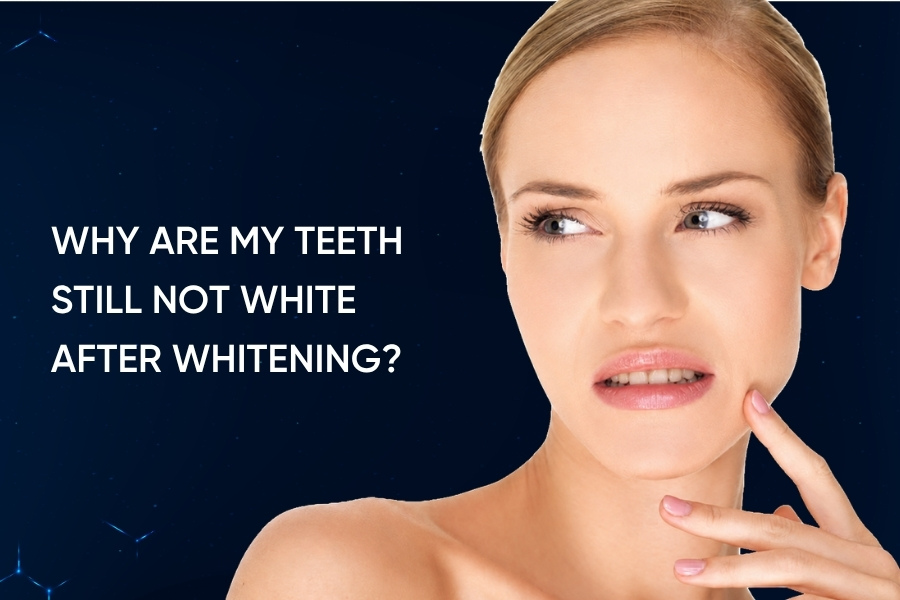
In some cases, tooth discoloration does not come from external deposits on the tooth surface, but from within the enamel or dentin. This is known as intrinsic discoloration, which is often more difficult to improve than yellow staining caused by coffee, tea, or tobacco.
This condition may be related to Tetracycline use while the teeth were still developing, previous dental trauma, fluoride exposure during childhood, or incomplete formation of the enamel or dentin. To learn more about this issue, you can refer to the article: Can teeth stained by tetracycline be whitened?
For teeth with internal discoloration, teeth whitening may only provide slight improvement, or the teeth may show almost no whitening effect if the discoloration is severe.
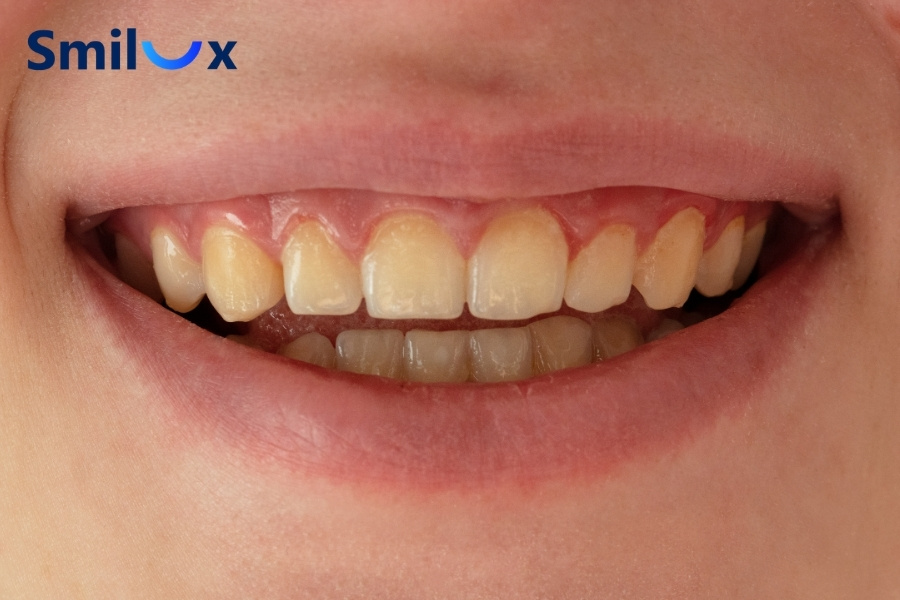
Whitening agents only work on natural tooth structure and do not lighten the color of dental crowns, dentures, or old composite fillings. Therefore, if a tooth has cosmetic fillings or ceramic restorations, these areas will retain their original color after teeth whitening.
This is one of the reasons why many patients feel that their teeth are not evenly white after whitening. In fact, the natural teeth may have become brighter, but the dental crowns or old fillings do not change color, making the teeth still appear dull, patchy, or uneven in shade.
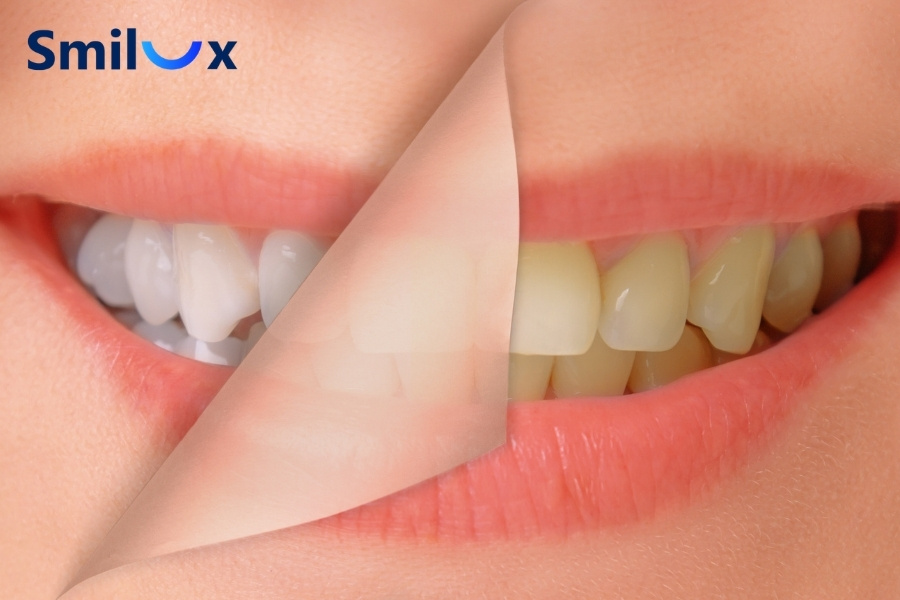
For cases where teeth are still not white after whitening due to deep discoloration, dark enamel, or uneven tooth color, the dentist may recommend porcelain veneers to improve dental aesthetics.
Porcelain veneers involve bonding a thin layer of porcelain to the front surface of the teeth, helping cover yellow, dull, or discolored teeth that do not respond well to whitening. This treatment is usually suitable for patients whose natural teeth are still healthy and who do not have tooth decay, severe gum inflammation, or an abnormal bite.
Compared with teeth whitening, porcelain veneers are more costly and may require minimal enamel reduction so the veneers can fit closely and look more natural.
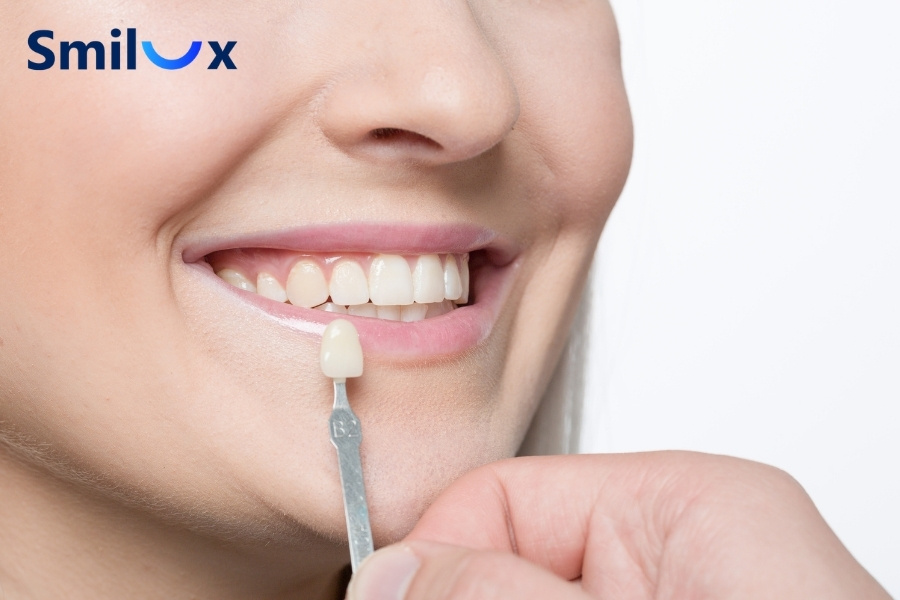
Teeth not becoming as white as expected after whitening can make patients feel concerned, especially when they have followed the instructions properly. However, instead of continuing to whiten their teeth at home or switching to another whitening product, patients should visit a dentist to identify the specific cause.
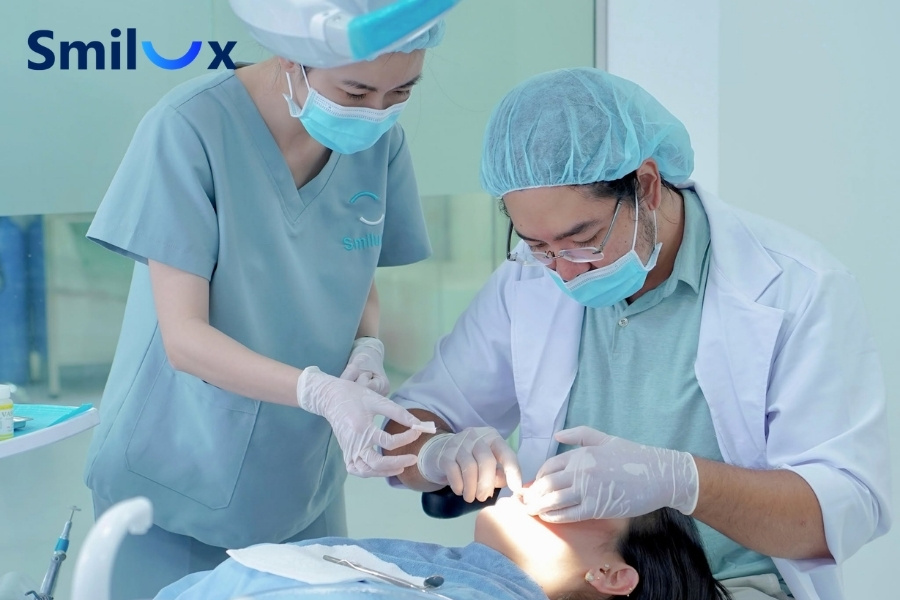
At Smilux Dental, the dentist will assess the current tooth shade, enamel condition, old fillings, dental crowns if any, and the reason why the teeth do not respond well to teeth whitening. From there, patients will receive consultation on a more suitable treatment approach.
We have a team of dentists with more than 15 years of experience in Dentistry, Oral and Maxillofacial care, especially in cosmetic dental treatments such as teeth whitening, porcelain veneers, dental crowns, and treatment for discolored teeth. Instead of focusing only on making the teeth whiter, the dentist will prioritize a safe, minimally invasive approach that helps preserve as much natural tooth structure as possible.
The clinic is also equipped with advanced diagnostic technology such as CT Cone Beam 3D, Panorex/Cephalo, and the iTero 5D scanner, helping the dentist assess the condition of the teeth, bite, and dental tissues more accurately before treatment.
In addition, all dental materials are genuine and have a clear origin. Patients can check the material information before deciding on treatment, giving them greater confidence in the safety, aesthetics, and durability of the final result.

Can teeth with cavities be whitened? Learn more with Smilux Dental’s dentists to help reduce tooth sensitivity and effectively protect the dental pulp.
Can teeth stained by tetracycline be whitened? Learn which cases are suitable for teeth whitening and when porcelain veneers or dental crowns may be recommended to safely improve tooth color. Smilux provides personalized treatment advice based on the severity of discoloration and the condition of the tooth enamel.