1. Home
  2. »
  3. Dental Crown Knowledge
  4. »
  5. How Long After Getting Dental Crowns Can You Eat?

How Long After Getting Dental Crowns Can You Eat?

Dental crowns are a cosmetic and restorative dental treatment that involves a certain level of intervention to the natural tooth structure. After the procedure, the teeth and gums may become more sensitive during the initial stage, so many patients wonder: How Long After Getting Dental Crowns Can You Eat?

In the article below, the dentists at Smilux Dental will provide a detailed explanation to help you better understand the recovery timeline, the proper way to eat after treatment, and the important care instructions to follow after getting dental crowns.
How Long After Getting Dental Crowns Can You Eat?

How Long After Getting Dental Crowns Can You Eat?

Many patients at Smilux Dental wonder: How Long After Getting Dental Crowns Can You Eat Normally? To answer this question, the dentists at Smilux Dental share the following information:

“After getting dental crowns, you should limit eating and drinking during the first 1 to 2 hours to allow the teeth and soft tissues in the mouth time to adapt to the new restoration.

This is also the stage when mild pressure, slight discomfort, or temporary sensitivity may occur. If you chew too soon, especially hard foods or foods that are extremely hot or cold, the risk of discomfort, temporary crown dislodgement, or increased sensitivity may be higher.

In most cases, after 24 to 48 hours, patients can return to eating almost normally. However, the actual adjustment period depends on the original condition of the teeth, the treatment technique, and the quality of the dental crowns used.

When dental crowns are performed at Smilux Dental, dentists carefully assess the indication, prepare the teeth precisely, and place the crowns using proper techniques. This helps chewing function stabilize faster, improves overall comfort, and reduces the risk of complications.”

Sau khi bọc răng sứ khoảng 24 đến 48 giờ, bạn có thể ăn uống gần như bình thường

Can You Eat Hard Foods After Getting Dental Crowns?

Can you eat hard foods after getting dental crowns? The answer is yes, but with caution. It is best to maintain healthy chewing habits and limit overly hard foods in your daily diet to keep your dental crowns durable, stable, and long-lasting.

In reality, dental crowns have high strength and good resistance to biting forces. Many premium ceramic crowns are even stronger than natural tooth enamel. However, they are still artificial dental restorations, so they should not be treated exactly the same as natural teeth in every chewing situation.

One important point to remember is that dental crowns do not have the same natural flexibility as real tooth structure. If you frequently eat extremely hard foods such as ice, hard bones, nuts, or use your teeth to bite hard objects, the crowns may face a higher risk of cracking, chipping, or reduced longevity.

In addition, excessive chewing force over time can place stress on the tooth roots, gums, and surrounding supporting tissues. This may lead to tooth sensitivity, gum inflammation, or gum recession if proper care is not maintained.
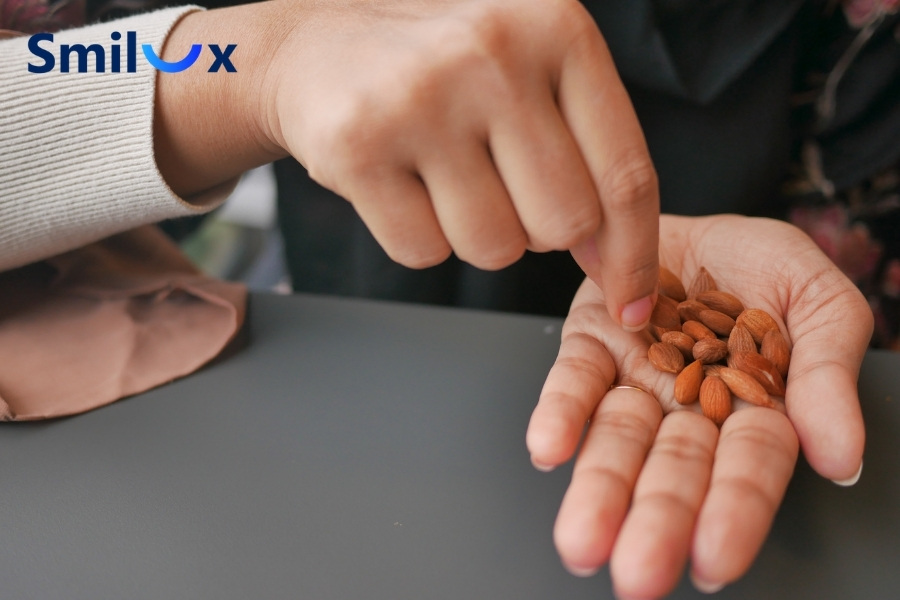
Bọc răng sứ có thể ăn đồ cứng nhưng không nên quá thường xuyên

Important Eating Tips After Getting Dental Crowns

Following the topic “How Long After Getting Dental Crowns Can You Eat?”, the dentists at Smilux Dental also share some important dietary tips after getting dental crowns to help you care for your teeth properly, chew comfortably, and keep your dental crowns durable and beautiful for a long time.

Foods to Limit After Getting Dental Crowns

Although dental crowns are designed to withstand chewing forces well, you should still choose suitable foods to reduce the risk of sensitivity, chipping, cracking, or discoloration over time. Below are the food groups you should limit after getting dental crowns:
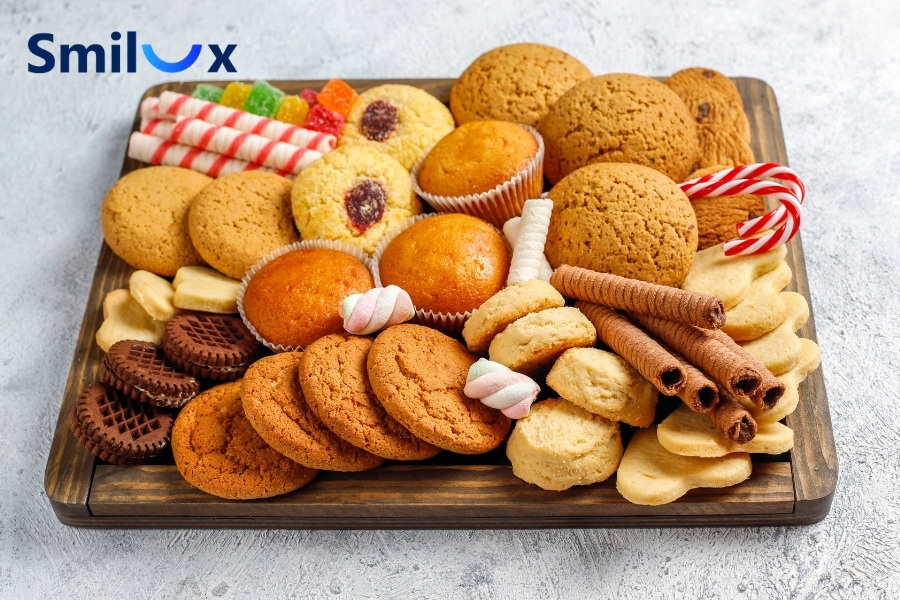
  • Foods that are too hot, too cold, or too hard: During the first period after treatment, your teeth may be more sensitive than usual. Very hot or cold foods can increase sensitivity. Extremely hard foods such as ice, bones, or hard nuts may place excessive force on the crowns, increasing the risk of damage or shortening their lifespan.
  • Sugary foods and sweets: Candy, chocolate, soft drinks, and foods high in sugar are not ideal for oral health, especially around the margin between the natural tooth and the crown. If oral hygiene is not maintained properly, sugar can promote bacterial growth and increase the risk of decay in the underlying tooth and gum inflammation.
  • Very sour fruits and acidic foods: Highly acidic foods and very sour fruits may irritate sensitive teeth and affect the oral environment. It is best to consume them in moderation and rinse your mouth with water afterward.
  • Alcohol and dark-colored beverages: Beer, wine, coffee, strong tea, colored soft drinks, and other dark beverages may stain the surrounding natural teeth and affect the overall brightness of your smile. You may also refer to the article “Can You Drink Coffee After Getting Dental Crowns?” for more detailed information.

Bạn nên hạn chế đồ ngọt để tránh ảnh hưởng đến phần răng thật bên trong và vùng tiếp giáp nướu

Foods to Eat After Getting Dental Crowns

In addition to avoiding certain foods, choosing the right diet after getting dental crowns is also important. Proper food choices can help your crowns adjust more quickly, reduce discomfort, and support long-term oral health.
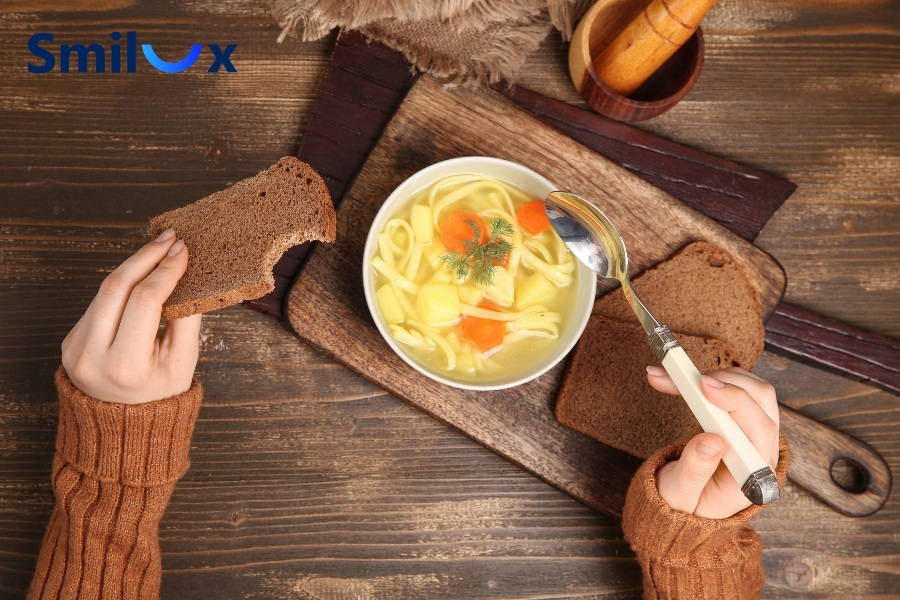
  • Soft and easy-to-chew foods: During the first few days after treatment, you should prioritize soft foods that are easy to swallow, such as porridge, soup, broth, soft rice, yogurt, or smoothies. These foods help reduce chewing pressure on the newly restored teeth, minimize sensitivity, and make eating more comfortable.
  • Foods rich in calcium and protein: Calcium and protein play an important role in maintaining strong teeth and supporting the tissues around them. Good options include fish, eggs, milk, cheese, lean meat, beans, and green vegetables.
  • Fresh fruits that support oral health: Some fruits such as apples, strawberries, pears, and bananas are suitable choices. Apples and strawberries may help clean the tooth surface to a certain extent due to their texture and high water content. However, they should be consumed in moderation, followed by proper oral hygiene.
  • Foods rich in vitamin C: Vitamin C helps support gum health and promotes soft tissue healing. You can get it from oranges, mandarins, grapefruit, kiwi, or guava. If your teeth are still sensitive, consume them at room temperature and avoid overly sour options.
  • Drink enough water every day: Water helps cleanse the mouth, reduce plaque buildup, and support natural saliva production. After getting dental crowns, maintaining adequate daily hydration is also a simple and effective way to protect your oral health.

Những món nên ăn sau khi bọc răng sứ

SMILUX DENTAL
TRUSTED DENTAL CROWN CLINIC

BOOK APPOINTMENT

    CONCLUSION

    We hope the information above has helped answer your question: How Long After Getting Dental Crowns Can You Eat? In most cases, you can return to eating almost normally after about 24 to 48 hours. However, this timeline may be faster or slower depending on your initial oral condition and how well you follow post-treatment care instructions.

    For detailed consultation about dental crowns, aftercare guidance, or other cosmetic and restorative dental solutions, please contact Smilux International Dental Clinic via HOTLINE (+84)866 251 379 for prompt assistance.

    ---------- Dental Crown Knowledge ----------

    Can Dental Crowns Fall Off? How to Reattach a Fallen Dental Crown
    18Apr

    Can Dental Crowns Fall Off? Learn the Causes of Loose or Fallen Crowns, Proper Reattachment Techniques, and Effective Prevention Tips from the Dentists at Smilux Dental Clinic.

    Can I get a dental crown if I have gum disease?
    17Apr

    Can I get a dental crown if I have gum disease? Learn about the treatment requirements, safe clinical process, and important considerations recommended by dental professionals. Smilux Dental helps you choose the most suitable solution to restore aesthetics, protect your natural teeth, and reduce the risk of long term complications.

    Can You Take a Crown Off and Put It Back On?
    16Apr

    In this article, the dental team at Smilux Dental will provide a detailed explanation of the question, “Can You Take a Crown Off and Put It Back On?” along with the important factors to consider before any procedure is performed. Keep reading to learn more.

    Can Pregnant Women Get Dental Crowns? Important Things You Should Know
    14Apr

    Home Can Pregnant Women Get Dental Crowns? Important Things You Should Know Pregnancy is always […]

    1 2 3
    This site is registered on wpml.org as a development site. Switch to a production site key to remove this banner.