How Long Do Teeth Whitening Results Last? Let’s find out with Smilux how long your teeth can stay bright after whitening, what factors affect the results, and how to maintain a whiter smile for longer.


Dental crowns are a restorative solution that helps restore the shape, color, chewing function, and overall aesthetics of the teeth. However, one common question many patients ask after getting dental crowns is: Can Dental Crowns Be Whitened? This concern becomes especially relevant when the surrounding natural teeth gradually become discolored over time, causing the tooth shade to appear uneven compared to the original result.
In the article below, the dentists at Smilux Dental will explain this topic in detail. Keep reading to learn more useful information.
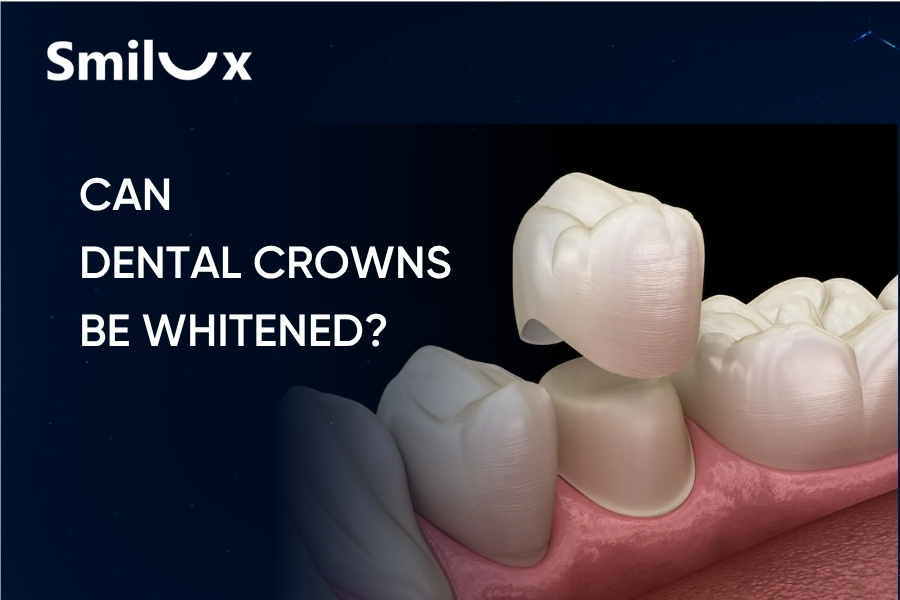
A dental crown is a restorative treatment in which a portion of the natural tooth is reshaped to the appropriate proportion, then covered with a custom-made crown to restore the tooth’s shape, color, and chewing function.
Common types of dental crown materials include:

Can Dental Crowns Be Whitened? The answer is no. Dental crowns cannot be whitened in the same way as natural teeth.
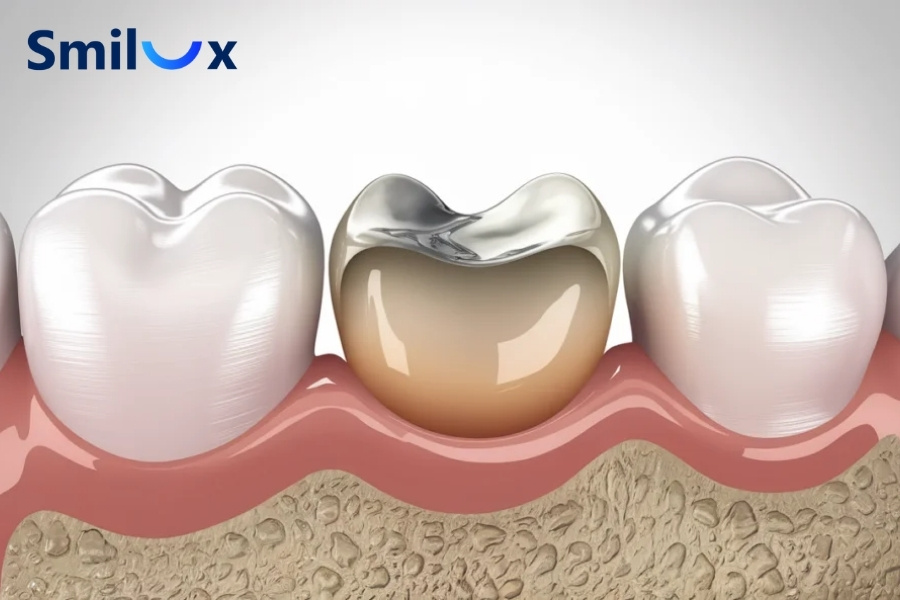
Whitening agents such as hydrogen peroxide or carbamide peroxide only work on natural tooth enamel. Meanwhile, dental crowns are made from restorative materials such as ceramic, porcelain-fused-to-metal, or zirconia, so whitening agents cannot penetrate the material or change its color.
Simply put, natural teeth have enamel that can respond to whitening agents, while dental crowns do not. The shade of a dental crown is selected and fabricated from the beginning to match each patient’s natural tooth color. Once the crown is permanently bonded to the tooth, its color generally cannot be changed with conventional teeth whitening methods.
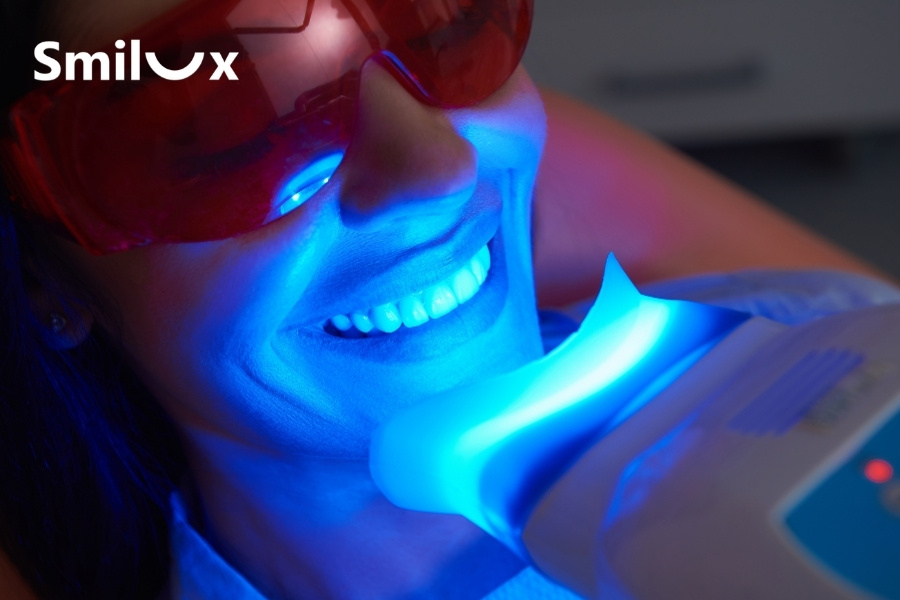
Dental crowns do not change color in the same way as natural teeth. However, their surface may still become dull, stained, or lose its shine after a period of use. This condition is often caused by the following factors:
To better understand why dental crowns may lose their original shade, you can read more in this article: “Do Teeth Turn Yellow Again After Whitening?”
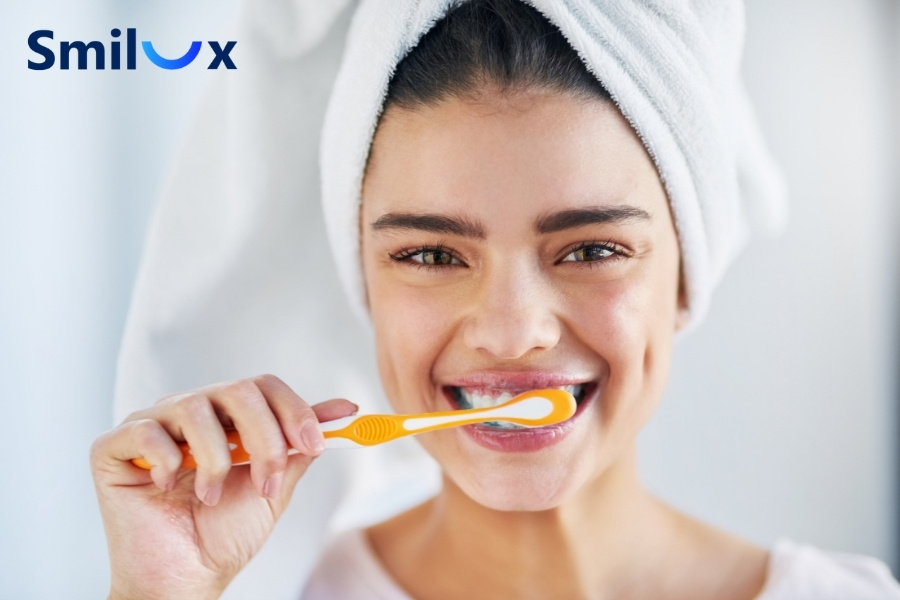
Based on the causes mentioned above, dental crowns cannot be whitened with bleaching agents like natural teeth. However, with proper at-home care, you can help reduce staining and keep the crown surface cleaner, brighter, and shinier.
Note: Do not use at-home whitening products without professional guidance. Whitening agents only work on natural teeth and cannot change the color of dental crowns. Using unsuitable whitening products on your own may cause tooth sensitivity, gum irritation, or affect the restored tooth area.

How Long Do Teeth Whitening Results Last? Let’s find out with Smilux how long your teeth can stay bright after whitening, what factors affect the results, and how to maintain a whiter smile for longer.
Is Teeth Whitening Harmful? Let Smilux dentists help you understand its safety, the potential risks of improper teeth whitening, and the right time to undergo the procedure to protect your oral health.
Can Teeth With Fillings Be Whitened? This is a common concern when dental fillings become discolored or no longer match the natural tooth color. In this article, Smilux will help you understand the answer in detail.
Can Dental Crowns Be Whitened? Learn with Smilux why dental crowns do not respond to whitening agents like natural teeth, what causes crowns to become discolored, and how to care for them at home.