Can Dental Crowns Be Whitened? Smilux Dentist Explains in Detail

Dental crowns are a restorative solution that helps restore the shape, color, chewing function, and overall aesthetics of the teeth. However, one common question many patients ask after getting dental crowns is: Can Dental Crowns Be Whitened? This concern becomes especially relevant when the surrounding natural teeth gradually become discolored over time, causing the tooth shade to appear uneven compared to the original result.

In the article below, the dentists at Smilux Dental will explain this topic in detail. Keep reading to learn more useful information.

Can Dental Crowns Be Whitened? Smilux Dentist Explains in Detail

What Are Dental Crowns and Teeth Whitening?

To understand Can Dental Crowns Be Whitened?, it is important to first clarify two key points: what dental crowns are made of and how whitening agents work on teeth.

What Are Dental Crowns?

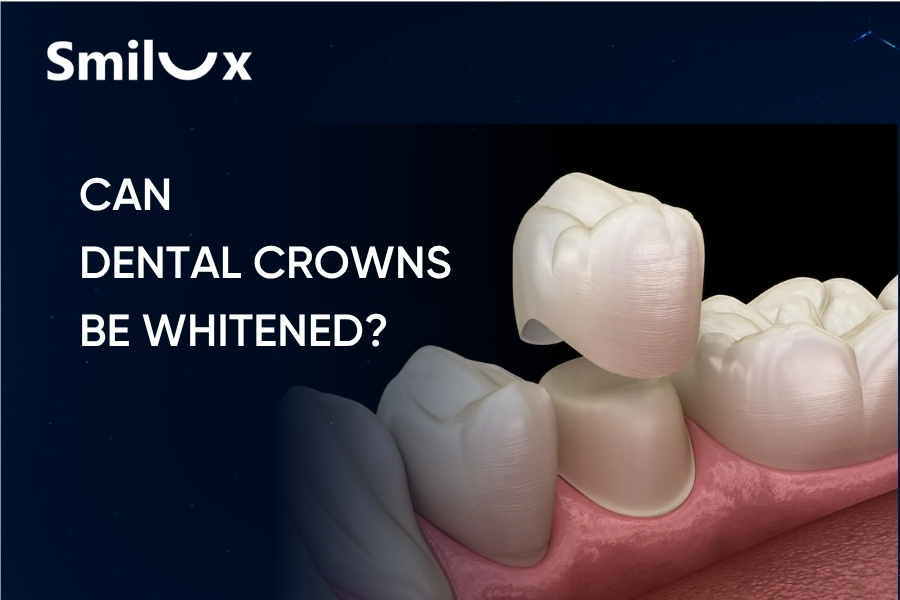
A dental crown is a restorative treatment in which a portion of the natural tooth is reshaped to the appropriate proportion, then covered with a custom-made crown to restore the tooth’s shape, color, and chewing function.

Common types of dental crown materials include:

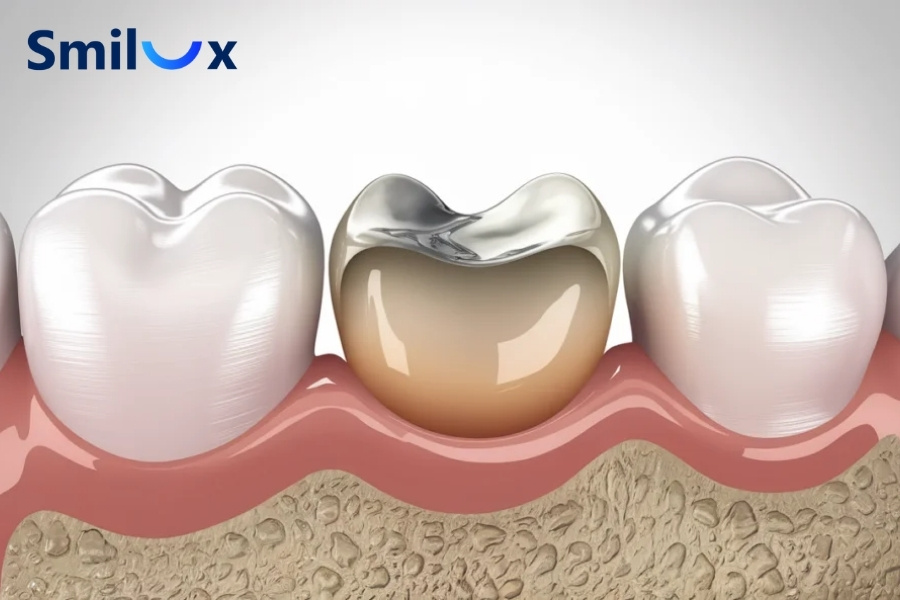
  • Porcelain-fused-to-metal crowns: These crowns have an inner metal framework covered by an outer porcelain layer. They offer relatively good durability and are often used for molars, but their aesthetics are not as natural as all-ceramic crowns.
  • All-ceramic crowns: These crowns are made entirely from dental ceramic and contain no metal. They provide a translucent, natural-looking color and are less likely to cause dark lines near the gum margin, making them a popular choice for highly visible teeth.
  • Zirconia crowns: Zirconia is a type of all-ceramic crown known for its high strength, good chewing resistance, and fairly natural appearance. It is widely used today because it meets both aesthetic and functional requirements.

Bọc răng sứ là kỹ thuật phục hình răng bằng mão sứ

What Is Teeth Whitening?

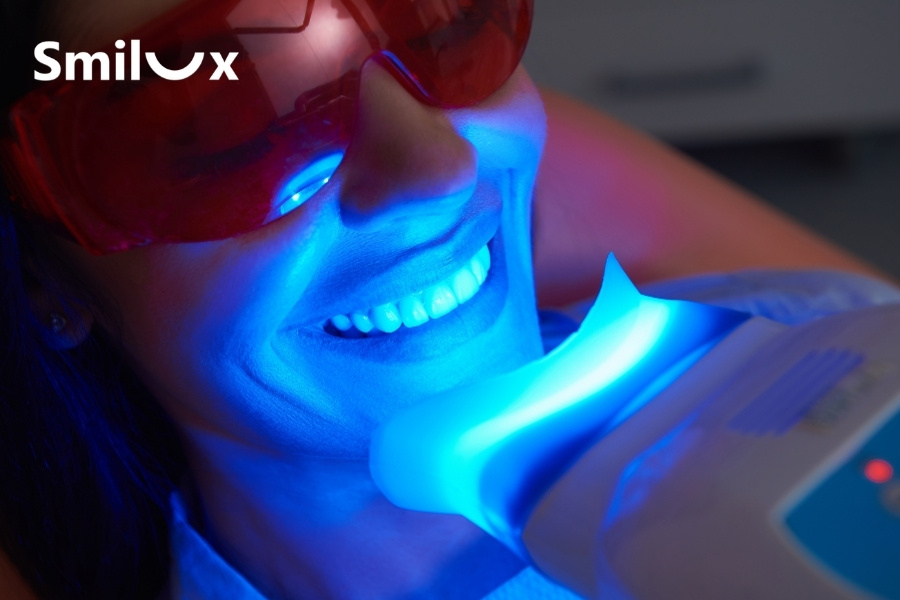
Teeth whitening is a procedure that uses professional whitening agents, sometimes combined with a dental light system in the clinic, to improve yellow, dull, or stained teeth. This method helps brighten the teeth without reshaping them or altering the natural tooth structure.

Teeth whitening can be performed at a dental clinic or at home under a dentist’s guidance. It is generally considered a relatively safe and minimally invasive option compared with dental crowns or tooth replacement treatments.

Can Dental Crowns Be Whitened?

Can Dental Crowns Be Whitened? The answer is no. Dental crowns cannot be whitened in the same way as natural teeth.

Whitening agents such as hydrogen peroxide or carbamide peroxide only work on natural tooth enamel. Meanwhile, dental crowns are made from restorative materials such as ceramic, porcelain-fused-to-metal, or zirconia, so whitening agents cannot penetrate the material or change its color.

Simply put, natural teeth have enamel that can respond to whitening agents, while dental crowns do not. The shade of a dental crown is selected and fabricated from the beginning to match each patient’s natural tooth color. Once the crown is permanently bonded to the tooth, its color generally cannot be changed with conventional teeth whitening methods.

Răng sứ không thể tẩy trắng răng

>>> READ MORE: Can Teeth Affected by Dental Fluorosis Be Whitened? Smilux Dentists Explain

Why Do Dental Crowns Become Discolored?

Dental crowns do not change color in the same way as natural teeth. However, their surface may still become dull, stained, or lose its shine after a period of use. This condition is often caused by the following factors:

  • Type of dental crown used: Dental crowns are commonly divided into porcelain-fused-to-metal crowns and all-ceramic crowns. Porcelain-fused-to-metal crowns have an inner metal framework, which may oxidize over time. This can cause a dark shadow around the gum margin or tooth root area, making the smile look less aesthetic.
  • Improper crown placement technique: When placing dental crowns, the dentist needs to reshape the natural tooth at the proper ratio and ensure the crown fits closely over the prepared tooth. If the crown does not fit properly, has an open margin, or affects the bite, food debris and plaque may accumulate around the gumline. Over time, this area can become discolored and may even affect the natural tooth underneath.
  • Frequent consumption of staining foods and drinks: Coffee, tea, red wine, colored soft drinks, or foods with strong pigments can adhere to the surface of dental crowns, making them appear duller over time.
  • Poor oral hygiene: If you do not brush thoroughly or use dental floss or a water flosser, plaque can easily build up around the crowns and gumline. This not only makes the teeth look less bright but may also lead to bad breath, gum inflammation, or decay in the natural tooth beneath the crown.
  • Smoking: Nicotine and tar in cigarettes can create yellow-brown stains on dental crowns, especially around the cervical area of the tooth and between the teeth.
  • Long-term use of dental crowns: After many years of chewing, the crown surface may lose its gloss, develop tiny scratches, or become more prone to staining. This is why many patients feel their dental crowns no longer look as bright and beautiful as when they were first placed.

To better understand why dental crowns may lose their original shade, you can read more in this article: “Do Teeth Turn Yellow Again After Whitening?

Răng sứ sau một thời gian sử dụng có thể bị ố vàng, xỉn màu

Tips to Keep Dental Crowns Bright at Home

Based on the causes mentioned above, dental crowns cannot be whitened with bleaching agents like natural teeth. However, with proper at-home care, you can help reduce staining and keep the crown surface cleaner, brighter, and shinier.

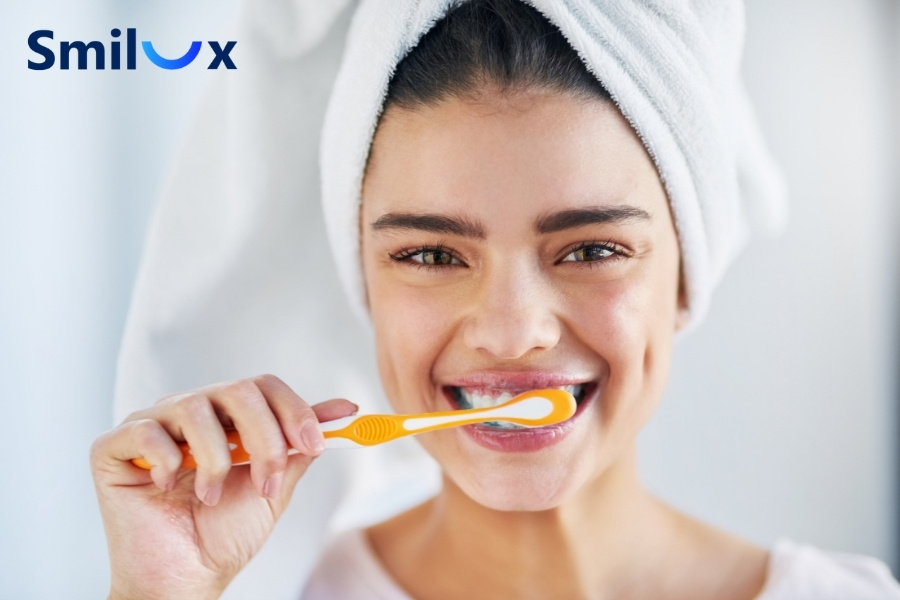
  • Maintain proper oral hygiene: You should brush your teeth at least twice a day with a soft-bristled toothbrush, using gentle movements to avoid irritating the gums and the natural tooth structure beneath the crown. In addition, dental floss, a water flosser, or mouthwash can help remove food debris and plaque between the teeth.
  • Adjust your diet: Limit frequent consumption of coffee, tea, colored soft drinks, heavily pigmented foods, sugary foods, and starchy foods. After eating or drinking staining foods and beverages, you should rinse your mouth or drink water to reduce the risk of stains adhering to the crown surface.

Note: Do not use at-home whitening products without professional guidance. Whitening agents only work on natural teeth and cannot change the color of dental crowns. Using unsuitable whitening products on your own may cause tooth sensitivity, gum irritation, or affect the restored tooth area.

Bí quyết làm răng sứ sáng màu tại nhà

>>> READ MORE: Can teeth with cavities be whitened? Is it effective and safe?

If your dental crowns become noticeably dull or stained, have open margins, or show dark lines around the gums, you should visit Smilux Dental for a direct examination. Depending on the cause and severity, our dentist will recommend a suitable treatment plan to improve aesthetics and protect the natural tooth underneath. Please fill out the form below so our dentist can contact you and provide detailed consultation.

BOOK APPOINTMENT​

    CONCLUSION

    Hopefully, this article has helped you clearly understand Can Dental Crowns Be Whitened? In fact, dental crowns cannot be whitened with bleaching agents like natural teeth because their shade is determined during the fabrication process.

    If your dental crowns become dull, stained, have open margins, or show dark lines around the gums, you should not try to treat them at home. Instead, you should visit a dentist for a direct examination to identify the cause and receive the most appropriate treatment recommendation.

    If you have any questions about your dental crowns or want to improve your tooth color safely, please contact Smilux International Dental Clinic via HOTLINE (+84) 866 251 379 for detailed consultation from our dentists.

    Note: The content in this article is for reference only and does not replace a dentist’s diagnosis or clinical recommendation. For accurate advice based on your oral condition, you should visit a dental specialist directly.

    bs hoàng danh ngân mới nhất
    PROFESSIONAL CONSULTATION: DR. HOANG DANH NGAN Dr. Hoang Danh Ngan, MSc., DDS., CHUWS, is one of the leading dental professionals at Smilux Dental, with over 15 years of clinical experience.

    ---------- Teeth And Gums Knowledge ----------

    Why Are My Teeth Still Not White After Whitening?
    25Jun

    According to dentists at Smilux, teeth may not become white after whitening due to thin enamel, deep staining, dental crowns, old fillings, or an unsuitable whitening technique.

    At What Age Can You Whiten Your Teeth?
    24Jun

    At What Age Can You Whiten Your Teeth? This article helps you understand the appropriate age for teeth whitening and why children need to be examined by a dentist before whitening their teeth.
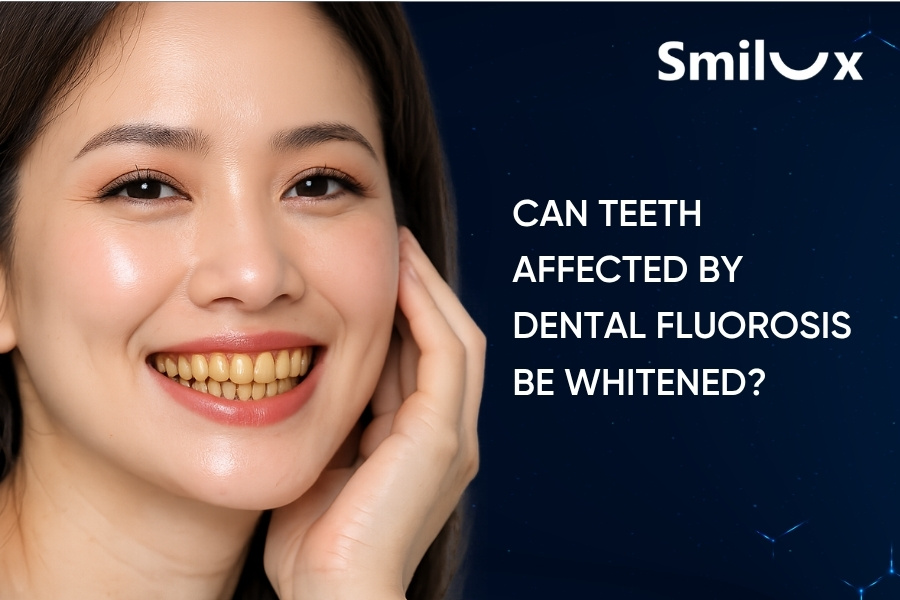
    Can Teeth Affected by Dental Fluorosis Be Whitened?
    23Jun

    Can Teeth Affected by Dental Fluorosis Be Whitened? Depending on the severity of discoloration and the condition of the tooth enamel, Smilux Dental dentists will recommend the most appropriate treatment.
    Can you whiten your teeth while breastfeeding?
    22Jun

    Can you whiten your teeth while breastfeeding? This article from Smilux doctors helps nursing mothers understand the appropriate time to whiten their teeth, important safety precautions, and suitable postpartum oral care.

    1 2 3
    This site is registered on wpml.org as a development site. Switch to a production site key to remove this banner.