
1. Home
  2. »
  3. Braces Knowledge
  4. »
  5. The Stages of Getting Braces

Learn About The Stages of Getting Braces in Detail - Smilux Dental

Braces are an orthodontic method that helps move teeth into their proper positions, improve the bite, enhance smile aesthetics, and support chewing function. This process is usually divided into several steps, with each step having its own orthodontic goal.

In this article, the dentists at Smilux Dental International Clinic will share detailed information about The Stages of Getting Braces to help you understand the process clearly and prepare better before starting. Keep reading to learn more.

Learn About The Stages of Getting Braces in Detail - Smilux Dental
Learn About The Stages of Getting Braces in Detail – Smilux Dental

Detailed Timeline of The Stages of Getting Braces

The stages of the braces process usually include five main steps: dental examination and orthodontic planning, bracket placement and teeth alignment, bite adjustment combined with space closure, final refinement, followed by bracket removal and wearing retainers. The entire process typically lasts about 1.5 to 3 years, depending on the initial condition of the teeth, the severity of bite misalignment, and each person’s individual response.

Stage 1: General Examination and Orthodontic Planning

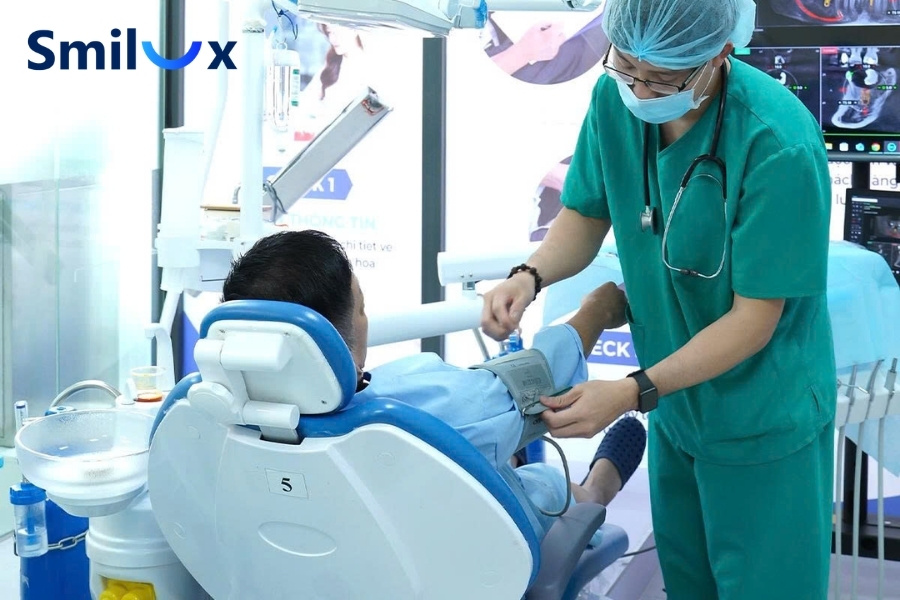
In the first stage, the dentist will perform a general examination of the teeth, gums, bite, and jawbone. This is a necessary step in The Stages of Getting Braces, helping identify the degree of tooth misalignment, bite problems, and oral health issues that need to be addressed before orthodontic care begins.

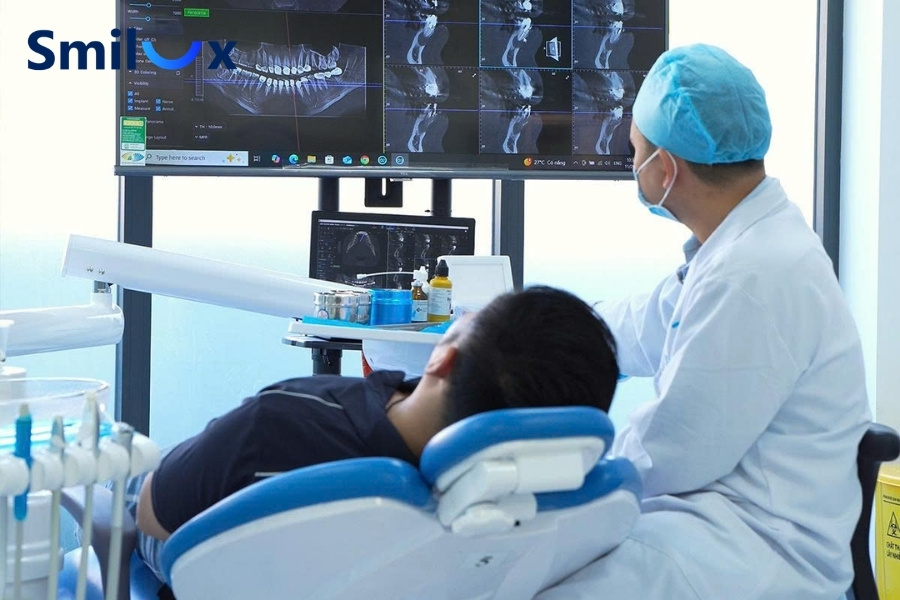
During the consultation, the patient will discuss their orthodontic goals, dental history, and any difficulties they are experiencing with chewing or oral hygiene. The dentist will then take intraoral and extraoral photographs, X-rays, or cephalometric images to evaluate tooth position, tooth roots, jawbone structure, and the relationship between the upper and lower jaws.

Based on the examination results, the dentist will create an orthodontic plan suitable for each case. Once the patient agrees with the plan, the dentist will take dental impressions or perform a digital scan.

For traditional braces, dental impressions are often used to design supporting appliances. For clear aligners, 3D scanning technology helps simulate tooth movement and fabricate aligners suitable for each stage.

Giai đoạn thăm khám tổng quát và lập kế hoạch chỉnh nha

Stage 2: Teeth Alignment

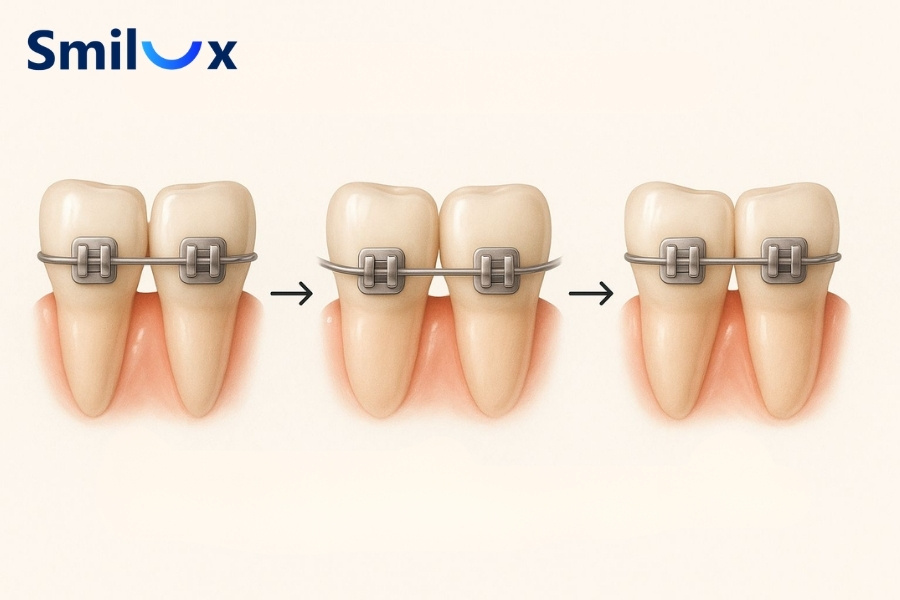
After the orthodontic plan is completed, the dentist will begin moving the teeth into a straighter position on the dental arch. This is an early stage of getting braces, helping rotate misaligned teeth, improve crowding, and create a foundation for later bite adjustment.

With braces, the dentist will attach orthodontic appliances to the teeth and use a suitable archwire to apply gentle force. This force helps the teeth move gradually, reduces significant discomfort, and allows the oral cavity time to adapt. Once the teeth respond well, the appliances will be adjusted at each follow-up visit.

In general, the teeth alignment stage lasts about 2 to 6 months, depending on the initial level of misalignment in each patient. After each tightening appointment or archwire change, you may feel mild soreness or pressure during the first 1 to 3 days.

If the dental arch does not have enough space for the teeth to move, the dentist may consider tooth extraction or interproximal reduction at an appropriate ratio. These indications will be carefully calculated to create enough space, guide the teeth in the right direction, and reduce the risk of crowding returning.

Stage 3: Bite Adjustment and Space Closure

Among The Stages of Getting Braces, bite adjustment and space closure directly affect facial aesthetics, the alignment of the dental arch, and chewing function after braces. Once the teeth are relatively straight, the dentist will begin controlling the movement direction of each group of teeth to close gaps and improve protrusion, underbite, or bite misalignment.

This stage usually takes about 4 to 8 months. For cases involving tooth extraction, severe bite misalignment, or slow tooth movement, the process may last around 12 months. At each follow-up visit, the dentist will assess tooth movement, root stability, and the relationship between the upper and lower jaws to adjust the orthodontic force appropriately.

During space closure, the dentist may prescribe one of three main movement approaches:

  • Moving the front teeth backward: This is commonly applied in cases of protruding teeth, flared front teeth, or lip protrusion caused by tooth position. The dentist uses power chains, springs, or orthodontic appliances to apply controlled force, gradually moving the front teeth backward into the correct position on the dental arch.
  • Moving the back teeth forward: This may be suitable for some cases that require using the front space or supporting jaw relationship improvement in underbite correction. The pulling force will be carefully calculated so the back teeth move in the right direction without disturbing the bite.
  • Combining movement of both front and back teeth: This approach is often used when the dentist needs to control both groups of teeth at the same time to close spaces evenly, keep the dental midline stable, and limit tooth tipping during movement.

Along with space closure, the dentist will refine the bite so the upper and lower teeth contact in the correct positions. Patients may be instructed to wear interarch elastics, attached from the upper braces to the lower braces as prescribed, to help the two jaws work together more effectively, improve chewing force, and support a more balanced jaw relationship after braces are completed.

Giai đoạn điều chỉnh khớp cắn và đóng khe hở

Stage 4: Refinement and Completion

After about 15 months of wearing braces, most teeth have moved close to their desired positions, and the dental arch begins to become more stable. At this stage, the dentist will focus on refining the final details before removing the braces to ensure that the teeth are not only well aligned but also have a bite that supports proper chewing function.

The dentist may further adjust tooth rotation, tooth inclination, any remaining small gaps, or unstable bite contact points. In some cases, patients may still need to continue wearing interarch elastics as prescribed to help the upper and lower jaws fit together better when biting down.

The refinement stage usually lasts about 2 to 6 months, depending on tooth stability and each person’s response to orthodontic force. Although the teeth may no longer change as much as in the previous stages, this final step still requires close monitoring by the dentist because even minor misalignments can affect the final result.

Stage 5: Braces Removal and Wearing Retainers

In the final stage of braces, the dentist will perform an overall assessment before deciding to remove the brackets. When the teeth have moved into stable positions, the dental arch is more even, the bite has reached a proper relationship, and the face appears more balanced, the braces process can move into the completion stage.

Before removing the braces, the dentist will carefully check the interdigitation between the upper and lower teeth, bite contact points, dental midline, evenness of the dental arch, and post-orthodontic stability. If these criteria are met, the brackets will be removed, and the patient will have dental impressions taken or a digital scan performed to make retainers.

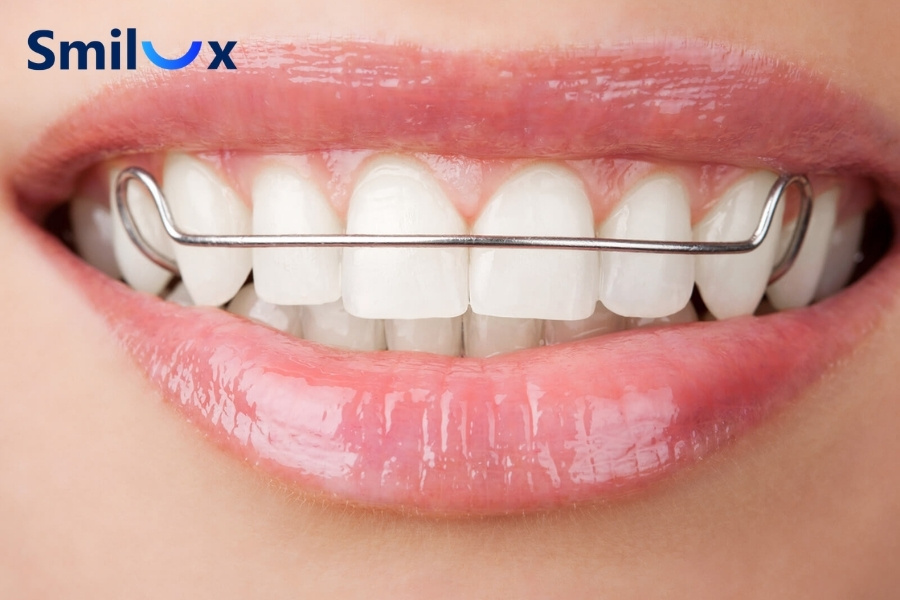
Wearing retainers is a required step after braces are removed. At this point, the teeth still tend to shift slightly because the periodontal ligaments and alveolar bone need time to adapt to the new tooth positions. Retainers help keep the teeth stable, reduce the risk of relapse, and protect the long-term orthodontic result.

Depending on each case, the dentist may prescribe removable retainers or fixed retainers placed on the inner surfaces of the teeth. Patients need to wear them for the recommended duration, attend regular follow-up visits, and maintain careful oral hygiene to preserve the result after braces.

For more information about how long retainers should be worn after braces, you can refer to the article “How Long Should You Wear Retainers After Braces?”.

Giai đoạn tháo niềng và đeo hàm duy trì

Some Issues to Keep in Mind During The Stages of Getting Braces

Throughout The Stages of Getting Braces, proper oral hygiene and following the dentist’s instructions play an important role in controlling orthodontic force, protecting the gum tissue, and maintaining the progress of orthodontic care. Therefore, to reduce the risk of loose brackets, gingivitis, tooth decay, or a prolonged braces process, patients should keep the following issues in mind:

A Suitable Diet

When wearing braces, you should limit foods that are too hard, chewy, or sticky, such as hard candy, crusty bread, ice cubes, nuts, gummy candy, and sticky rice foods. These foods can cause brackets to come loose, bend the archwire, or place excessive chewing force on the teeth.

During the first few days after braces tightening, you should prioritize soft, easy-to-chew foods such as porridge, soup, eggs, yogurt, mashed potatoes, or foods cut into small pieces. This eating approach helps reduce soreness and pressure while limiting stress on the bracket system.

In addition, sweets, carbonated drinks, and high-sugar foods should also be controlled because plaque can easily accumulate around the brackets, increasing the risk of tooth decay and white spots on tooth enamel.

To build a suitable diet during orthodontic care, you can refer to the article “What Foods to Eat and Avoid with Braces for Healthy Tooth Movement?”.

Niềng răng nên ăn mềm, tránh đồ cứng dai dính để hạn chế bung mắc cài

Proper Oral Hygiene

You need to brush your teeth thoroughly after each meal or at least twice a day with a soft-bristled toothbrush and fluoride toothpaste. When brushing, you should clean the outer surfaces, inner surfaces, chewing surfaces, and the areas around the brackets and archwire, as these are places where food can easily get trapped.

In addition to a regular toothbrush, you should also use an interdental brush, orthodontic floss, or a water flosser if needed. These tools help clean between the teeth, under the archwire, and areas that are difficult for a toothbrush to reach. Mouthwash can be used as additional support to reduce plaque and limit gum inflammation, but it does not replace daily brushing and interdental cleaning.

>>> READ MORE: How Long Does Single-Arch Braces Take? Key Factors That Affect the Timeline

Following the Dentist’s Instructions

Patients wearing braces need to attend follow-up appointments on schedule so the dentist can check how far the teeth have moved, whether the current orthodontic force is appropriate, and whether the archwire needs to be changed. Each follow-up visit helps the dentist control the direction of tooth movement, preventing the teeth from moving in the wrong direction or the braces process from taking longer than expected.

If the dentist prescribes interarch elastics, an expander, miniscrews, or other supporting orthodontic appliances, you should use them exactly as instructed to help the teeth and jaws move according to the treatment plan.

If a bracket becomes loose, the archwire pokes into the cheek, pain persists, the gums become swollen, or any unusual signs appear, you should contact the dental clinic for an early checkup. You should not cut the wire, remove appliances, or adjust brackets at home, as this may alter the orthodontic force and cause the teeth to move differently from what the dentist has planned.

Tái khám đúng hẹn và tuân thủ hướng dẫn của bác sĩ giúp răng di chuyển đúng kế hoạch

BOOK APPOINTMENT​

    CONCLUSION

    Above is the information about The Stages of Getting Braces shared by the team of dentists at Smilux Dental International Clinic. Each orthodontic case will have a different treatment plan, depending on the condition of the teeth, bite, and aesthetic goals of each person.

    At Smilux, the braces process includes dental examination, X-rays, bite analysis, and treatment planning performed by highly qualified dentists with more than 15 years of experience, along with a modern system of machines and dental equipment, so you can feel completely confident.

    If you are considering getting braces or need consultation and answers to your questions, please contact HOTLINE (+84) 866 251 379 or email cskhsmilux@gmail.com for support from a dentist as soon as possible.

    bs hoàng danh ngân mới nhất
    PROFESSIONAL CONSULTATION: DR. HOANG DANH NGAN Dr. Hoang Danh Ngan, MSc., DDS., CHUWS, is one of the leading dental professionals at Smilux Dental, with over 15 years of clinical experience.

    ---------- Braces Knowledge ----------

    Can I Get Braces at 40?
    02Jun

    Can I Get Braces at 40? Learn about the conditions for getting braces at 40, orthodontic duration, suitable methods, and notes from Smilux Dental doctors.

    The Stages of Getting Braces
    30May

    Understanding The Stages of Getting Braces helps you prepare mentally, care for your oral health properly, and work more effectively with your dentist. Each step can affect the final orthodontic result. Learn more with Smilux in the article below.

    Can You Drink Beer with Braces?
    21May

    Can You Drink Beer with Braces? Learn Smilux dentists’ advice on drinking beer and alcohol during orthodontic care, the possible effects you may experience, and proper oral hygiene practices to protect your brackets while reducing bad breath, tooth sensitivity, and yellowing.

    Can Braces Make Your Nose Look Higher?
    19May

    Can Braces Make Your Nose Look Higher? In fact, braces do not change the structure of the nose. Let’s learn more with Smilux Dental in this article.

    1 2 3
    This site is registered on wpml.org as a development site. Switch to a production site key to remove this banner.