1. Home
  2. »
  3. Knowledge of teeth and gums
  4. »
  5. Why Are My Teeth Still Not White After Whitening?

Why Are My Teeth Still Not White After Whitening? Causes and Solutions

Teeth whitening is one of the cosmetic dental treatments many patients choose to improve tooth color and feel more confident when communicating. However, whitening does not always deliver the brighter tooth shade patients expect. In some cases, after treatment, the teeth may become only slightly brighter, appear unevenly white, or show almost no noticeable change. This is why many patients wonder, “Why are my teeth still not white after whitening?

This condition can make patients feel concerned, especially when they expect their teeth to become several shades whiter after treatment. So what causes this issue, and how should it be managed safely for natural teeth? Let’s learn more with the dentists at Smilux Dental in the article below.

Why Are My Teeth Still Not White After Whitening?

Why Are My Teeth Still Not White After Whitening?

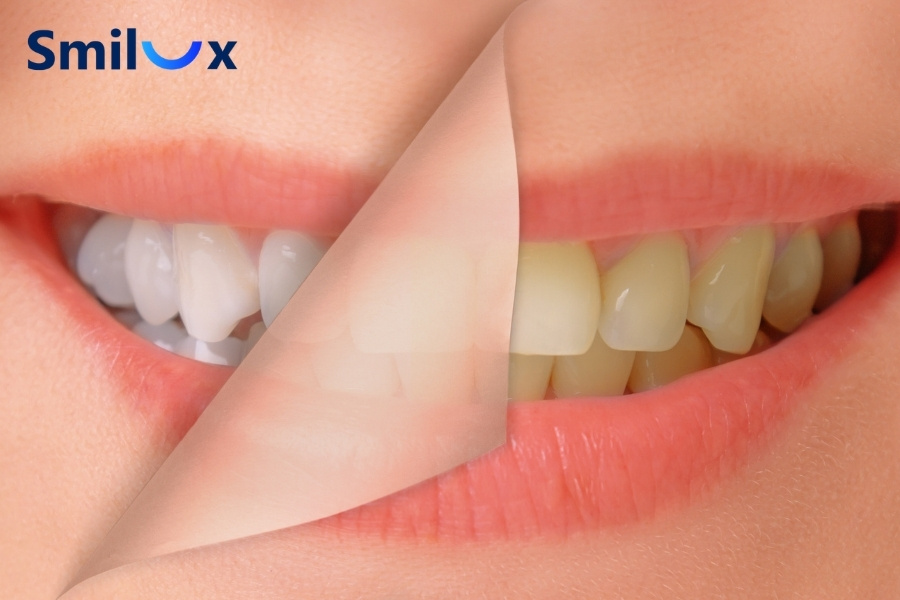
Teeth whitening helps improve surface stains and makes the teeth appear brighter. This treatment is often effective for teeth with mild yellow or brown staining caused by lifestyle habits such as drinking coffee, tea, red wine, smoking, using e-cigarettes, or tooth enamel becoming darker over time.

However, it is important to note that whitening does not change the natural structure of the teeth, and not all types of discoloration respond well to treatment. The final result depends on the cause of tooth discoloration, enamel thickness, and each patient’s individual response.

Below are the reasons why your teeth are still not white after whitening:

Natural Tooth Color Due to Genetics

Not everyone is born with the same white tooth color. Similar to skin color or eye color, natural tooth color is strongly influenced by genetics.

In some people, the enamel is thicker and lighter in shade, making the teeth appear whiter. On the other hand, if the enamel is thin or slightly translucent, the yellowish dentin underneath can show through more easily, making the teeth look darker even with proper oral care.

In this case, teeth whitening can still help brighten the teeth, but it may be difficult to make them several shades whiter compared to people who naturally have a lighter baseline tooth shade.

Severe Internal Tooth Discoloration

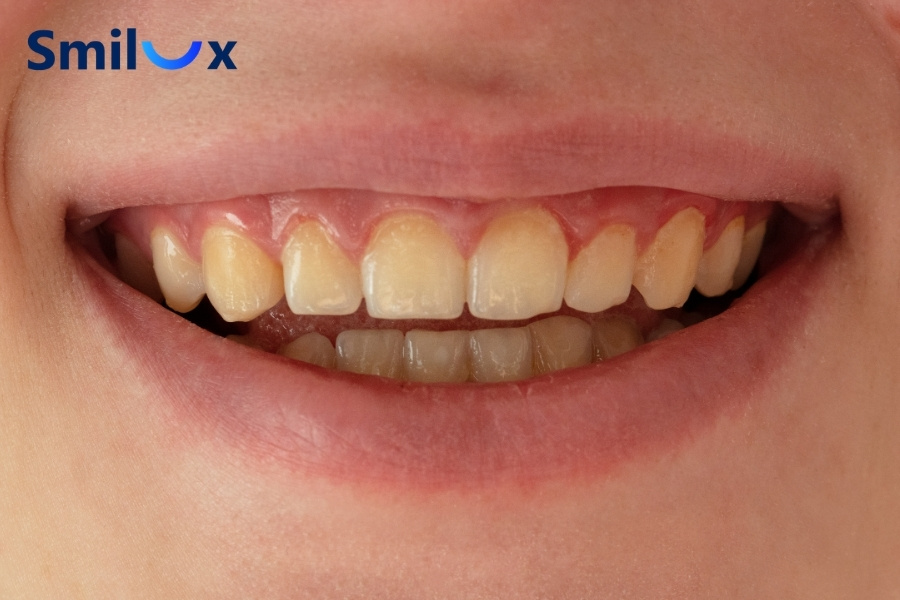
In some cases, tooth discoloration does not come from external deposits on the tooth surface, but from within the enamel or dentin. This is known as intrinsic discoloration, which is often more difficult to improve than yellow staining caused by coffee, tea, or tobacco.

This condition may be related to Tetracycline use while the teeth were still developing, previous dental trauma, fluoride exposure during childhood, or incomplete formation of the enamel or dentin. To learn more about this issue, you can refer to the article: Can teeth stained by tetracycline be whitened?

For teeth with internal discoloration, teeth whitening may only provide slight improvement, or the teeth may show almost no whitening effect if the discoloration is severe.

Răng nhiễm màu nội sinh thường khó trắng rõ sau tẩy trắng

Thin or Worn Enamel

When tooth enamel wears down over time, the darker yellow dentin underneath can become more visible. As a result, even after professional teeth whitening, the teeth may still not appear as bright as expected.

Enamel erosion is commonly seen in people who have a habit of grinding their teeth, have acid reflux, frequently consume carbonated soft drinks, lemon juice, acidic beverages, or brush their teeth too hard over a long period of time.

If the enamel is too thin or the teeth are sensitive, the dentist needs to examine them first to determine whether teeth whitening is suitable or whether treatment to protect the enamel should be prioritized.

>>> READ MORE: Uneven Teeth Whitening Results – Causes and Effective Solutions

Dental Crowns or Old Fillings Do Not Change Color After Whitening

Whitening agents only work on natural tooth structure and do not lighten the color of dental crowns, dentures, or old composite fillings. Therefore, if a tooth has cosmetic fillings or ceramic restorations, these areas will retain their original color after teeth whitening.

This is one of the reasons why many patients feel that their teeth are not evenly white after whitening. In fact, the natural teeth may have become brighter, but the dental crowns or old fillings do not change color, making the teeth still appear dull, patchy, or uneven in shade.

Mão sứ, răng giả và miếng trám cũ không đổi màu sau tẩy trắng.

Unsuitable Whitening Products or Techniques

In some cases, teeth are still not white after whitening not because of the tooth condition itself, but because the whitening product or technique is not suitable. This often happens when patients use at-home whitening products of unknown origin, use them incorrectly, or have the procedure performed at a clinic without sufficient professional expertise.

To make the teeth appear brighter, the whitening agent needs to be used at the appropriate concentration, duration, and protocol. If the whitening agent is too weak, applied unevenly, the whitening tray does not fit closely against the teeth, or the procedure is not well controlled, the pigments that cause discoloration may not be effectively improved. As a result, there may be almost no visible change after treatment.

What Should You Do If Your Teeth Are Still Not White After Whitening?

Teeth not becoming white after whitening does not necessarily mean that the treatment is ineffective. In many cases, the cause comes from the original condition of the teeth, such as deep discoloration, thin enamel, dental crowns, old fillings, or naturally darker tooth color.

At this point, patients should visit a dental clinic so the dentist can examine their teeth directly, determine why the teeth do not respond well to whitening, and recommend a more suitable treatment option. Depending on each condition, the dentist may suggest porcelain veneers or dental crowns to make the tooth color more even and aesthetically pleasing.

Porcelain Veneers

For cases where teeth are still not white after whitening due to deep discoloration, dark enamel, or uneven tooth color, the dentist may recommend porcelain veneers to improve dental aesthetics.

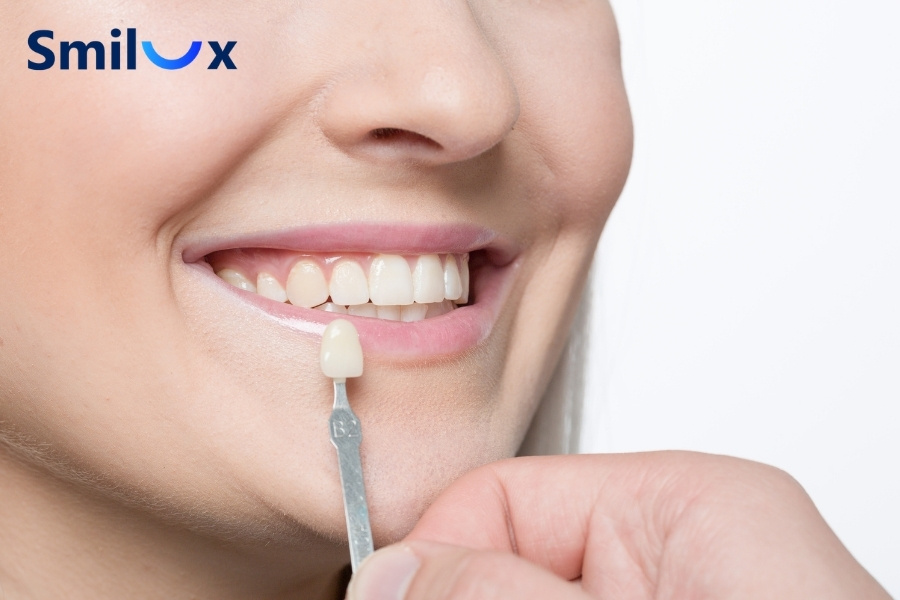
Porcelain veneers involve bonding a thin layer of porcelain to the front surface of the teeth, helping cover yellow, dull, or discolored teeth that do not respond well to whitening. This treatment is usually suitable for patients whose natural teeth are still healthy and who do not have tooth decay, severe gum inflammation, or an abnormal bite.

Compared with teeth whitening, porcelain veneers are more costly and may require minimal enamel reduction so the veneers can fit closely and look more natural.

Dán sứ Veneer có thể che phủ màu răng ố vàng, xỉn màu hoặc nhiễm màu

Cosmetic Dental Crowns

When a tooth has extensive decay, becomes weak after root canal treatment, or has lost a large amount of natural tooth structure, teeth whitening is often not a suitable option. In this case, the dentist may recommend a dental crown to restore the tooth’s shape and color while protecting the remaining tooth structure.

A dental crown is a technique in which the tooth is reshaped to the appropriate proportion before a ceramic crown is placed over it. Unlike porcelain veneers, which mainly improve the front surface of the teeth, a dental crown covers the entire visible portion of the tooth and is often used when the tooth needs to be restored in both aesthetics and chewing function.

Smilux Dental - A Trusted Cosmetic Dental Clinic in Ho Chi Minh City

Teeth not becoming as white as expected after whitening can make patients feel concerned, especially when they have followed the instructions properly. However, instead of continuing to whiten their teeth at home or switching to another whitening product, patients should visit a dentist to identify the specific cause.

At Smilux Dental, the dentist will assess the current tooth shade, enamel condition, old fillings, dental crowns if any, and the reason why the teeth do not respond well to teeth whitening. From there, patients will receive consultation on a more suitable treatment approach.

We have a team of dentists with more than 15 years of experience in Dentistry, Oral and Maxillofacial care, especially in cosmetic dental treatments such as teeth whitening, porcelain veneers, dental crowns, and treatment for discolored teeth. Instead of focusing only on making the teeth whiter, the dentist will prioritize a safe, minimally invasive approach that helps preserve as much natural tooth structure as possible.

The clinic is also equipped with advanced diagnostic technology such as CT Cone Beam 3D, Panorex/Cephalo, and the iTero 5D scanner, helping the dentist assess the condition of the teeth, bite, and dental tissues more accurately before treatment.

In addition, all dental materials are genuine and have a clear origin. Patients can check the material information before deciding on treatment, giving them greater confidence in the safety, aesthetics, and durability of the final result.

Smilux Dental - Địa chỉ nha khoa thẩm mỹ uy tín tại TPHCM

BOOK APPOINTMENT​

    CONCLUSION

    We hope the information above has helped patients better understand why teeth are still not white after whitening. If you are concerned because your teeth remain dull after whitening, please contact Smilux Dental via HOTLINE (+84) 866 251 379 for a detailed consultation with our dentist and to choose a suitable solution for a brighter, healthier, and more confident smile.

    Note: The content in this article is for reference only and does not replace a dentist’s diagnosis or clinical recommendation. For accurate advice based on your oral condition, you should visit a dental specialist directly.

    bs hoàng danh ngân mới nhất
    PROFESSIONAL CONSULTATION: DR. HOANG DANH NGAN Dr. Hoang Danh Ngan, MSc., DDS., CHUWS, is one of the leading dental professionals at Smilux Dental, with over 15 years of clinical experience.

    ---------- Teeth And Gums Knowledge ----------

    Why Are My Teeth Still Not White After Whitening?
    25Jun

    According to dentists at Smilux, teeth may not become white after whitening due to thin enamel, deep staining, dental crowns, old fillings, or an unsuitable whitening technique.

    At What Age Can You Whiten Your Teeth?
    24Jun

    At What Age Can You Whiten Your Teeth? This article helps you understand the appropriate age for teeth whitening and why children need to be examined by a dentist before whitening their teeth.
    How Long Does Tooth Sensitivity Last After Teeth Whitening?
    24Jun

    How Long Does Tooth Sensitivity Last After Teeth Whitening? Learn with Smilux dentists about how long sensitivity typically lasts, what causes tooth sensitivity, and how to care for your teeth properly after whitening.
    Can Teeth Affected by Dental Fluorosis Be Whitened?
    23Jun

    Can Teeth Affected by Dental Fluorosis Be Whitened? Depending on the severity of discoloration and the condition of the tooth enamel, Smilux Dental dentists will recommend the most appropriate treatment.

    1 2 3
    This site is registered on wpml.org as a development site. Switch to a production site key to remove this banner.