A Temporary crown on Implant is a provisional restoration used while the dental implant integrates with the jawbone. In the article below, Smilux explains its functions, types, and placement procedure.


To create a complete dental implant restoration, three main components must work together: the implant fixture, the abutment, and the dental crown. Among these, the abutment serves as an intermediate connector, helping complete the dental implant restoration process and playing an essential role in this restorative technique.
So, What Is an Implant Abutment? What are its structure and functions? Let the dentists at Smilux Dental International Clinic explain everything in detail in the article below.

An implant abutment, also known as an abutment implant or implant connector, is an intermediate component that connects the implant fixture placed in the jawbone with the dental crown above. In simple terms, the abutment functions like the prepared natural tooth structure after tooth reduction. It is attached to the implant fixture with a small specialized screw, helping secure the dental crown firmly in place while supporting the durability, chewing function, and natural aesthetics of the final restoration.
In dental implant treatment, dentists commonly use two types of abutments: healing abutments and permanent abutments. A healing abutment, also known as a healing cap, is usually cylindrical in shape and is temporarily attached for about 1-2 weeks to shape the gum tissue around the implant site. Once the gums have stabilized, the dentist will replace it with a permanent abutment, which supports and connects the final dental crown placed above.

An implant abutment is usually cylindrical in shape and can be designed as either a straight or angled component to suit different implant positions, such as molars or front teeth. This connector sits above the gum line and has two connection ends.

Although small in size, the abutment is an essential component of a dental implant restoration and directly affects the final treatment outcome. Specifically, an implant abutment plays the following roles:

In addition to material, implant abutments are also designed in different shapes to match each implant position along the dental arch.

After the implant fixture has successfully integrated with the jawbone, the dentist will attach the abutment following a standard clinical procedure:
The dentist performs a minor surgical procedure to open the gum tissue and access the head of the implant fixture hidden beneath the gums.
A temporary healing abutment is attached to shape the gum contour around the implant. After approximately 1–2 weeks, the gum tissue will stabilize and be ready for the next step.
The dentist takes a digital scan or a traditional dental impression, which serves as the basis for designing the abutment and dental crown according to each patient’s anatomical structure.
Once the gums have fully healed, the dentist attaches the final abutment, then places the dental crown or implant-supported bridge to complete the restoration process.

To ensure oral health safety, prevent irritation in the oral tissues, and maintain the stability of the dental implant fixture, patients should choose genuine abutments from reputable brands that have been quality-tested and certified by medical organizations.
Some long-established implant brands known for high quality and long-term durability that patients may consider include MIS C1 implant abutments (Germany), Tekka implant abutments (France), Nobel Biocare implant abutments (Sweden), Straumann implant abutments (Switzerland), Korean implant systems, and others.

Smilux Dental is a trusted choice for many patients seeking dental implant treatment. At our clinic, all implant fixtures, abutments, and dental crowns are genuine products with complete certification records, legal import documents, and clear origins, giving patients peace of mind about quality and safety throughout the restoration process.
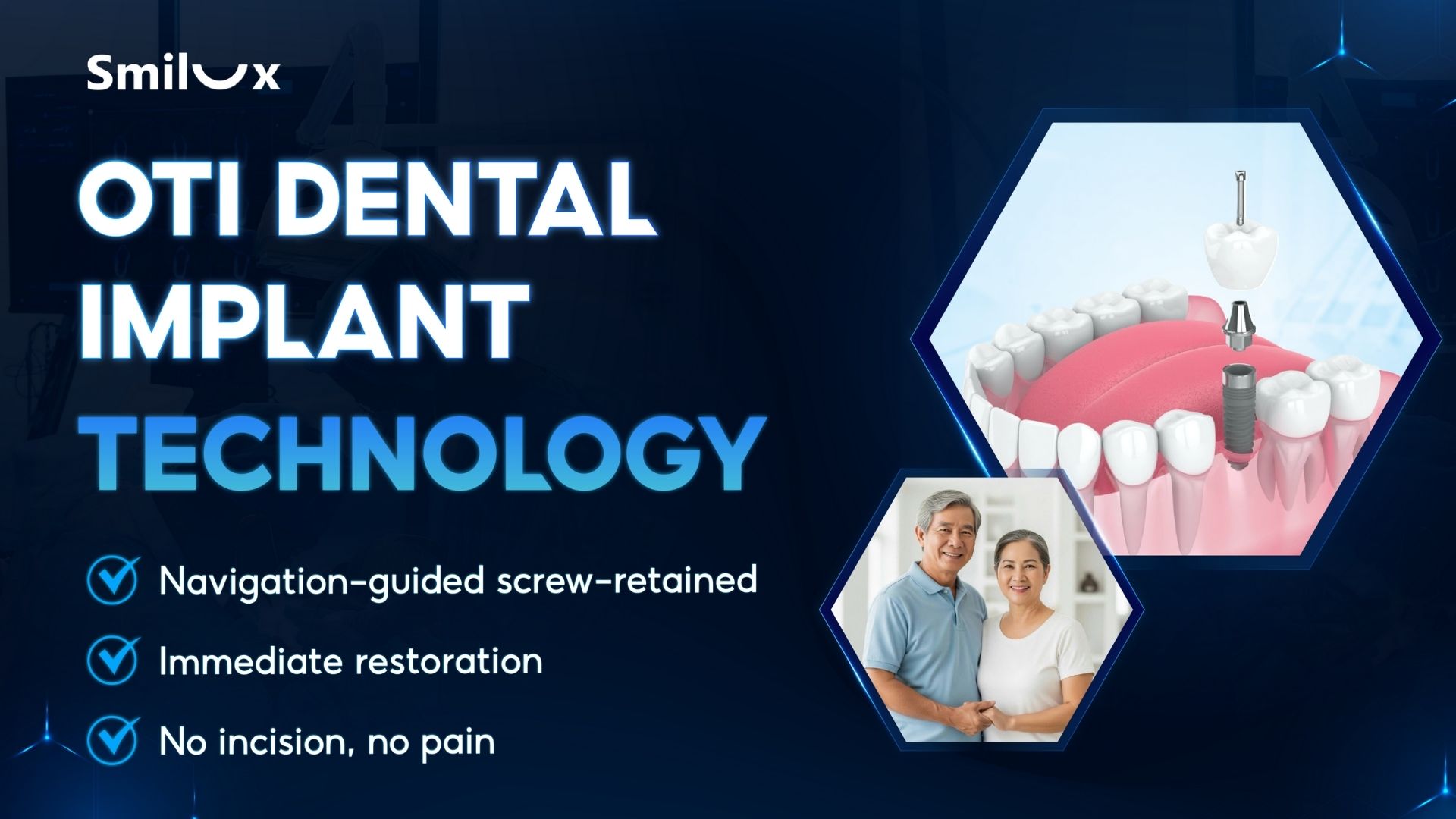
In addition, Smilux Dental is among the pioneers in applying OTI positioning screw-retained technology, which helps overcome several limitations of traditional implant methods. This advanced approach provides a gentler, safer implant experience and supports faster recovery with many outstanding advantages:
At Smilux Dental, patients are examined and consulted directly by a team of dentists with more than 15 years of experience in dental implant treatment.
All treatment costs are clearly and transparently listed from the beginning, with no hidden fees during the treatment process. This allows patients to plan their budget with confidence and peace of mind.

A Temporary crown on Implant is a provisional restoration used while the dental implant integrates with the jawbone. In the article below, Smilux explains its functions, types, and placement procedure.

An implant-supported removable denture is a restorative solution for patients who have lost multiple teeth or an entire arch, helping improve chewing function at a reasonable cost. Smilux dentists will explain what this treatment is, whether it is good, and how much it costs.
Learn with Smilux Dental about What Is an Implant Abutment?, including its structure, classification, placement procedure, and the latest implant abutment price list.

Learn about the structure of the dental implant, including its components and the role of each part. Smilux dentists provide detailed explanations to help patients understand clearly before getting dental implants.