Can You Get Braces After Dental Crowns? Learn with Smilux about the conditions for getting braces after dental crowns, suitable methods, and key considerations to help minimize the impact on dental crowns and natural teeth.


When wearing braces, especially traditional metal braces, maintaining oral hygiene is often more difficult than usual. Food particles and plaque can easily accumulate around the brackets, archwires, and between the teeth. If not cleaned properly, this plaque buildup can cause teeth to become dull or yellow, and may even increase the risk of tooth decay or gingivitis.
This is also why many patients want to whiten their teeth to improve their smile aesthetics. However, can I whiten my teeth while wearing braces? Let the dentists at Smilux explain in the article below.

Whether you can whiten your teeth while wearing braces depends on your dental condition and the orthodontic method you choose.
Specifically, for patients wearing metal braces or ceramic braces, dentists usually recommend waiting until the orthodontic treatment is completed before whitening the teeth.
This is because the brackets are fixed to the tooth surface and may cover certain areas of the enamel. If teeth whitening is performed during this period, the whitening agent may not work evenly across the entire tooth surface, which can cause uneven tooth color or patchy discoloration after the braces are removed.
For clear aligners, patients may whiten their teeth more easily because the aligner trays can be removed when eating, drinking, cleaning, and maintaining oral hygiene. However, teeth whitening should still be performed only after a dentist has examined the teeth to assess the enamel, gums, and level of tooth sensitivity.
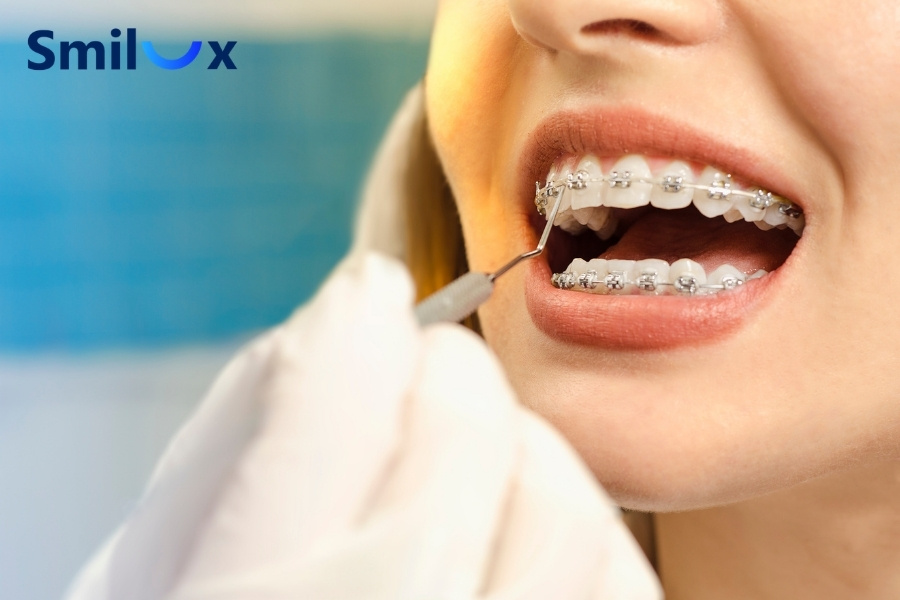
Following the topic “Can I Whiten My Teeth While Wearing Braces?”, the dentists at Smilux International Dental Clinic will share the ideal time to whiten your teeth, helping patients achieve a brighter smile without affecting their oral health or orthodontic results.
After braces are removed, patients should wait about 2 to 4 weeks before undergoing teeth whitening. This is the necessary amount of time for the teeth and gums to become more stable after orthodontic treatment. It also allows the dentist to examine the condition of the enamel, plaque buildup, tartar, and other oral health concerns before recommending a suitable whitening method.
In addition, patients should not whiten their teeth immediately after braces are removed. At this point, the teeth and gum tissues may still be quite sensitive, and the enamel surface needs time to stabilize after being subjected to orthodontic movement.
If teeth whitening is performed too soon, the whitening agent or whitening light may cause increased tooth sensitivity, gum irritation, and discomfort after the procedure.
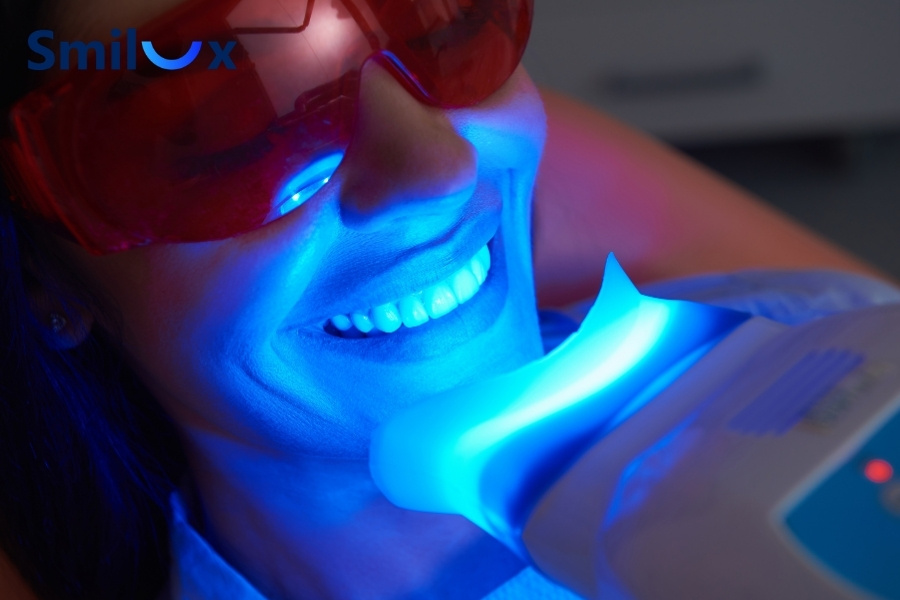
To determine the exact time to whiten your teeth after braces, patients should visit a dentist for a direct examination. Depending on the condition of the teeth, level of sensitivity, and gum health, the dentist will recommend a safe time to proceed with the whitening treatment. Please fill out the form below so that Smilux dentists can assist you promptly.
Patients should not whiten their teeth before getting braces, especially in cases of severely crowded, overlapping, or misaligned teeth. When the teeth have not yet been properly aligned on the dental arch, the whitening agent may not come into even contact with the entire tooth surface.
Areas of the teeth that are hidden, misaligned, or positioned close to the interdental spaces may not be whitened as effectively as the rest of the teeth, making the tooth color more likely to appear patchy or uneven after orthodontic treatment is completed.
In addition, during orthodontic treatment, the teeth are subjected to movement forces and are often more sensitive than usual. If teeth whitening is performed beforehand, patients may be more prone to sensitivity when orthodontic appliances are placed and adjusted.
Moreover, during braces treatment, maintaining oral hygiene is often more difficult because brackets, archwires, or aligner trays can make it easier for food particles and plaque to accumulate. If not cleaned thoroughly, the teeth may still be at risk of becoming dull or yellow. Even if patients have whitened their teeth before getting braces, they may still need another whitening treatment after braces removal to achieve a more even, brighter, and more aesthetic tooth color.
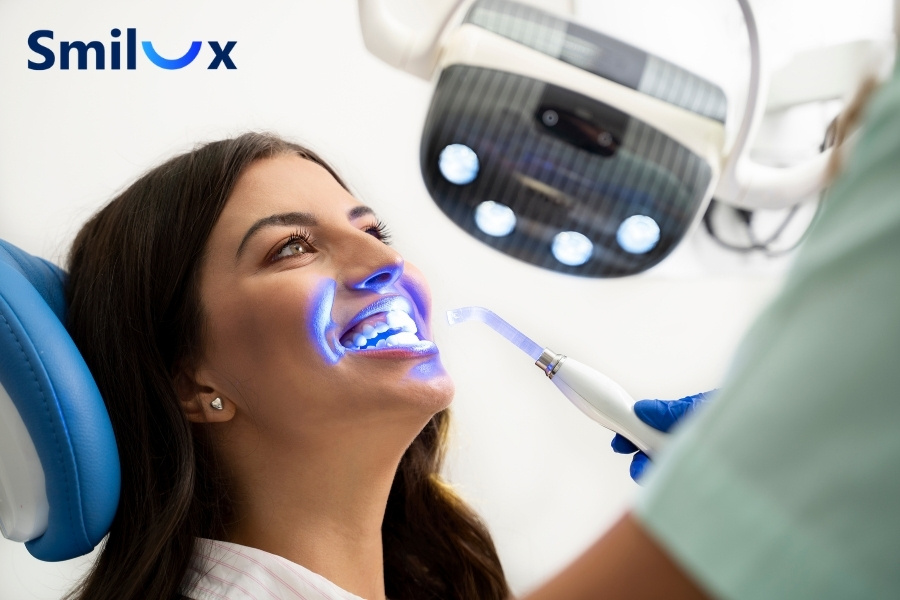
Diet also directly affects tooth color and oral health during orthodontic treatment. To help prevent teeth from becoming dull or yellow, patients should keep the following in mind:



Can You Get Braces After Dental Crowns? Learn with Smilux about the conditions for getting braces after dental crowns, suitable methods, and key considerations to help minimize the impact on dental crowns and natural teeth.

Can I Get Braces If I Have Periodontitis? Smilux International Dental Clinic explains the conditions for safe orthodontic care for people with periodontitis, helping you understand the risks and key considerations.
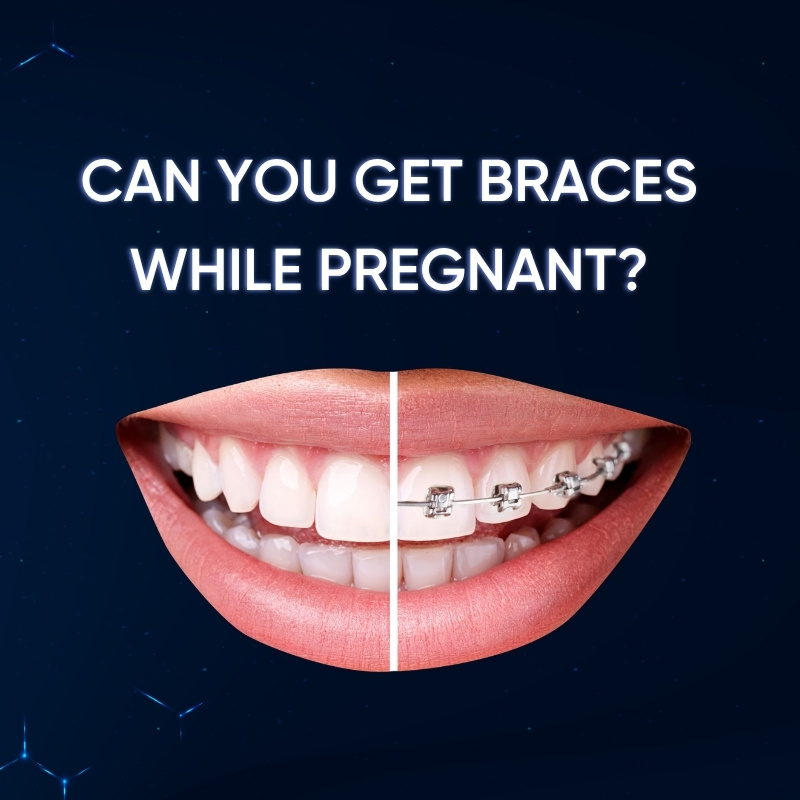
Can You Get Braces While Pregnant? Let’s explore with Smilux when pregnant women can continue orthodontic care, which cases should be postponed, and what important notes to know to help ensure safety for the mother, the fetus, and braces results.

Can I Get Braces at 40? Learn about the conditions for getting braces at 40, orthodontic duration, suitable methods, and notes from Smilux Dental doctors.