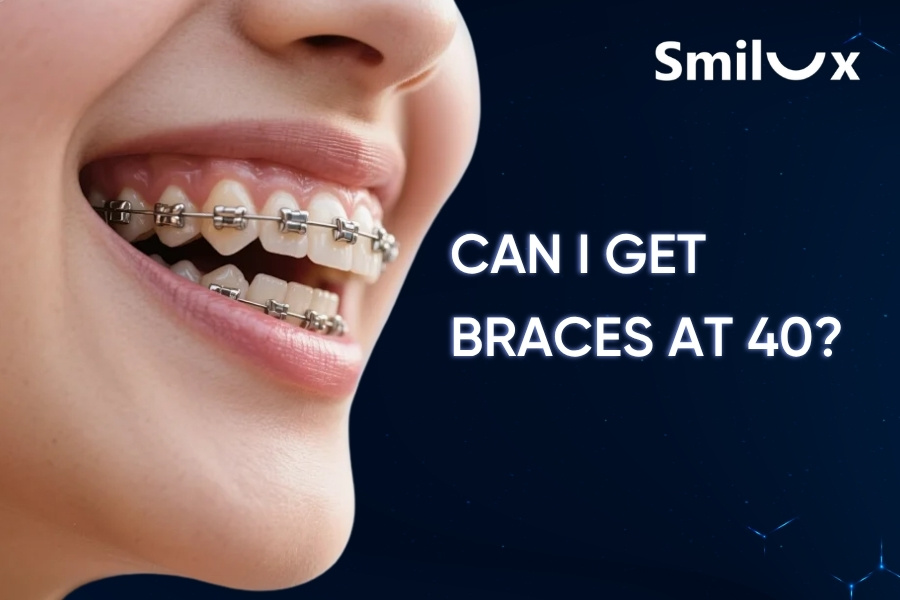
Can I Get Braces at 40? Learn about the conditions for getting braces at 40, orthodontic duration, suitable methods, and notes from Smilux Dental doctors.
The age range from 12 to 16 is often considered an ideal time to get braces because the jawbone is still developing, teeth can move more easily, and orthodontic duration may be shorter. However, this does not mean that adults, even at the age of 40, cannot get braces.
So, Can I Get Braces at 40? Is getting braces at this age more difficult, and what should you keep in mind to achieve safe results? The article below will help you understand this more clearly from the professional perspective of Smilux doctors.

MỤC LỤC (TABLE)
ToggleIn fact, people at 40 or even 50 can still get braces if their oral health meets the necessary orthodontic conditions. Thanks to the development of modern dental techniques and technology, braces are no longer strictly limited by age.
Adults can still undergo orthodontic care to improve protruding teeth, underbite, misaligned teeth, crowded teeth, or bite problems, helping create a more even smile and supporting better chewing function.
However, braces for people at 40 require a thorough examination by a dentist before starting. The key condition is that the jawbone, gums, and periodontal tissues must remain healthy so the teeth can move safely according to the planned orthodontic protocol.
In addition, the number of teeth on the dental arch also needs to be carefully evaluated. If the patient has lost many teeth or has uncontrolled periodontal disease, the dentist may need to stabilize these conditions before planning braces.
In general, age is not the deciding factor in whether a person can get braces. What matters is whether the teeth, gums, and jawbone are healthy enough to support the orthodontic process. If you want to better understand the suitable ages for getting braces and which timing offers the most advantages, you can refer to the article “At What Age Can You Get Braces?”.
Besides the question Can I Get Braces at 40?, orthodontic duration at this age is also a common concern. In adults, the jawbone has fully developed, and bone density is usually higher than in teenagers, so teeth tend to move more slowly. Therefore, the orthodontic process at 40 often takes more time and requires patients to follow the dentist’s instructions properly.
In general, the duration of braces for teenagers may range from about 1.5 to 2 years. For adults, especially people at 40, braces may take around 2 to 3 years or longer, depending on the severity of tooth misalignment, bite condition, periodontal health, and the selected orthodontic method.
In addition, adult patients are also more likely to experience oral health problems such as tooth decay, gingivitis, periodontitis, enamel wear, tooth loss, or alveolar bone resorption.
If these conditions are present, the dentist needs to stabilize them before braces to ensure the teeth can move safely. This is also one of the factors that may make the total braces duration for people at 40 longer.
Depending on their oral health condition and aesthetic needs, 40-year-old patients may be advised by the dentist to choose one of the braces methods below.
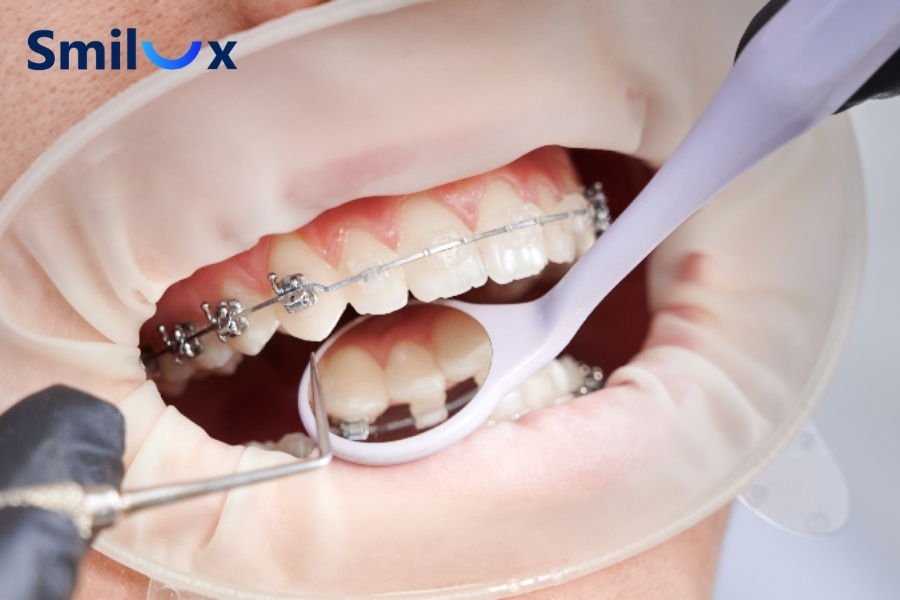
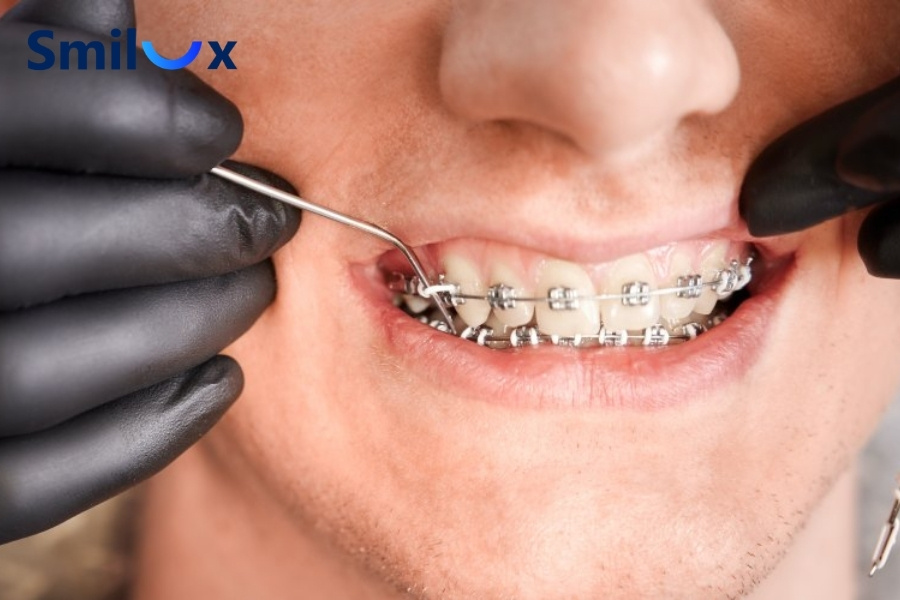
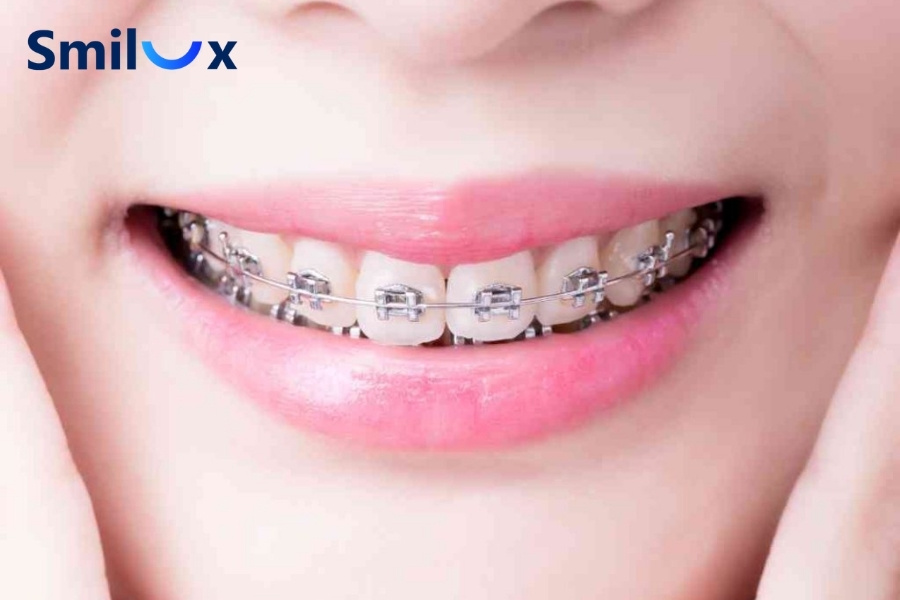
Metal braces are a traditional orthodontic method that uses metal brackets attached to the tooth surface, combined with archwires and elastic ties to create pulling force, helping teeth move into their proper positions on the dental arch.
The advantage of this method is its ability to provide stable force and its suitability for many cases, including protruding teeth, underbite, crowded teeth, gaps between teeth, or bite problems. The cost of metal braces is also usually lower than other aesthetic orthodontic methods.
However, because the brackets and archwires are clearly visible when speaking, this method is less aesthetic. In the early stage, patients may feel discomfort, irritation against the lips and cheeks, or soft tissue irritation if they are not yet used to the orthodontic appliances.
Self-ligating metal braces use an automatic sliding door system to hold the archwire inside the bracket slot, instead of using elastic ties like traditional braces. This mechanism allows the archwire to move more flexibly, reduces friction during the orthodontic process, and limits the risk of loose or detached elastic ties.
Compared with conventional metal braces, self-ligating brackets have a higher cost but provide greater comfort for patients, especially during the stage when the teeth begin to move. This method also helps the dentist control orthodontic force more effectively and may reduce the number of follow-up visits.
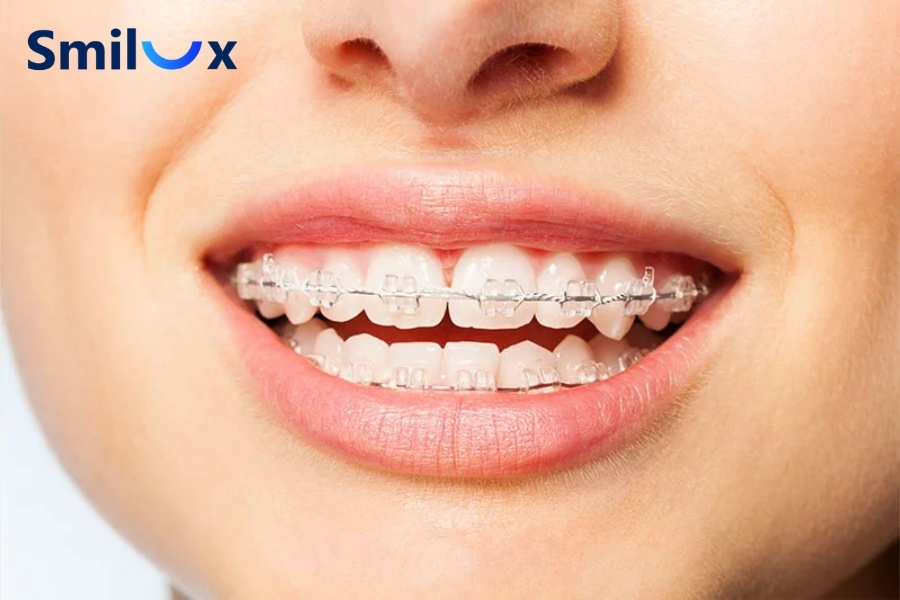
Ceramic braces work in a similar way to metal braces, but the brackets are made from ceramic material with a color that closely resembles natural teeth. As a result, this method offers better aesthetics and is suitable for adults who communicate frequently or do not want orthodontic appliances to be too visible when smiling or speaking.
Ceramic brackets can still improve misaligned teeth, protruding teeth, underbite, gaps between teeth, or bite problems when properly indicated. However, ceramic material is more brittle than metal, so patients need to be careful when eating and avoid biting very hard foods to limit the risk of bracket cracks or breakage. The cost of this method is also usually higher than traditional metal braces.
Invisalign clear aligners are an orthodontic method that uses transparent aligner trays custom-designed based on each person’s dental impressions and tooth movement plan. Each set of aligners applies gentle force to the teeth in different stages, gradually helping them move into the desired position.
A major advantage of Invisalign is its high aesthetic appeal. The aligner trays fit closely over the teeth, making them difficult to notice when communicating. They can be removed when eating, drinking, cleaning the teeth, or during necessary occasions, making this method suitable for adults, especially people at 40 who often need to communicate frequently in work and daily life.
However, the cost of clear aligners is also higher than bracket-based methods, so patients should have a direct examination to receive advice from the dentist on whether this method is suitable.
At the age of 40, braces are not only intended to improve the alignment and appearance of the teeth, but also need to ensure that the teeth, gums, and jawbone remain healthy throughout the orthodontic process. Therefore, patients should prioritize choosing a reputable dental clinic where an orthodontist directly examines them, carefully evaluates their oral health condition, and develops a suitable plan for each case.
This is also the process that Smilux Dental focuses on when receiving adult patients who want to get braces. Before recommending an orthodontic method, the doctor will examine the condition of the teeth, bite, jawbone, and periodontal health to determine whether the teeth can move safely.
This evaluation is especially necessary for people at 40, as teeth often move more slowly and may be accompanied by problems such as gingivitis, periodontitis, tooth loss, or alveolar bone resorption.
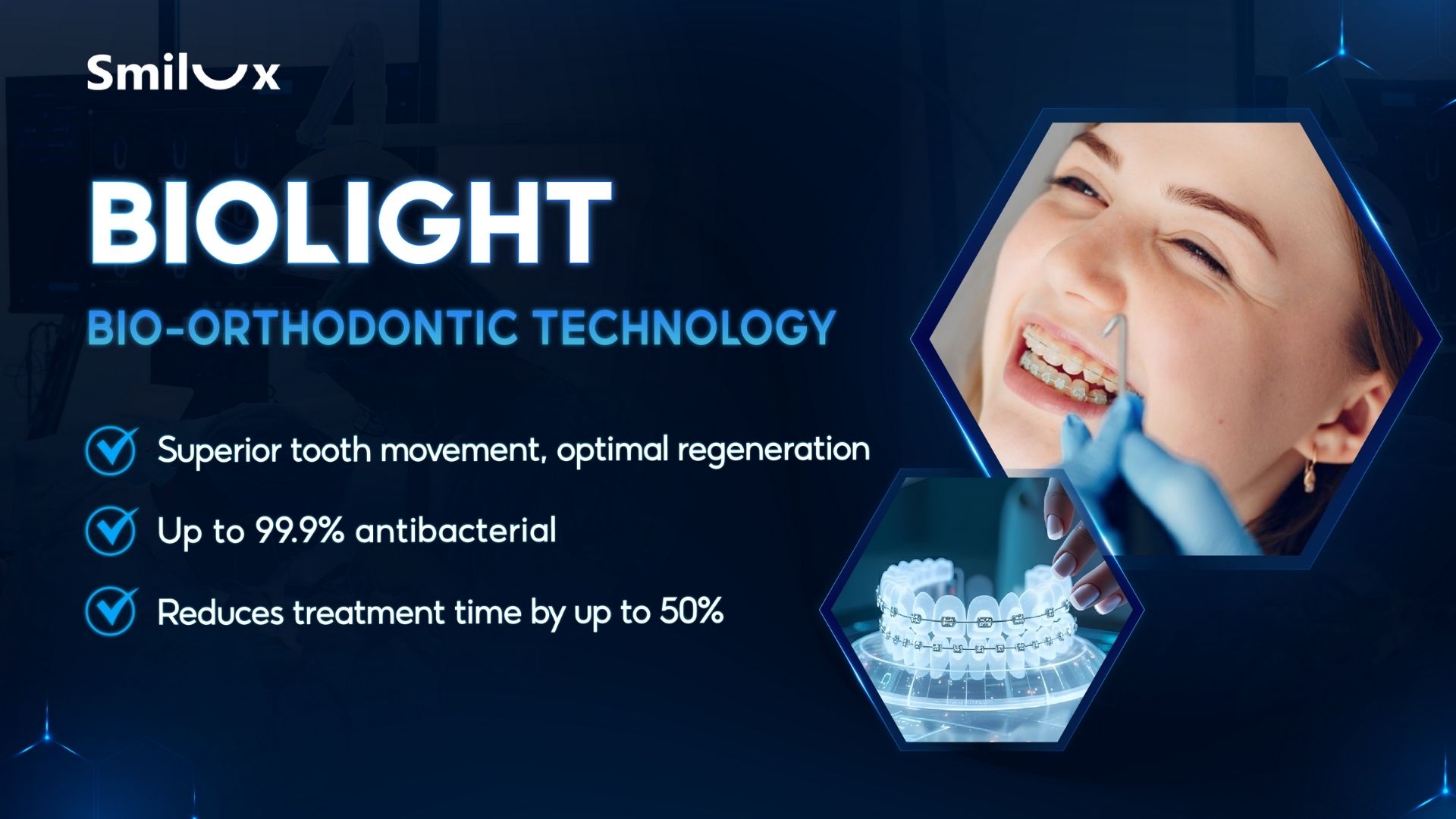
With a team of doctors with more than 15 years of experience and a modern equipment system, Smilux Dental aims to provide a safe, personalized orthodontic process that is suitable for each patient’s oral health condition. One of the highlights is BioLight biostimulation braces technology, which supports the braces process with many outstanding advantages, including:

Nếu bạn đang muốn bắt đầu chỉnh nha nhưng còn lo lắng về thời gian, cảm giác đau nhức hoặc chi phí thực hiện, hãy để Smilux Dental đồng hành cùng bạn ngay từ bước thăm khám đầu tiên.
Điền thông tin vào FORM bên dưới, đội ngũ Smilux Dental sẽ liên hệ tư vấn chi tiết và hỗ trợ đặt lịch thăm khám với bác sĩ.
BOOK APPOINTMENT
We hope the article above has helped answer your question: Can I Get Braces at 40? In fact, age is not the deciding factor in whether you can get braces. What matters more is whether your teeth, gums, jawbone, and periodontal health meet the necessary conditions for orthodontic care.
If you are in your 40s and want to improve protruding teeth, underbite, misaligned teeth, crowded teeth, or bite problems, let Smilux Dental accompany you. Please contact HOTLINE (+84) 866 251 379 or email cskhsmilux@gmail.com so our team can provide consultation, support appointment scheduling with a doctor, and build a braces plan suitable for your oral health condition.
---------- Braces Knowledge ----------
Can I Get Braces at 40? Learn about the conditions for getting braces at 40, orthodontic duration, suitable methods, and notes from Smilux Dental doctors.
Understanding The Stages of Getting Braces helps you prepare mentally, care for your oral health properly, and work more effectively with your dentist. Each step can affect the final orthodontic result. Learn more with Smilux in the article below.
Can You Drink Beer with Braces? Learn Smilux dentists’ advice on drinking beer and alcohol during orthodontic care, the possible effects you may experience, and proper oral hygiene practices to protect your brackets while reducing bad breath, tooth sensitivity, and yellowing.
Can Braces Make Your Nose Look Higher? In fact, braces do not change the structure of the nose. Let’s learn more with Smilux Dental in this article.
CONTACT