A Temporary crown on Implant is a provisional restoration used while the dental implant integrates with the jawbone. In the article below, Smilux explains its functions, types, and placement procedure.


Many patients, due to the nature of their work or social relationships, are frequently exposed to alcohol. However, for those who are preparing for implant surgery or have just undergone dental implant placement, alcoholic beverages can directly affect the healing process and the stability of the implant.
In the article below, Smilux Dental will provide a detailed answer to the question, “Can you drink beer after getting dental implants?” Stay with us to better understand how alcohol impacts the dental implant process.

Before and after dental implant placement, patients are strongly advised not to drink beer, alcohol, or use any stimulants, strictly following the dentist’s instructions.
Avoiding alcohol during this period helps stabilize the implant site and creates optimal conditions for proper healing. It also supports successful osseointegration between the implant and the jawbone, improving treatment outcomes and reducing the risk of post-operative complications.
In fact, clinical observations show that the failure rate of dental implants is significantly higher in individuals who frequently consume alcohol or stimulants compared to those who do not.

Patients who continue to consume alcohol or use stimulants during the dental implant healing period have a higher risk of developing peri-implant infection.
When the surrounding gingival tissue becomes inflamed, bacteria can easily invade and spread to the underlying bone, leading to marginal bone loss and damage to the supporting structures of the implant.

Alcohol consumption and smoking can irritate the surgical site, increasing the risk of inflammation and post-operative infection. This not only damages the gingival tissue surrounding the implant but also delays the healing process. In severe cases, it may even lead to implant failure or rejection.

In addition to impacting the implant fixture, alcohol and smoking can also cause discoloration of the dental crown, affecting the overall aesthetics of the restoration.
Moreover, dry mouth induced by these stimulants can make oral hygiene more difficult, increasing the risk of infection and negatively affecting the longevity of the dental implant.

According to recommendations from Smilux Dental, patients should avoid alcohol for at least 1 to 2 weeks before implant surgery and a minimum of 2 to 4 weeks after the procedure.
Once the implant has fully integrated with the jawbone and the gum tissue has completely healed, alcohol consumption may be resumed. However, dentists advise that it should only be consumed in moderation.
Frequent or excessive alcohol intake can increase the risk of gingivitis, periodontitis, tooth decay, bad breath, tooth discoloration, and enamel erosion. These issues not only affect natural teeth but also reduce the longevity of dental implants and negatively impact overall oral health.

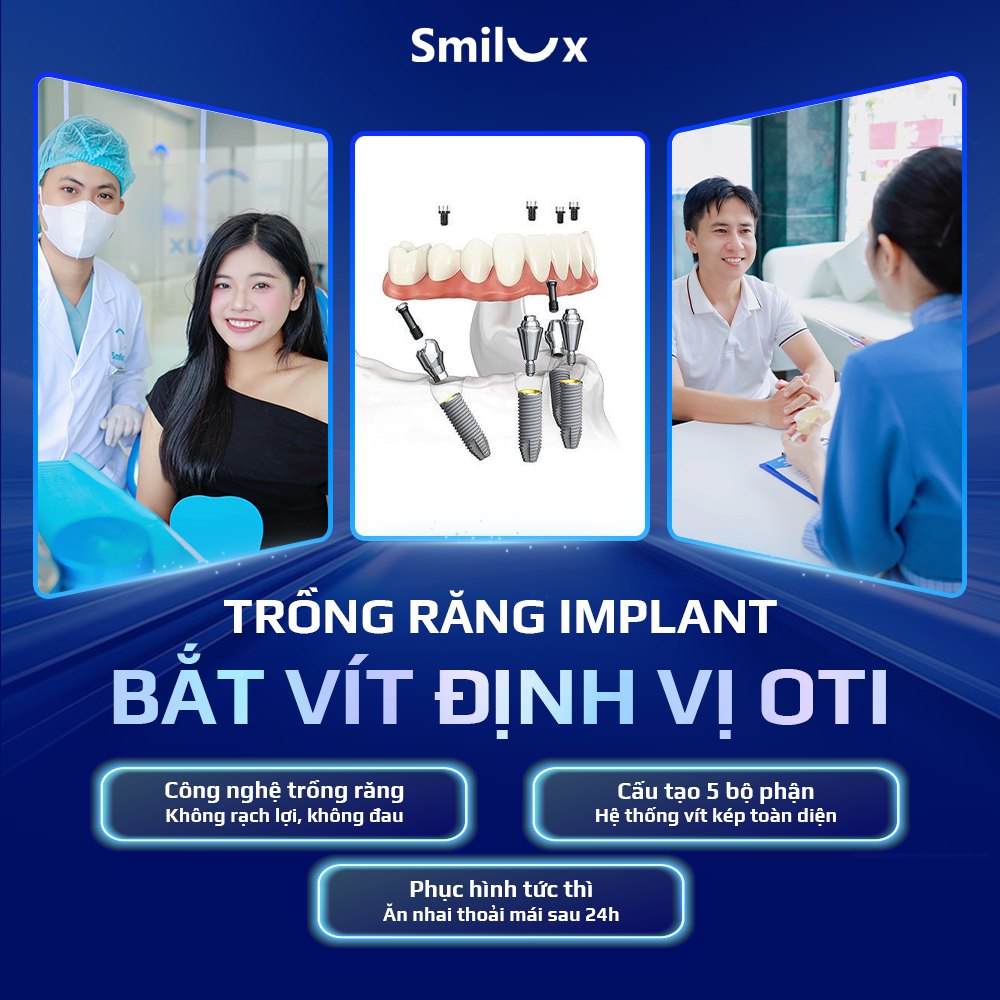
OTI dental implant technology is an exclusive implant solution currently applied at Smilux Dental International Clinic.
This method is designed to provide a gentle treatment experience, featuring a flapless technique, minimal discomfort, and the ability to restore teeth within a short period. As a result, patients can confidently undergo implant treatment with a safe procedure and achieve long-lasting restorative outcomes.
A key highlight of this technology is the OTI screw-retained implant system, which consists of five components: the implant fixture, abutment, Ti-cylinder, dental crown, and SSE titanium screw system. These components are securely connected along a vertical axis using a dual-screw mechanism, enhancing stability and load-bearing capacity during mastication.
In addition, MagSense™ magnetic field sensor technology is utilized to analyze resonance frequency, allowing clinicians to accurately determine the optimal timing for final crown placement. This enables a faster restoration process while maintaining high precision.
At Smilux Dental, patients undergo a comprehensive evaluation before implant placement, including assessment of jawbone condition, bone density, and gingival health. Based on these findings, dentists develop a personalized treatment plan tailored to each individual case.
The entire procedure is standardized under strict sterilization protocols, helping to shorten surgical time, minimize technical errors, and improve long-term treatment outcomes.

A Temporary crown on Implant is a provisional restoration used while the dental implant integrates with the jawbone. In the article below, Smilux explains its functions, types, and placement procedure.

An implant-supported removable denture is a restorative solution for patients who have lost multiple teeth or an entire arch, helping improve chewing function at a reasonable cost. Smilux dentists will explain what this treatment is, whether it is good, and how much it costs.

Learn with Smilux Dental about What Is an Implant Abutment?, including its structure, classification, placement procedure, and the latest implant abutment price list.

Learn about the structure of the dental implant, including its components and the role of each part. Smilux dentists provide detailed explanations to help patients understand clearly before getting dental implants.