Are Braces Results Permanent? Learn with Smilux Dental’s dentists how long braces results can last, why teeth may shift again after braces are removed, and how proper care and retainer wear can help protect your smile for the long term.
Dental crowns and braces are two cosmetic dental methods that many patients consider when they want to improve tooth shape, tooth color, and bite alignment. However, for those who have already had dental crowns, many patients wonder whether they can still get braces to make their teeth more even and aesthetically pleasing.
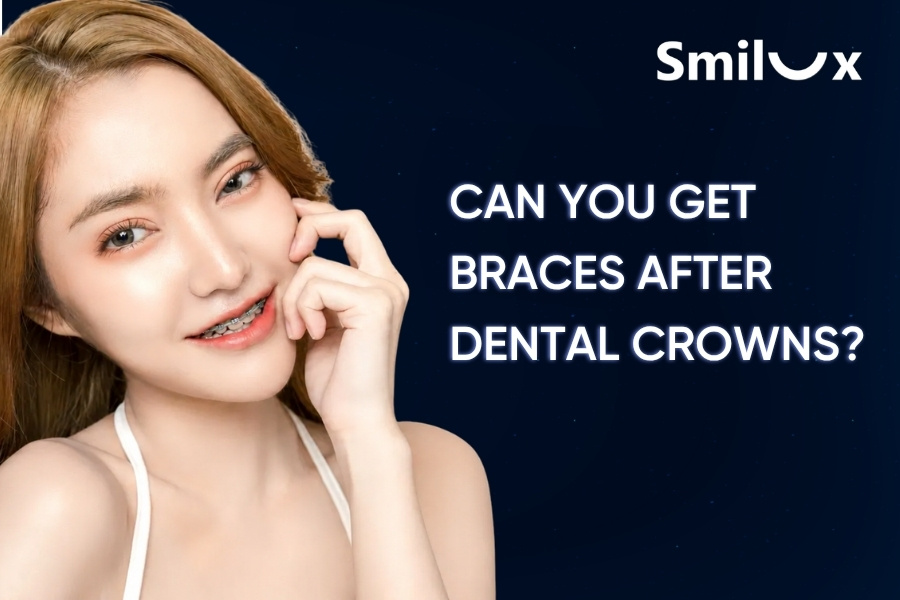
In the article below, Smilux dentists will provide a detailed answer to the question “Can You Get Braces After Dental Crowns?”, while also sharing which cases may be suitable for braces after dental crowns and key considerations for safe orthodontic care.

MỤC LỤC (TABLE)
ToggleMany patients who have had dental crowns are still not fully satisfied with their tooth shape, bite, or the evenness of their dental arch, so they continue to consider braces. At this point, common questions include whether you can get braces after dental crowns or whether braces are possible after getting crowns.
In fact, teeth with dental crowns can still undergo braces in certain cases. If the patient only has crowns on a few individual teeth, the natural teeth underneath are still strong, the tooth roots are stable, and they can withstand the pulling force from brackets or aligners, the dentist may still consider orthodontic care.
However, in cases where the patient has full mouth dental crowns, getting braces is often more complicated and may not always be safe, as the crowns can affect how orthodontic appliances bond, how orthodontic force is transmitted, and how the natural teeth underneath move.
To determine exactly whether you can get braces after dental crowns, patients need to be examined directly by a dentist and have their oral condition evaluated based on the following professional factors:
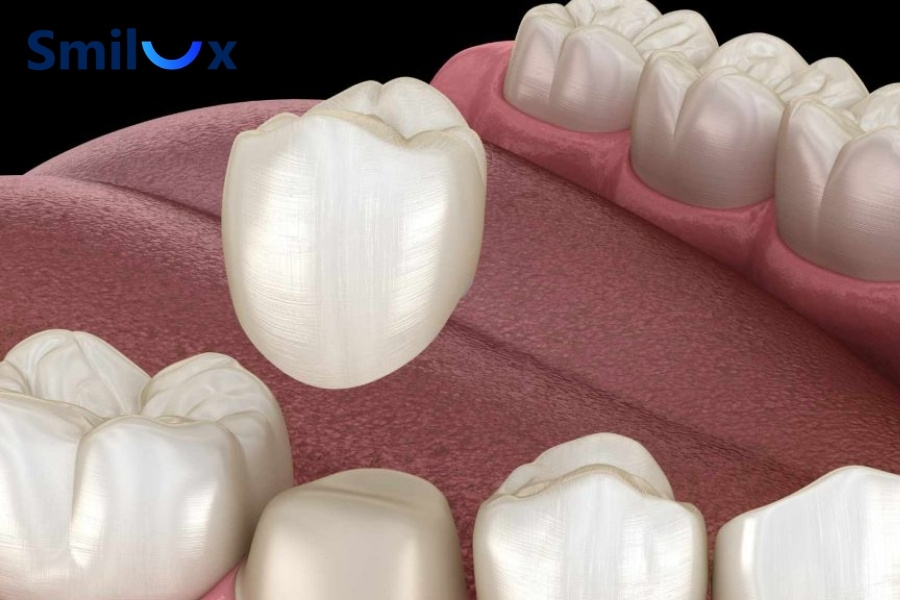
When placing dental crowns, the dentist has already reshaped part of the natural tooth to attach the crown. If the tooth stump is still healthy, the tooth root is stable, and the tooth can withstand orthodontic force, the dentist may consider attaching brackets to the dental crown or using clear aligners to move the teeth.
However, crowned teeth transmit orthodontic force differently from natural teeth. If the pulling force is not properly controlled, the dental crown may become loose, detached, or affect the natural tooth underneath.
If the dental crown fits closely over the natural tooth stump, has no open margins, and is firmly bonded, the force from brackets or clear aligners can be transmitted more stably while helping protect the natural tooth underneath.
On the other hand, if the dental crown has an open margin, is misaligned, or is not securely bonded, the braces process may cause the crown to come loose, shift, or even increase the risk of gum inflammation and tooth decay around the gap.
Therefore, if the dental crown is no longer secure, the patient may need to have it adjusted or replaced before getting braces so that tooth movement can take place more safely.
Before getting braces on crowned teeth, the dentist needs to check whether the natural teeth underneath the crowns have undergone root canal therapy. Root canal treated teeth are usually weaker than vital teeth because their tooth structure no longer has the same elasticity and natural force resistance as before.
If only a few teeth have undergone root canal therapy but the roots are still stable, the dentist may still consider orthodontic care. However, if many teeth in the jaw have had root canal therapy and have also been extensively reshaped for crowns, the braces process will be more difficult to control. At this point, the risk of crowns coming loose, teeth becoming mobile, or teeth being damaged during orthodontic movement will also be higher.
>>> READ MORE: Can You Get Braces If Tooth Number 6 Is Missing? Smilux Dentist Explains
The dentist needs to check whether the teeth are ankylosed before deciding whether Can You Get Braces After Dental Crowns?
Dental ankylosis is a condition in which the tooth root is fused to the jawbone, making the tooth almost unable to move even when orthodontic force is applied. This issue is often seen in teeth that have experienced trauma, undergone root canal therapy, or had dental crowns for a long time.
If a tooth is ankylosed, braces may be very difficult to achieve the desired result and may even increase the risk of pain, root resorption, or damage to the dental crown.
Before getting braces on crowned teeth, the teeth and gums must be healthy, without inflammation, abscesses, or pus around the tooth roots. If the crowned tooth has persistent pain, sensitivity, or swollen gums, the dentist needs to resolve these issues completely before orthodontic care.
Once the dental foundation is stable, the braces process can be safer and reduce the risk of the dental crowns becoming loose, weakened, or damaged.
Whether you can get braces after dental crowns also depends on how much the teeth need to move. Crowned teeth are often more difficult to control in terms of force than natural teeth, so not every case can be adjusted with large tooth movements.
In cases of severe overbite, underbite, or malocclusion, the teeth may need to move significantly to improve both aesthetics and chewing function. In such cases, the dentist must carefully evaluate the tooth roots, jawbone, and dental crowns before braces to reduce the risk of root resorption, tooth mobility, or unstable tooth movement.
Not everyone who has had dental crowns can get braces. Orthodontic care can only be performed when the dental crowns, the natural teeth underneath, and the jawbone meet the necessary conditions. Below are some cases where braces may still be possible after dental crowns:
When only 1 to 2 individual teeth have dental crowns, the dentist can usually plan orthodontic care more easily because most teeth in the dental arch are still natural teeth. This makes it easier to control the pulling force and direction of tooth movement compared to cases with multiple crowns or full mouth dental crowns.
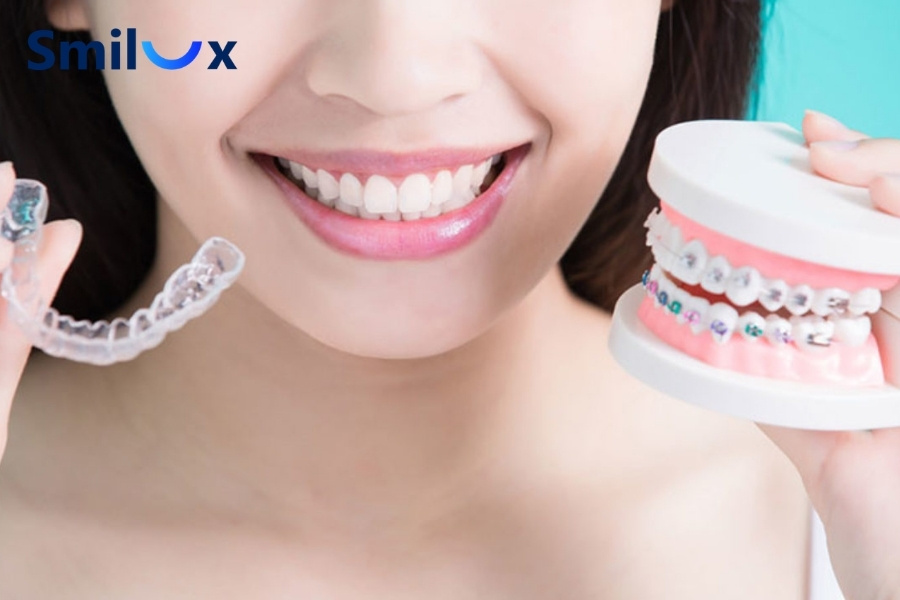
Depending on the patient’s oral health and the severity of misalignment, the dentist may recommend metal braces, ceramic braces, or Invisalign clear aligners.
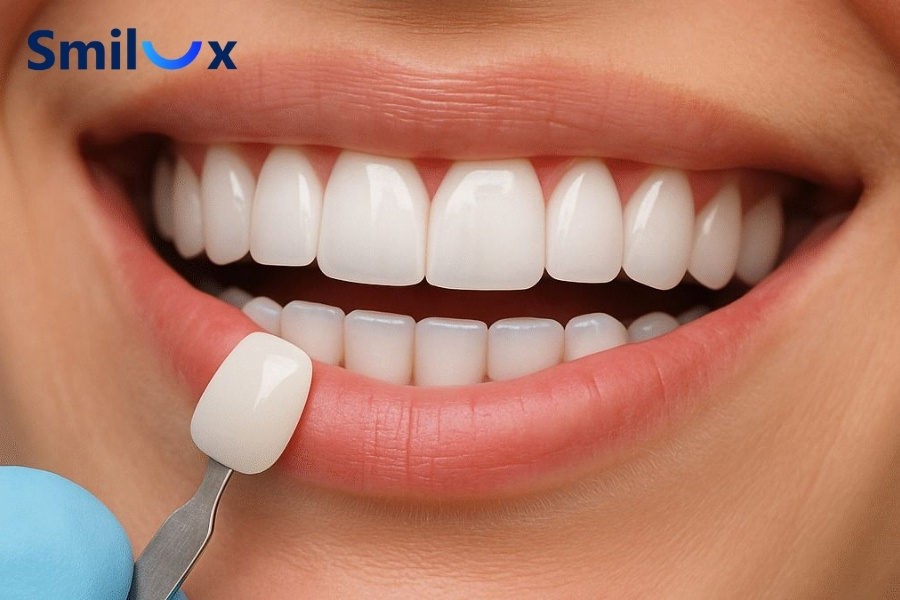
In cases where dental veneers are used to cover imperfections such as yellow, discolored, or unattractive tooth shape, patients may still be able to get braces. However, although veneers usually require less tooth reshaping than dental crowns, the natural tooth structure still needs to be strong enough to withstand orthodontic force.
In cases where dental crowns are placed due to tooth decay, cracked or broken teeth, or trauma, the dentist usually restores only a few damaged teeth, mainly in the molar area, to restore chewing function.
At this point, dental crowns are only present in certain individual positions, while the remaining teeth are still natural and suitable for movement. Therefore, patients may still be able to get braces.
According to Smilux Dental dentists, after getting dental crowns, patients may be able to get braces using 2 common methods: traditional braces and clear aligners.
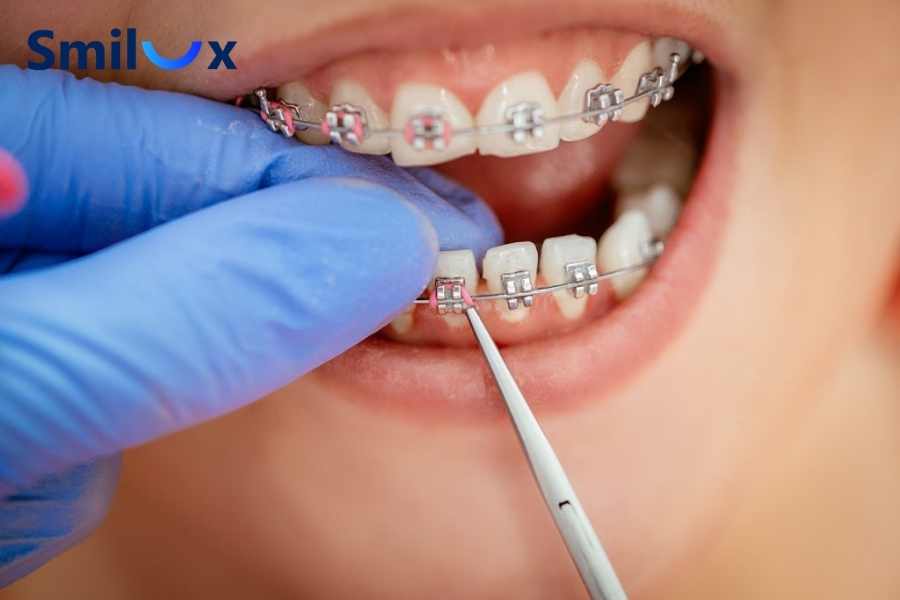
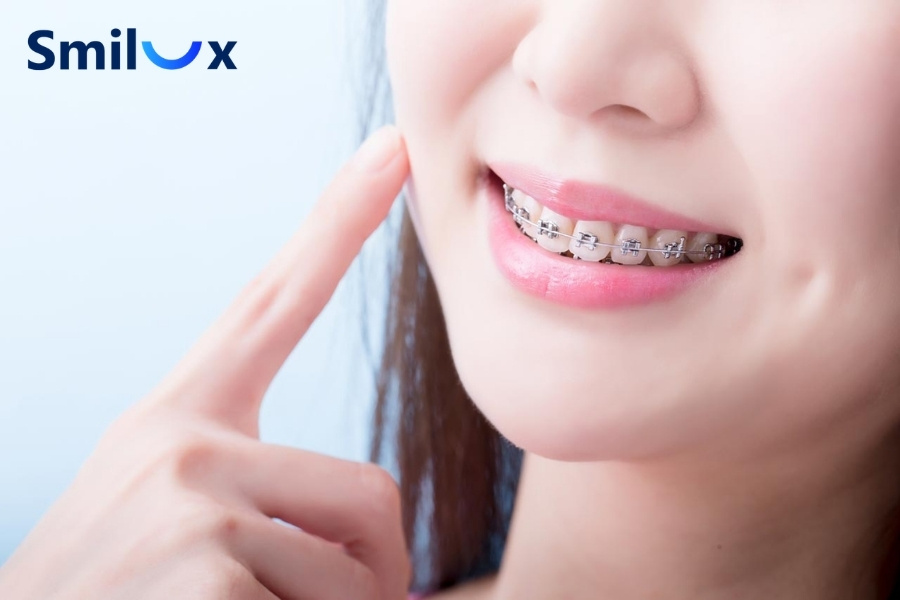
Traditional braces use metal or ceramic brackets combined with archwires to create pulling force, helping move the teeth into their proper positions. For teeth with dental crowns, this method should only be performed when the crowns are firmly bonded, the natural tooth stumps are healthy, and the tooth roots are stable enough to withstand orthodontic force.
Clear aligners use transparent plastic trays to create force and move the teeth. Unlike fixed braces, aligners can be removed when eating, drinking, and cleaning the teeth. They also apply less direct impact on the surface of dental crowns. As a result, this method helps reduce the risk of crowns becoming detached, cracked, chipped, or worn down during orthodontic care.
Continuing the topic “Can You Get Braces After Dental Crowns?”, Smilux Dental dentists will share key notes to help the braces process after dental crowns take place more safely and achieve better results.
Getting braces after dental crowns requires more careful evaluation than orthodontic care on fully natural teeth. At this stage, the dentist does not only check whether the teeth are protruding, underbite, misaligned, or affected by malocclusion, but also needs to examine the crowns, natural tooth stumps, tooth roots, jawbone, and force resistance throughout the tooth movement process.
Therefore, choosing a trusted dental clinic from the beginning is very important to reduce risks and feel more confident during dental care. Among them, Smilux Dental is one of the braces addresses worth considering for patients who have previously had dental crowns.
At Smilux Dental, patients with dental crowns will be directly examined by dentists with more than 15 years of experience, along with dental X rays and comprehensive evaluation before creating a braces plan. Based on the actual condition, the dentist will determine whether the crowned teeth are suitable for orthodontic care.
A key difference at Smilux Dental is that each orthodontic plan is personalized for every patient, especially in cases where dental crown restorations have been placed before. The dentist will control the pulling force appropriately to reduce the risk of crowns coming loose, pain, tooth mobility, or impact on the natural teeth underneath.
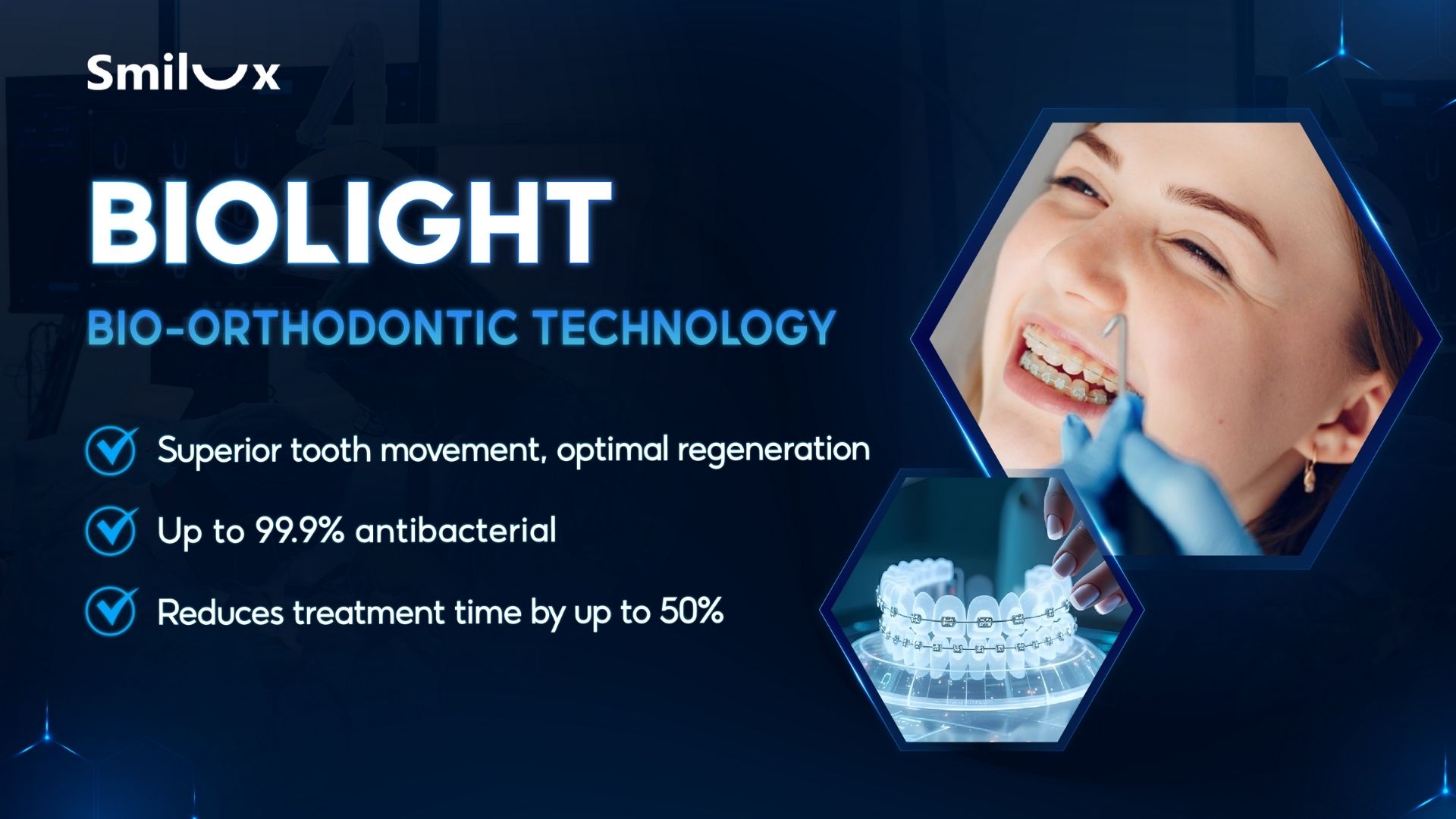
We currently also apply BioLight technology in braces, supporting a gentler, more accurate orthodontic process and optimizing the patient experience. Combined with modern diagnostic imaging systems such as 3D Cone Beam CT, the dentist can clearly observe the tooth structure, jawbone, and periodontal tissues, thereby creating a safer dental care plan.
Book an appointment at Smilux Dental through the FORM below to have your teeth examined directly by a dentist and receive clear consultation before deciding to get braces.
BOOK APPOINTMENT
In summary, Can You Get Braces After Dental Crowns? depends on several factors, including the number of crowned teeth, the health of the natural teeth underneath, the fit of the dental crowns, gum condition, jawbone health, and the severity of bite misalignment.
If you want to get braces after dental crowns, please contact Smilux via HOTLINE (+84) 866 251 379 to have your teeth examined by a dentist and receive advice on the most suitable dental care option.
---------- Braces Knowledge ----------
Are Braces Results Permanent? Learn with Smilux Dental’s dentists how long braces results can last, why teeth may shift again after braces are removed, and how proper care and retainer wear can help protect your smile for the long term.
Can Braces Cause Sunken Cheeks? Let Smilux Dental help you understand the causes of sunken cheeks during the braces process and how to improve this condition in the article below.
Does orthodontic mini-implant placement hurt? In the article below, Smilux Dental provides a detailed explanation of the level of discomfort during the procedure, the step-by-step placement process, and important considerations to help you feel more confident throughout your orthodontic treatment and achieve optimal results.
Do braces hurt? Smilux dentists explain: Orthodontic treatment may cause mild discomfort during certain stages, but the intensity is typically low and remains well within the tolerance level of most patients.
CONTACT
ABOUT SMILUX
DENTAL KNOWLEDGE