Can you whiten your teeth while breastfeeding?

After childbirth, many nursing mothers want to improve their appearance to feel more confident in their work and daily life. Among the available options, teeth whitening is a treatment that many people consider to address tooth discoloration after pregnancy.

However, many mothers are concerned that whitening agents may affect their baby’s health through breast milk. So, can you whiten your teeth while breastfeeding? The dentists at Smilux Dental will provide a detailed explanation in the article below to help you make a suitable and safe decision.
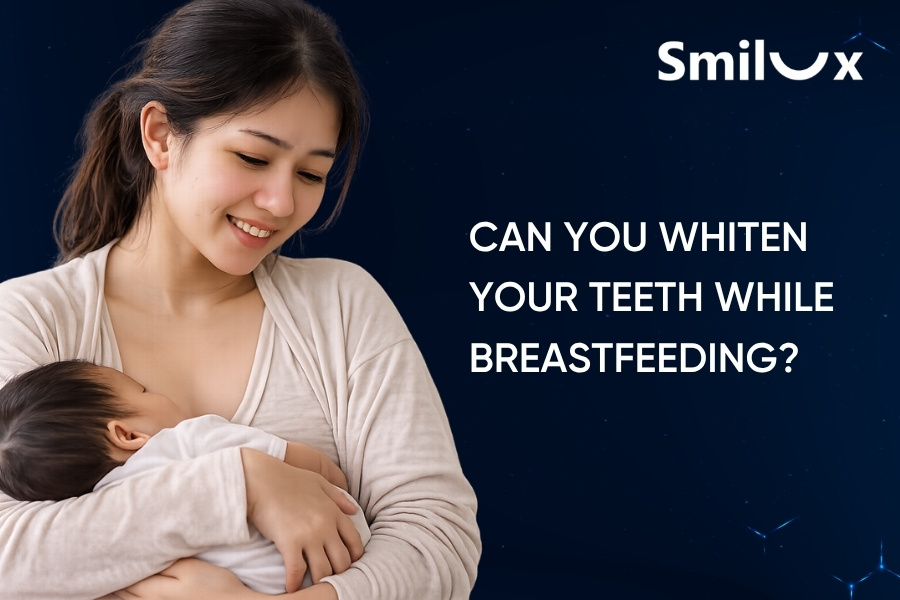
Can you whiten your teeth while breastfeeding?

Causes of yellow teeth during pregnancy

Can you whiten your teeth while breastfeeding? To answer this question, let’s first look at the causes of yellow or discolored teeth during pregnancy.

According to experts, pregnant women are more likely to experience tooth discoloration than usual. This may result from bodily changes during pregnancy, such as:

A nutritionally inadequate diet

During pregnancy, a mother’s body needs more nutrients to support fetal development. If the diet does not meet this increased demand, the body may become deficient in essential minerals and vitamins. In particular, a lack of calcium, phosphorus, or vitamin D can make tooth enamel more prone to dullness, yellowing, and reduced brightness compared with before pregnancy.

Frequently eating sour foods

Many women tend to crave sour foods during pregnancy. However, these foods often contain high levels of acid. When acid comes into contact with the teeth for a prolonged period, tooth enamel gradually wears down. As the outer enamel layer becomes thinner, the natural yellow color of the dentin becomes more visible, making the teeth appear dull and less white.
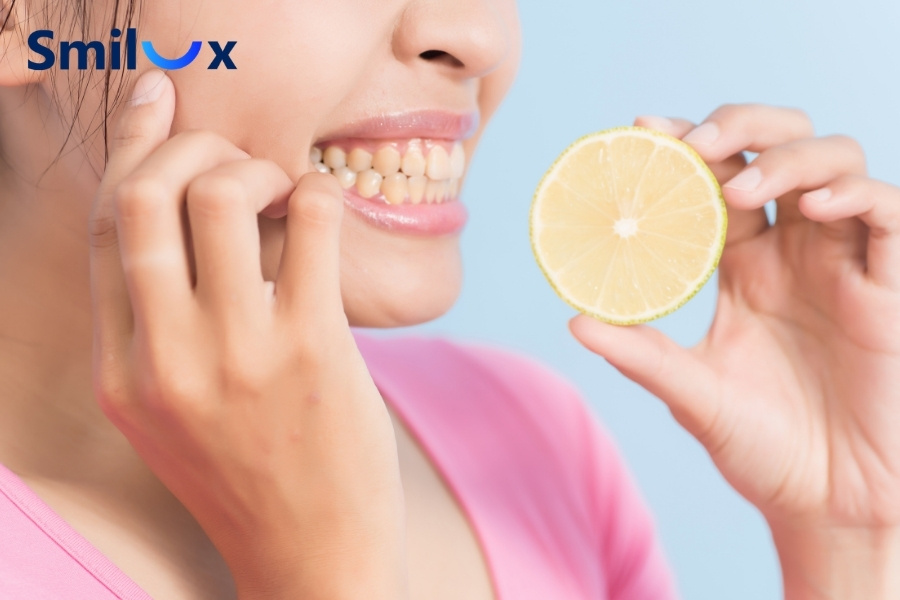
Thèm đồ chua khi mang thai dễ làm mòn men răng, khiến răng xỉn màu hơn.

Excessive iron supplementation

Iron is an essential mineral during pregnancy, helping reduce the risk of anemia and supporting fetal development. However, excessive iron supplementation or long-term use of products with a high iron content may affect the color of the teeth. When iron levels in the oral cavity increase, iron pigments can adhere to the tooth surface, forming dark stains or discoloration.

>>> READ MORE: At What Age Can You Whiten Your Teeth? Should Children Have Their Teeth Whitened?

Improper oral care

During pregnancy, eating frequency often increases to meet the nutritional needs of both the mother and the fetus. If oral hygiene is not maintained properly after meals, plaque and food debris can accumulate on the tooth surfaces. Over time, this plaque may become stained by foods and beverages and harden into tartar, causing the teeth to gradually turn yellow or appear dull.
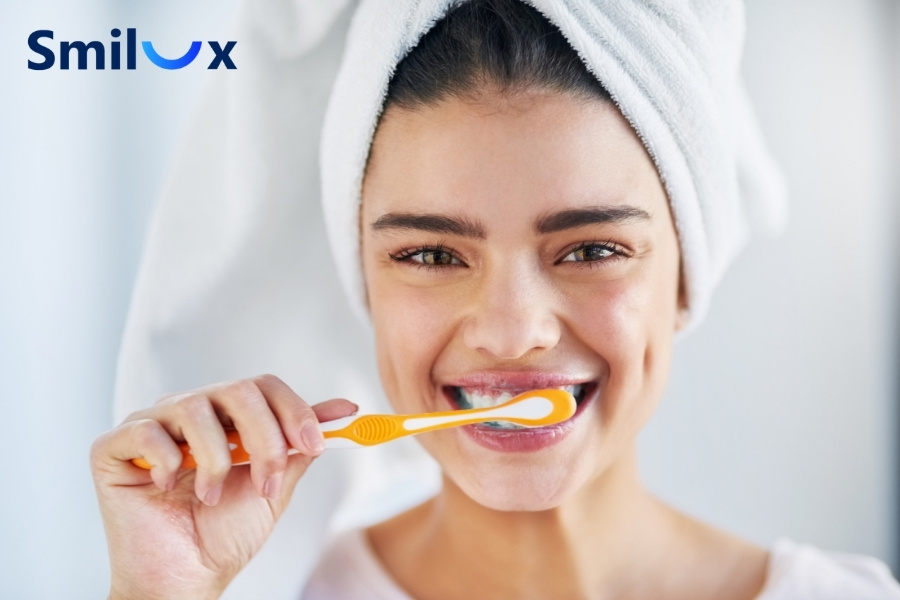
Ăn uống nhiều hơn khi mang thai nhưng vệ sinh răng chưa kỹ có thể khiến mảng bám tích tụ, làm răng ngả vàng

Can you whiten your teeth while breastfeeding?

Can you whiten your teeth while breastfeeding? The dentists at Smilux International Dental Clinic advise nursing mothers not to whiten their teeth during this period to ensure the baby’s absolute safety.

Current teeth whitening methods essentially use bleaching agents such as hydrogen peroxide or carbamide peroxide. These active ingredients can penetrate the enamel and break down the molecular structure of deep stains within the dentin, helping the teeth appear brighter than their original shade.

For adults in general, these ingredients have been proven safe when used at the proper concentration and according to professional indications. However, there is still not enough research data to confirm their safety for breastfeeding women and newborns during this special period.

The American Dental Association (ADA) currently does not list teeth whitening as contraindicated for breastfeeding women. However, the organization still recommends that nursing mothers consult a dentist and a pediatrician before undergoing the procedure to ensure it is suitable for both the mother’s and baby’s health conditions.

Đang cho con bú có tẩy trắng răng được không?

How long after childbirth can women whiten their teeth?

The ideal time to whiten teeth is after the mother has completely weaned her baby. At this stage, the mother can feel more confident undergoing cosmetic dental treatments without concerns related to breastfeeding and caring for her baby.

In addition, teeth whitening methods often use bleaching agents at relatively high concentrations, so postpartum women should wait until their health has recovered and their oral condition has fully stabilized before undergoing the procedure. If teeth whitening is performed too early, the teeth may become sensitive or painful, affecting oral health and chewing function.

Before the procedure, postpartum mothers should still visit a dental clinic for a comprehensive oral examination. This allows the dentist to determine the most appropriate time for teeth whitening, ensuring both safety and optimal results.
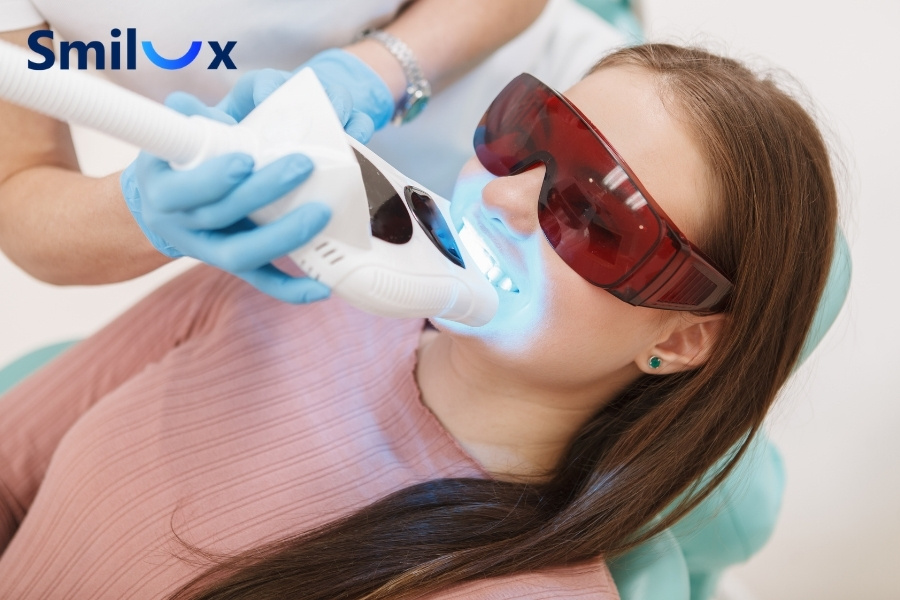
Sau khi cai sữa hoàn toàn, mẹ bỉm có thể cân nhắc tẩy trắng răng

BOOK APPOINTMENT​

Error: Contact form not found.

At-home teeth whitening methods for nursing mothers

Although nursing mothers cannot undergo teeth whitening at the clinic while breastfeeding, they can still try some at-home teeth whitening methods. These methods use natural, gentle ingredients that are less likely to affect the baby.
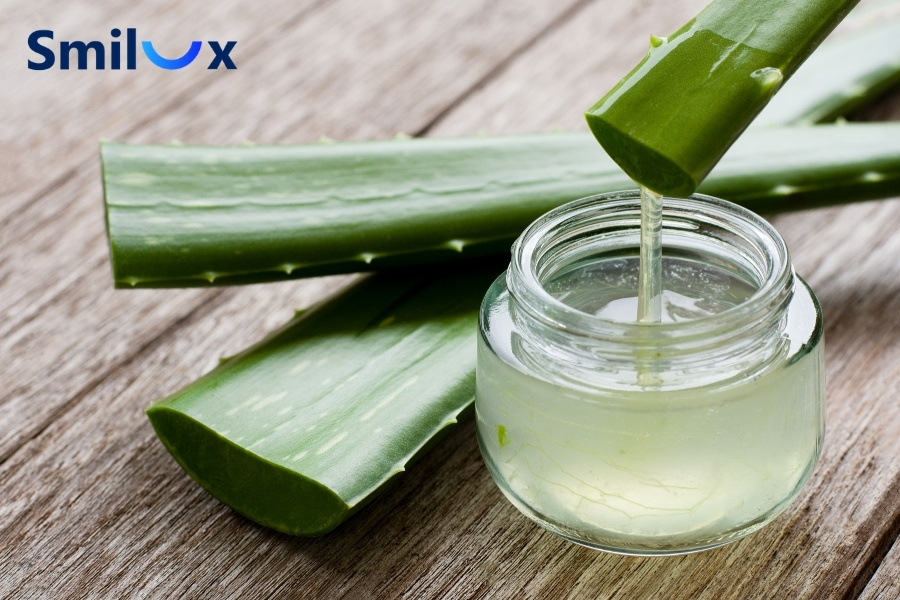
  • Aloe vera: This is a natural ingredient commonly used to help clean the teeth. Nursing mothers can gently rub aloe vera gel onto the tooth surfaces or combine it with a small amount of honey for oral hygiene.
  • Strawberries: Strawberries contain malic acid, which can help remove stains on the tooth surface. Adding strawberries to the diet may help the teeth appear brighter over time.
  • Ripe banana peel: Banana peel contains certain minerals such as potassium and magnesium. Nursing mothers can gently rub the inside of the banana peel on their teeth for about 1-2 minutes, then rinse thoroughly with water and maintain this habit daily.
  • Lemon: Lemon contains a relatively high amount of citric acid, which can help clean plaque on the tooth surface. Nursing mothers can dilute lemon juice with a small amount of salt and use it to clean their teeth. However, this should not be done more than 2-3 times per week to reduce the risk of affecting tooth enamel.

Nha đam có thể hỗ trợ làm sạch bề mặt răng

Guidelines on oral care for postpartum women

During pregnancy and after childbirth, hormonal changes can make the gums more sensitive and the teeth more prone to plaque buildup and discoloration. To help reduce this condition, postpartum mothers can refer to the oral care tips shared by Smilux dentists below:

  • Brush your teeth and clean between your teeth regularly: You should brush your teeth twice a day with fluoride toothpaste. After eating, rinse your mouth with clean water. For the spaces between the teeth, postpartum mothers can use dental floss or a water flosser to remove plaque and prevent food from getting trapped, which may cause tooth decay, gingivitis, and bad breath.
  • Maintain a nutritious diet: After childbirth, the mother’s body needs adequate nutrients to recover and maintain oral health. Foods rich in calcium, vitamin D, and phosphorus, such as milk, cheese, eggs, fish, and green vegetables, can help strengthen the teeth.
  • Limit sweets and acidic foods: Candies, soft drinks, carbonated beverages, or overly sour foods can increase the risk of tooth decay and enamel erosion. If you consume them, you should rinse your mouth with water afterward. Avoid brushing your teeth immediately after eating or drinking acidic foods to prevent further damage to the enamel.
  • Reduce tea, coffee, and dark-colored foods: Strong tea, coffee, dark-colored soft drinks, or deeply colored foods can easily stain the tooth surface. Postpartum mothers should limit these during the period when their teeth are sensitive and maintain proper oral hygiene after eating and drinking.
  • Have regular dental checkups: Postpartum mothers should visit the dentist regularly so the dentist can examine the condition of their teeth and gums and remove tartar when necessary. If there are signs of bleeding gums, tooth sensitivity, pain, or severe tooth discoloration, they should visit the dentist early for proper treatment.

Hạn chế đồ ngọt, nước có gas và món chua giúp giảm nguy cơ sâu răng, mòn men răng

CONCLUSION

We hope the information above has helped patients answer the question: Can you whiten your teeth while breastfeeding? To ensure safety, nursing mothers should postpone teeth whitening until after the breastfeeding period has ended and consult a dentist before undergoing the procedure.

If patients need teeth whitening or want to learn more about the whitening method suitable for their dental condition, please contact Smilux International Dental Clinic via HOTLINE (+84) 866 251 379 for detailed consultation.

Note: The content in this article is for reference only and does not replace a dentist’s diagnosis or clinical recommendation. For accurate advice based on your oral condition, you should visit a dental specialist directly.

bs hoàng danh ngân mới nhất
PROFESSIONAL CONSULTATION: DR. HOANG DANH NGAN Dr. Hoang Danh Ngan, MSc., DDS., CHUWS, is one of the leading dental professionals at Smilux Dental, with over 15 years of clinical experience.

---------- Teeth And Gums Knowledge ----------

Uneven Teeth Whitening Results: Causes and Effective Solutions
22Jun

Uneven Teeth Whitening Results can make your smile look less aesthetic after whitening. Learn about the causes and safe solutions from Smilux doctors to protect tooth enamel, limit sensitivity, and help teeth become evenly brighter.

Can you whiten your teeth while breastfeeding?
22Jun

Can you whiten your teeth while breastfeeding? This article from Smilux doctors helps nursing mothers understand the appropriate time to whiten their teeth, important safety precautions, and suitable postpartum oral care.

Can teeth with cavities be whitened?
19Jun

Can teeth with cavities be whitened? Learn more with Smilux Dental’s dentists to help reduce tooth sensitivity and effectively protect the dental pulp.

Can teeth stained by tetracycline be whitened?
18Jun

Can teeth stained by tetracycline be whitened? Learn which cases are suitable for teeth whitening and when porcelain veneers or dental crowns may be recommended to safely improve tooth color. Smilux provides personalized treatment advice based on the severity of discoloration and the condition of the tooth enamel.

1 2 3
This site is registered on wpml.org as a development site. Switch to a production site key to remove this banner.