Can teeth with cavities be whitened? Learn more with Smilux Dental’s dentists to help reduce tooth sensitivity and effectively protect the dental pulp.


After childbirth, many nursing mothers want to improve their appearance to feel more confident in their work and daily life. Among the available options, teeth whitening is a treatment that many people consider to address tooth discoloration after pregnancy.
However, many mothers are concerned that whitening agents may affect their baby’s health through breast milk. So, can you whiten your teeth while breastfeeding? The dentists at Smilux Dental will provide a detailed explanation in the article below to help you make a suitable and safe decision.
Many women tend to crave sour foods during pregnancy. However, these foods often contain high levels of acid. When acid comes into contact with the teeth for a prolonged period, tooth enamel gradually wears down. As the outer enamel layer becomes thinner, the natural yellow color of the dentin becomes more visible, making the teeth appear dull and less white.
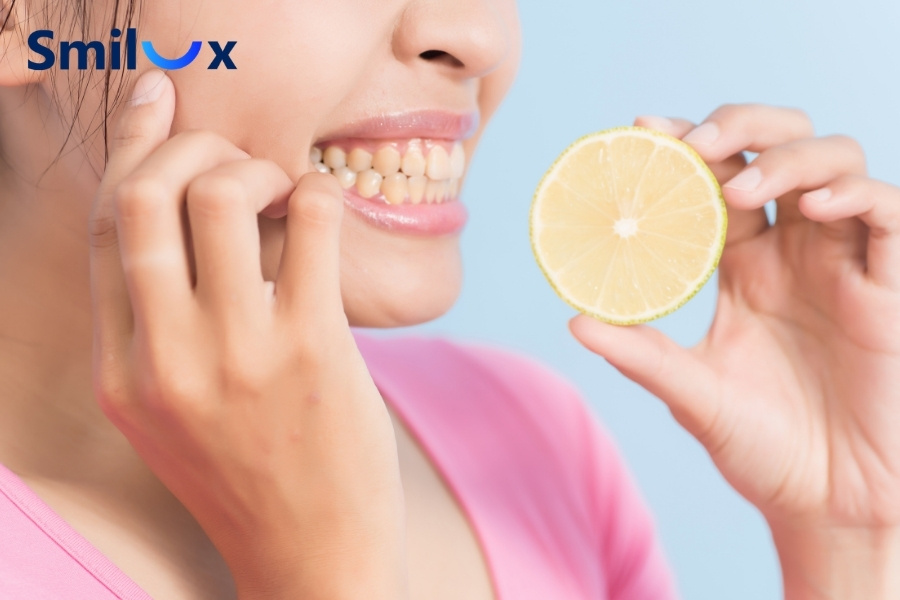
During pregnancy, eating frequency often increases to meet the nutritional needs of both the mother and the fetus. If oral hygiene is not maintained properly after meals, plaque and food debris can accumulate on the tooth surfaces. Over time, this plaque may become stained by foods and beverages and harden into tartar, causing the teeth to gradually turn yellow or appear dull.
Can you whiten your teeth while breastfeeding? The dentists at Smilux International Dental Clinic advise nursing mothers not to whiten their teeth during this period to ensure the baby’s absolute safety.
Current teeth whitening methods essentially use bleaching agents such as hydrogen peroxide or carbamide peroxide. These active ingredients can penetrate the enamel and break down the molecular structure of deep stains within the dentin, helping the teeth appear brighter than their original shade.
For adults in general, these ingredients have been proven safe when used at the proper concentration and according to professional indications. However, there is still not enough research data to confirm their safety for breastfeeding women and newborns during this special period.
The American Dental Association (ADA) currently does not list teeth whitening as contraindicated for breastfeeding women. However, the organization still recommends that nursing mothers consult a dentist and a pediatrician before undergoing the procedure to ensure it is suitable for both the mother’s and baby’s health conditions.

The ideal time to whiten teeth is after the mother has completely weaned her baby. At this stage, the mother can feel more confident undergoing cosmetic dental treatments without concerns related to breastfeeding and caring for her baby.
In addition, teeth whitening methods often use bleaching agents at relatively high concentrations, so postpartum women should wait until their health has recovered and their oral condition has fully stabilized before undergoing the procedure. If teeth whitening is performed too early, the teeth may become sensitive or painful, affecting oral health and chewing function.
Before the procedure, postpartum mothers should still visit a dental clinic for a comprehensive oral examination. This allows the dentist to determine the most appropriate time for teeth whitening, ensuring both safety and optimal results.
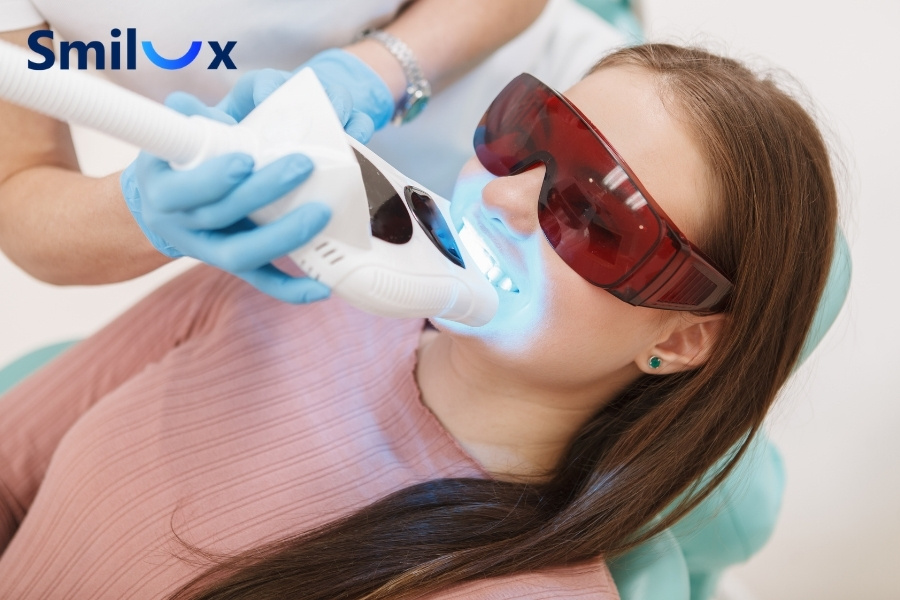
Although nursing mothers cannot undergo teeth whitening at the clinic while breastfeeding, they can still try some at-home teeth whitening methods. These methods use natural, gentle ingredients that are less likely to affect the baby.
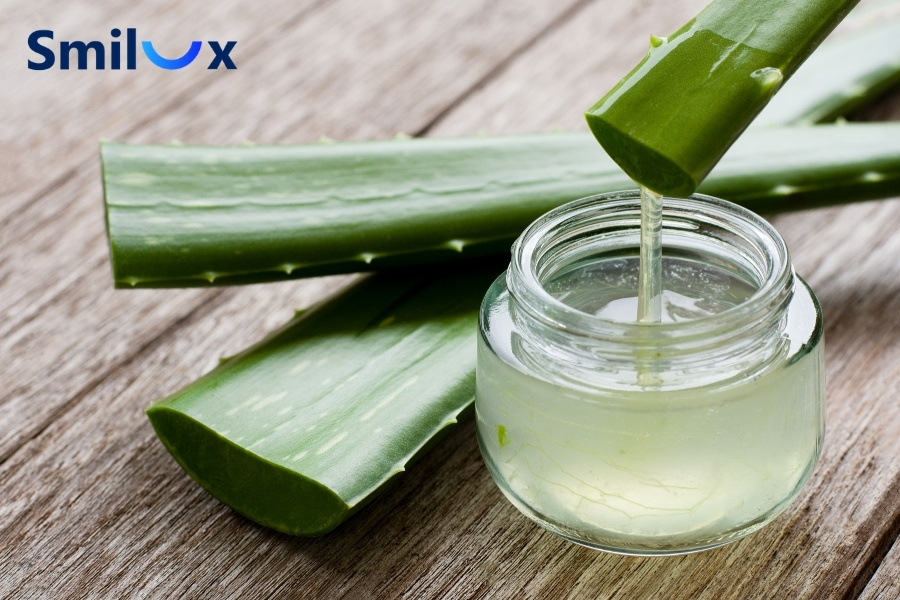
During pregnancy and after childbirth, hormonal changes can make the gums more sensitive and the teeth more prone to plaque buildup and discoloration. To help reduce this condition, postpartum mothers can refer to the oral care tips shared by Smilux dentists below:


Can teeth with cavities be whitened? Learn more with Smilux Dental’s dentists to help reduce tooth sensitivity and effectively protect the dental pulp.
Can teeth stained by tetracycline be whitened? Learn which cases are suitable for teeth whitening and when porcelain veneers or dental crowns may be recommended to safely improve tooth color. Smilux provides personalized treatment advice based on the severity of discoloration and the condition of the tooth enamel.