
Can Braces Cause Sunken Cheeks? Let Smilux Dental help you understand the causes of sunken cheeks during the braces process and how to improve this condition in the article below.
Swollen gums during braces treatment are a common problem, causing many patients to experience pain, discomfort while chewing, and difficulty maintaining oral hygiene. So, is Swollen Gums With Braces dangerous, what causes it, and how can it be treated? Let’s learn more in detail with Smilux Dental dentists in the article below.

MỤC LỤC (TABLE)
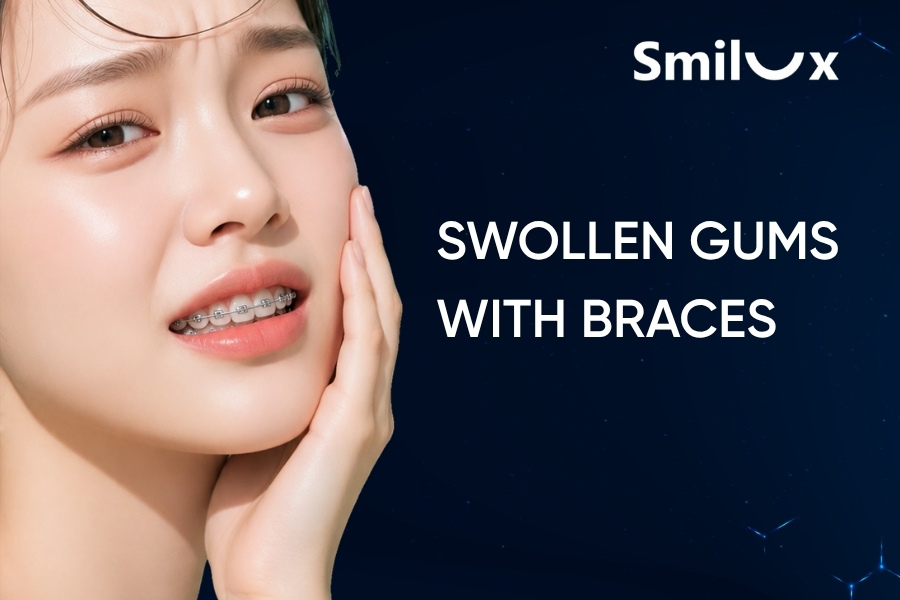
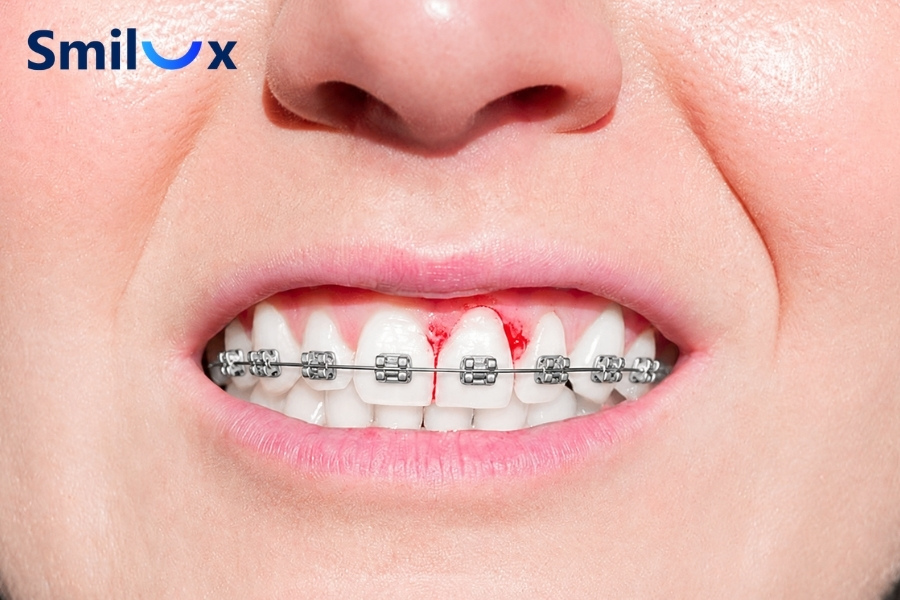
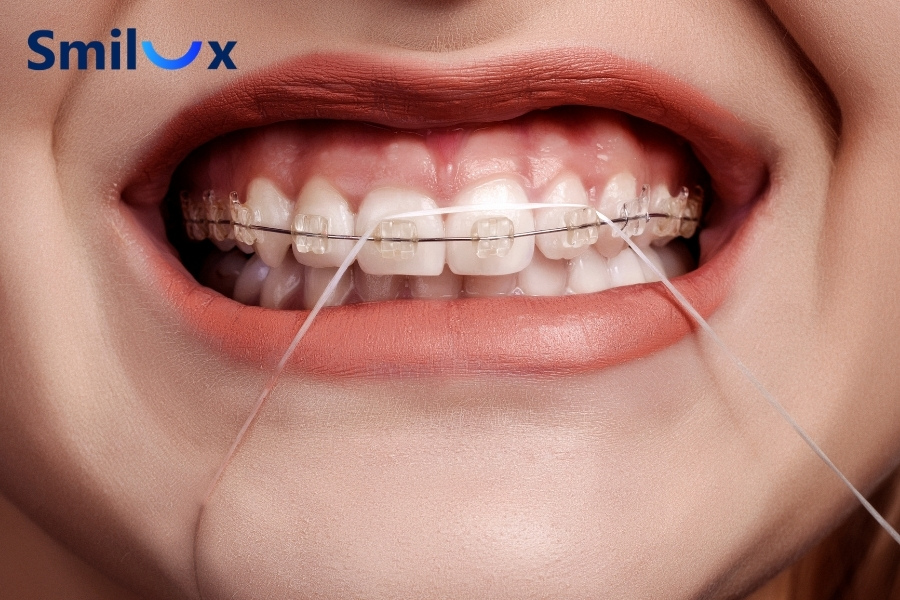
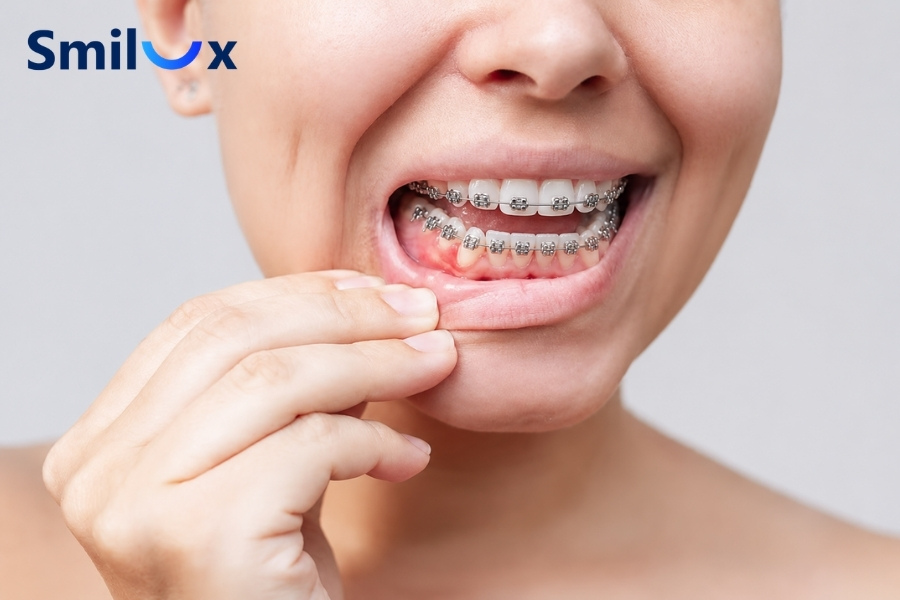
ToggleSwollen Gums With Braces, also known as gum swelling during braces treatment, is a condition in which the gum tissue around the teeth becomes inflamed, swollen, red, or more sensitive during orthodontic treatment. Gum swelling may appear in several areas around the brackets, between the teeth, or spread to multiple gum areas if oral hygiene is not well controlled.
During braces treatment, brackets, archwires, or aligners can make it easier for food debris and plaque to get trapped on the teeth. If they are not cleaned properly, bacteria can accumulate around the tooth necks and gumline, irritating the gum tissue and leading to gingivitis.
Common signs of this condition include red, swollen gums, bleeding easily when brushing, and pain or discomfort when chewing. In some cases, it may also be accompanied by bad breath, mild gum recession, or a feeling that the teeth are looser than usual.
In mild stages, swollen and inflamed gums can improve with proper oral hygiene and follow-up visits as instructed by the dentist. However, if the condition persists and is not treated promptly, gingivitis can progress to a more severe stage, affecting the periodontal tissues, alveolar bone, and orthodontic treatment results.
Gum swelling during braces treatment is a fairly common condition and may result from various causes, such as:
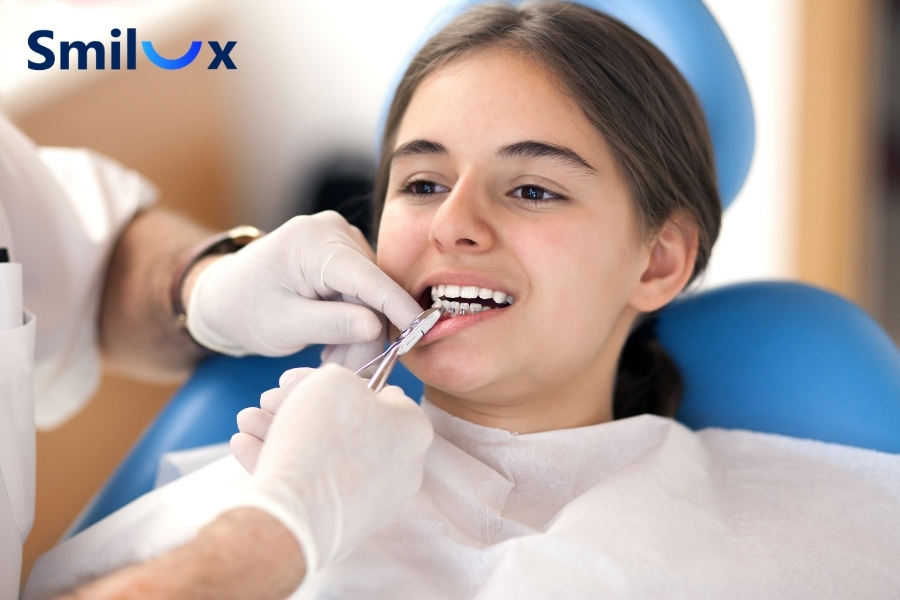
Incorrect orthodontic technique, such as placing brackets in the wrong position, adjusting the archwire improperly, or applying excessive tightening force, can irritate the gums and cause swelling, pain, and bleeding. If not treated promptly, this condition can easily increase the risk of gingivitis, gum recession, dental abscesses, or affect the final orthodontic treatment results.
Before getting braces, the dentist needs to perform a general examination and treat oral health problems such as tooth decay, gingivitis, and periodontitis, as well as remove tartar if necessary.
If gingivitis has not been completely treated, bacteria may still remain around the teeth and can easily cause the gums to become red, swollen, painful, or bleed more during the process of wearing braces.
To better understand this case, you can refer to the article: “Can I Get Braces If I Have Periodontitis? Smilux Answers“
Wearing brackets, archwires, and orthodontic elastics makes oral hygiene more difficult, especially around the brackets and between the teeth. If food debris is not cleaned thoroughly, it can combine with bacteria to form plaque, increasing the risk of gingivitis, tooth decay, and bad breath.
In addition, improper brushing can also easily damage the gums. Using a toothbrush that is too hard or brushing with excessive force can scratch the gums, cause bleeding, and make them more sensitive. When the gum tissue is damaged, bacteria can easily enter and cause gingivitis.
After brackets are placed or after each braces adjustment, the teeth and gums are often more sensitive than usual. Eating too many foods that are too spicy or too hot can irritate the gums, causing a burning sensation, redness, swelling, or discomfort when chewing.
Although spicy or hot foods are not a direct cause of Swollen Gums With Braces, they can make the swelling and pain more noticeable, especially when the gums are already damaged or oral hygiene is not well maintained.
Gingivitis during braces treatment may also be related to existing oral health conditions such as tooth decay, periodontitis, or long-term tartar buildup. In addition, people with diabetes often have a higher risk of gingivitis because unstable blood sugar levels can reduce the body’s resistance and cause gum tissue to heal more slowly.
>>> READ MORE: Bone Loss With Braces – Signs, Causes, and How to Fix It
Swollen Gums With Braces is usually not dangerous if it occurs only mildly and for a short period of time. However, if the gums remain red and swollen for a long time, bleed easily, feel painful, or are accompanied by bad breath, patients should not ignore the condition and should visit a dentist as soon as possible.
Some common harmful effects of gum swelling with braces include:
When patients experience gum swelling or gingivitis with braces, they should visit a dentist early for examination and treatment to prevent the infection from spreading and affecting orthodontic treatment results.
In mild cases of Swollen Gums With Braces, the dentist will clean plaque from the tooth surfaces and around the gumline to control the bacteria that cause inflammation. After that, patients will be instructed on how to care for their teeth at home to reduce swelling and pain and limit the recurrence of gingivitis.
In cases of severe gingivitis, gum recession, or exposed tooth roots, the dentist needs to carefully examine the condition of the gum tissue, alveolar bone, and the degree of tooth mobility. Depending on the specific condition, patients may need periodontal treatment, deep cleaning below the gumline, or gum tissue grafting if the recessed gum area affects aesthetics, causes tooth sensitivity, and exposes a large portion of the tooth root.
During this stage, the dentist may adjust the orthodontic force, reduce the tightening force, or temporarily pause certain orthodontic steps to prioritize inflammation control. Once the gum tissue has stabilized and oral health is ensured, the braces treatment should continue according to the treatment plan.
Based on the common causes of gum swelling during braces treatment, patients can proactively prevent this condition in the following ways:
Swollen Gums With Braces is something no one wants to experience, but you can still avoid this condition by choosing orthodontic treatment at a reputable dental clinic with a team of dentists who are professionally trained in Dentistry and Oral and Maxillofacial care. Before getting braces, the dentist needs to carefully examine the condition of the teeth, gums, and jawbone, and thoroughly treat any existing oral health problems if present.
Meeting these criteria, Smilux Dental is an orthodontic clinic trusted by many patients thanks to its team of dentists with over 15 years of experience, who directly examine, create treatment plans, and monitor patients throughout the entire braces treatment process.
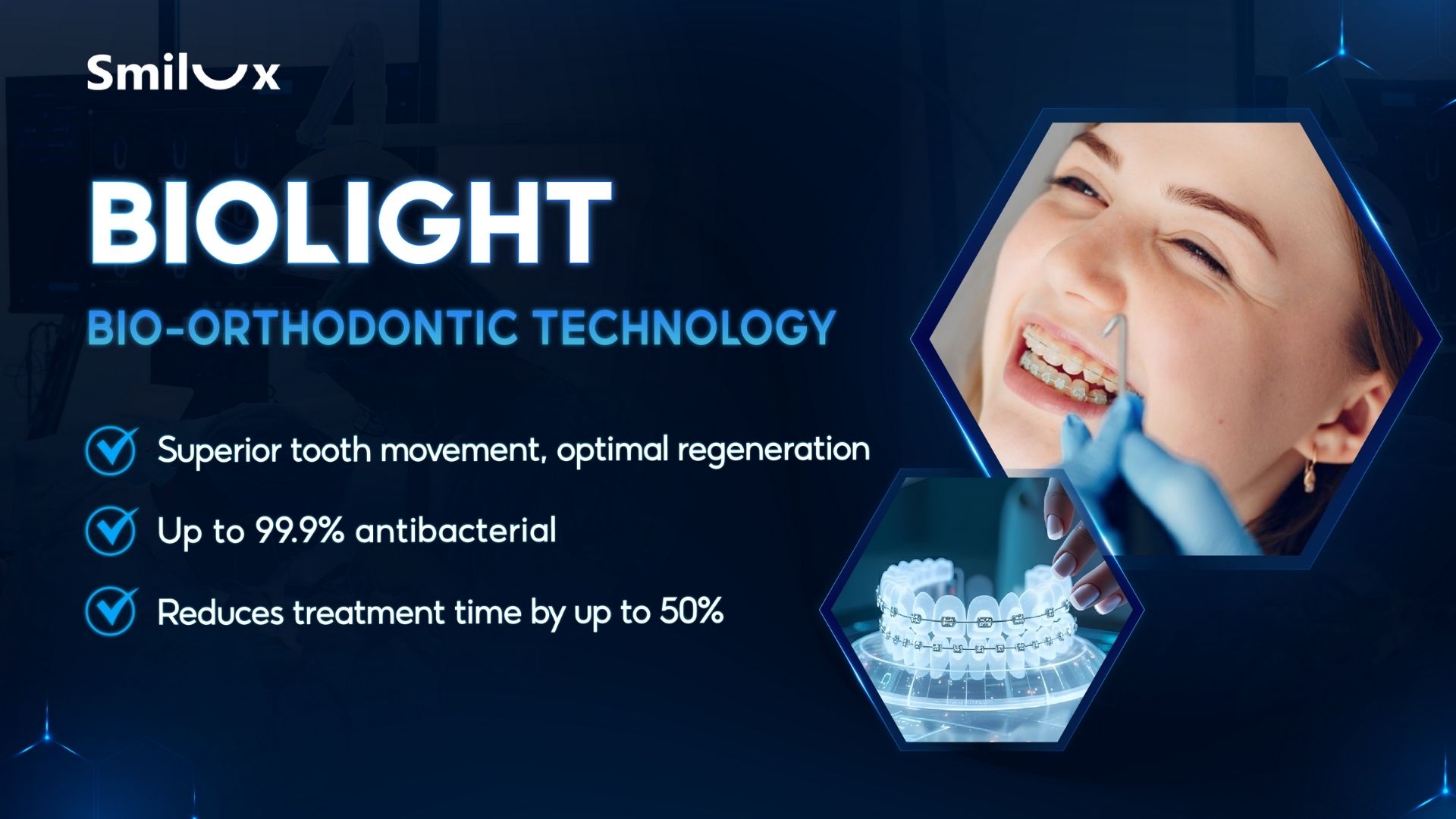
Each treatment plan is developed based on the actual oral condition of each patient, combined with BioLight technology to help control orthodontic force and the direction of tooth movement more accurately. As a result, patients can feel more confident during orthodontic treatment while limiting problems such as gum swelling, gingivitis, or teeth moving in the wrong direction.
In addition to the dentists’ expertise, we also focus on investing in modern machinery and advanced dental equipment to support more accurate examination, diagnosis, and orthodontic monitoring.
The clinic also follows a sterilization protocol, schedules regular follow-up visits, and closely monitors each stage of tooth movement. As a result, patients can feel more at ease throughout the braces treatment process, reduce potential problems, and achieve safe, long-term orthodontic results.

BOOK APPOINTMENT
Smilux Dental hope the information above has helped you better understand Swollen Gums With Braces, including its causes, level of severity, and appropriate treatment solutions.
If you are planning to get braces and are concerned about problems such as gum swelling, gingivitis, or teeth moving in the wrong direction, please contact Smilux Dental’s HOTLINE at (+84) 866 251 379 for an examination and consultation with a dentist.
Note: The content in this article is for reference only and does not replace a dentist’s diagnosis or clinical recommendation. For accurate advice based on your oral condition, you should visit a dental specialist directly.
---------- Braces Knowledge ----------
Can Braces Cause Sunken Cheeks? Let Smilux Dental help you understand the causes of sunken cheeks during the braces process and how to improve this condition in the article below.
Does orthodontic mini-implant placement hurt? In the article below, Smilux Dental provides a detailed explanation of the level of discomfort during the procedure, the step-by-step placement process, and important considerations to help you feel more confident throughout your orthodontic treatment and achieve optimal results.
Do braces hurt? Smilux dentists explain: Orthodontic treatment may cause mild discomfort during certain stages, but the intensity is typically low and remains well within the tolerance level of most patients.
CONTACT
ABOUT SMILUX
DENTAL KNOWLEDGE