Can teeth with cavities be whitened? Learn more with Smilux Dental’s dentists to help reduce tooth sensitivity and effectively protect the dental pulp.


Teeth whitening is a cosmetic dental treatment chosen by many patients when their teeth become yellow or discolored. However, not every case achieves the expected results. Some patients may experience a condition where only one or a few teeth appear darker than the remaining teeth, making the smile look less harmonious.
So, what causes Uneven Teeth Whitening Results, and how can this condition be corrected? Let’s find out in detail with the doctors at Smilux Dental in the article below.

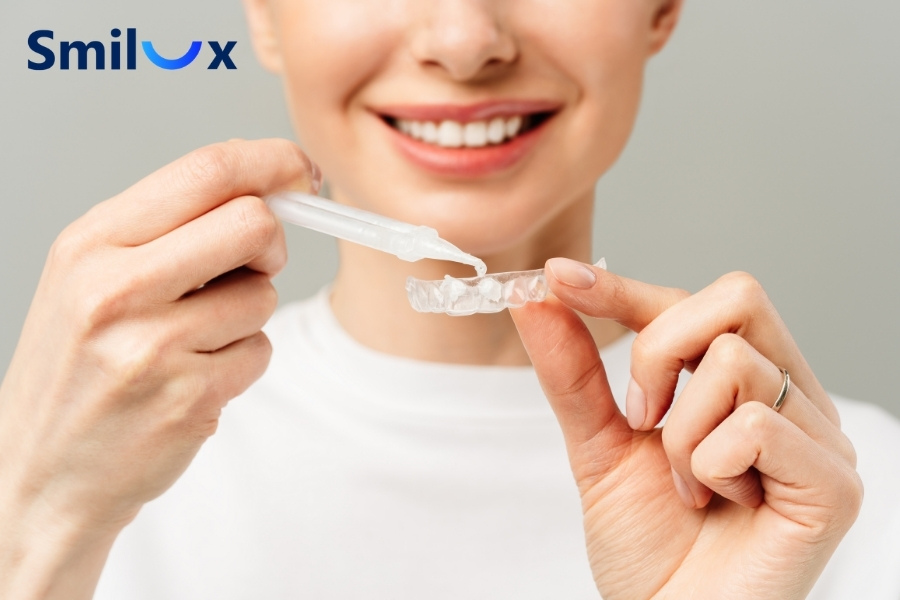
Using teeth whitening agents at home without professional guidance is one of the common causes of uneven tooth color after whitening. Each person has different levels of staining, enamel condition, and oral health, so you should not choose whitening agents or whitening products on your own without being examined by a dentist.
Before prescribing at-home teeth whitening, the dentist needs to perform an examination to assess the initial tooth shade and check for issues such as tooth decay, enamel wear, gingivitis, tartar buildup, or old fillings. If these problems are not treated beforehand, the whitening agent may work unevenly, causing some areas of the teeth to appear brighter while others remain yellow or show patchy color changes.
In addition, using the wrong concentration, wearing whitening trays incorrectly, exceeding the recommended application time, or choosing low-quality products can also reduce the whitening effect. In some cases, this may also cause tooth sensitivity and make it difficult to achieve the desired harmonious tooth shade.
Old fillings or ceramic restorations can also cause Uneven Teeth Whitening Results. This is because whitening agents only affect natural tooth enamel and do not change the color of artificial materials such as composite, dental crowns, or porcelain veneers.
Therefore, if the front teeth have previously had aesthetic fillings or dental crowns, after whitening, the natural teeth may become brighter while the restorative materials remain their original color. This color difference can make the smile look mismatched and less harmonious, especially in areas that are easily visible during communication.
Before performing the procedure, the dentist will check the condition of the natural teeth, the location of the fillings, and the ceramic restorations to recommend a suitable treatment plan. In some cases, after the natural tooth color has stabilized, patients may need to replace old fillings or restorations so that the overall tooth color becomes more even and aesthetic.
To better understand this case, you can refer to the article: “Can Dental Crowns Be Whitened?”
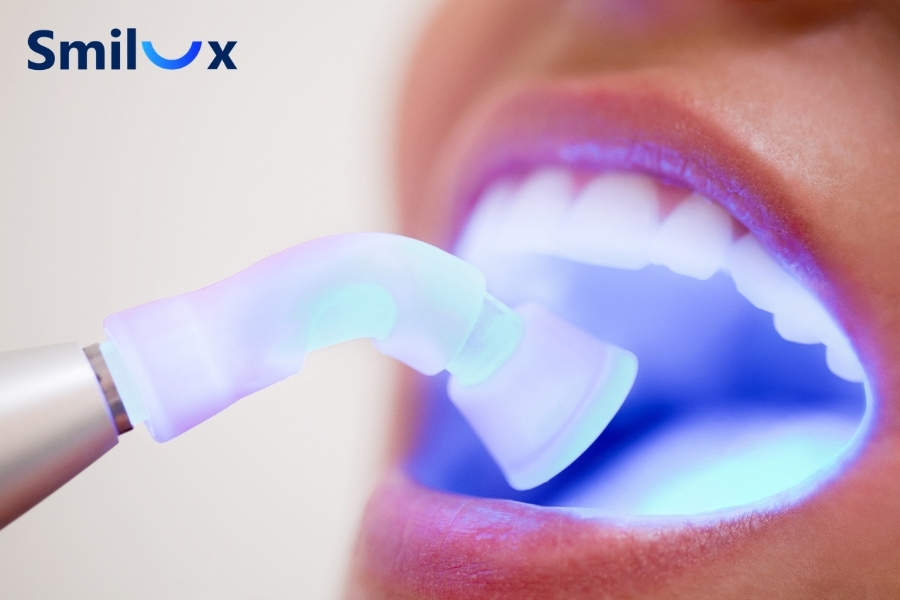
When you notice uneven tooth color after whitening, you should visit a reputable dental clinic so the dentist can examine your teeth, determine the cause of the color mismatch, and recommend an appropriate treatment plan.
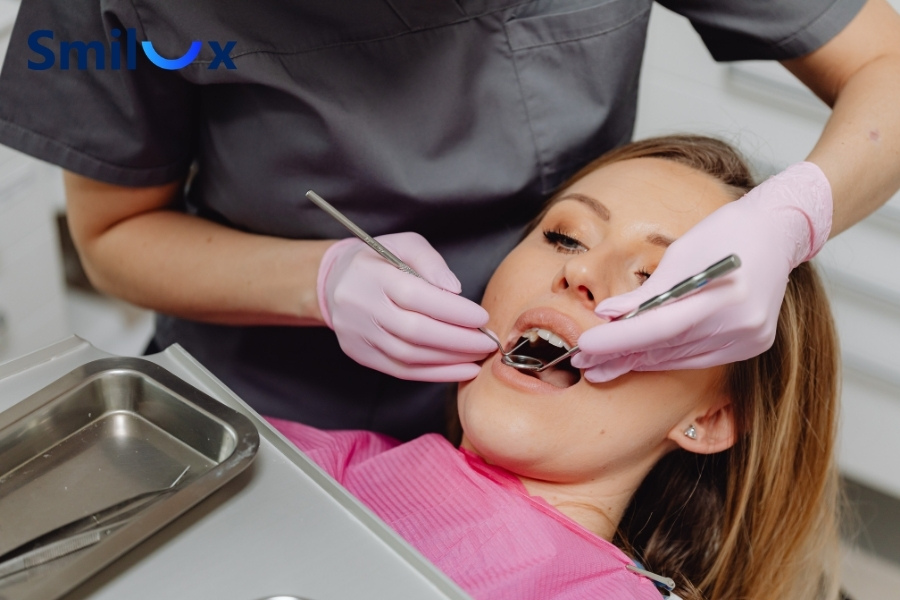
To minimize issues such as teeth not becoming white after whitening or Uneven Teeth Whitening Results, you should choose a reputable dental clinic from the beginning. When your teeth are thoroughly examined and the procedure is performed with proper technique, teeth whitening will be safer and deliver better results.
At Smilux International Dental Clinic, patients will be directly examined and consulted by a team of dentists with more than 15 years of experience. The dentist will check the current tooth shade, enamel condition, and level of discoloration, while also removing plaque and tartar if necessary so that the whitening agent can come into even contact with the tooth surface.
We are currently applying Laser teeth whitening technology, which helps control the treatment time, light energy, and amount of whitening agent used throughout the procedure. Depending on each patient’s tooth condition, the dentist will adjust the treatment plan accordingly to improve tooth color while limiting sensitivity and gum irritation.
In addition, the clinic also uses genuine whitening agents with clear origins. Patients can check the product information before the procedure for greater peace of mind during treatment.
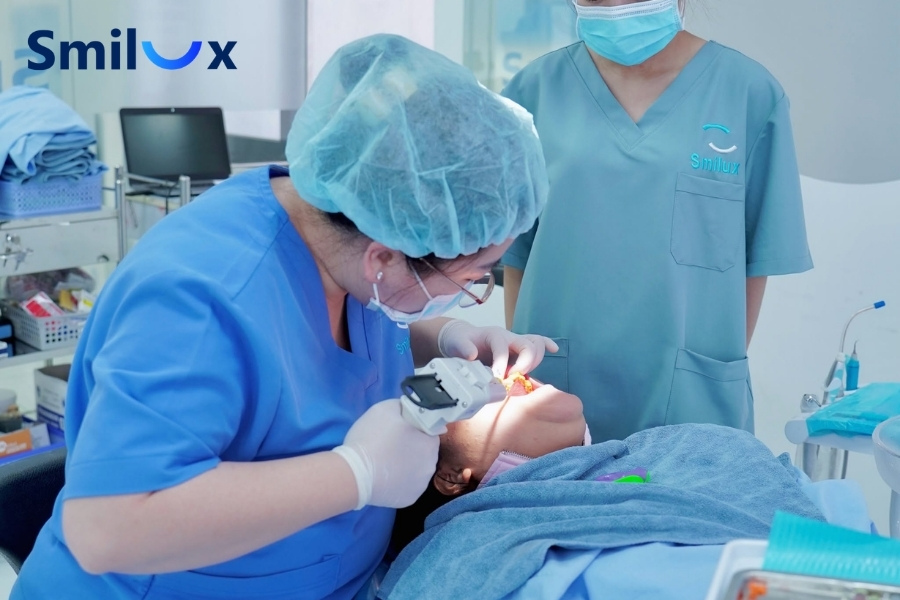
If you are looking for a reputable teeth whitening clinic in Ho Chi Minh City or need to check uneven tooth color after whitening, please fill in the FORM below so Smilux International Dental Clinic can advise you on the most suitable solution.

Can teeth with cavities be whitened? Learn more with Smilux Dental’s dentists to help reduce tooth sensitivity and effectively protect the dental pulp.
Can teeth stained by tetracycline be whitened? Learn which cases are suitable for teeth whitening and when porcelain veneers or dental crowns may be recommended to safely improve tooth color. Smilux provides personalized treatment advice based on the severity of discoloration and the condition of the tooth enamel.