At What Age Can You Get Braces? Learn with Smilux about the appropriate age for orthodontic treatment, the “golden time” that allows teeth to move more easily, and cases that require a dental examination before getting braces.


Braces help improve dental issues such as protruding teeth, underbite, gaps between teeth, misaligned teeth, or bite problems. However, for pregnant women, orthodontic care should be carefully considered to ensure safety for both the mother and the fetus. So, Can You Get Braces While Pregnant, and what should you keep in mind during the braces process? Let’s explore the details with Smilux Dental in the article below.
“Can You Get Braces While Pregnant?” or “Can you wear braces during pregnancy?” is a common question Smilux receives from many patients who need orthodontic care while they are pregnant or planning to become pregnant.
From a professional perspective, pregnant women can still get braces. However, dentists usually do not recommend starting the braces process during this sensitive period, especially when the dental condition does not seriously affect chewing function or oral health.
This is because before getting braces, patients often need a general dental examination, dental X-rays, dental impressions, jawbone assessment, and may need to address issues such as tooth decay, gingivitis, periodontitis, or tooth extraction if space creation is required.
During pregnancy, these procedures need to be carefully considered because the mother’s body becomes more sensitive, hormonal changes occur, the gums are more prone to swelling and inflammation, and the use of pain relievers or antibiotics must strictly follow the dentist’s instructions.
In addition, braces are a long process that requires regular follow-up visits to adjust the force applied to the teeth. After each braces adjustment, pregnant women may experience tooth sensitivity, difficulty chewing, or reduced food intake during the first few days. This may affect nutritional intake, especially during pregnancy, when stable health is needed for both the mother and the baby.
In summary, if a pregnant woman only wants braces to improve her smile aesthetics, it is better to postpone the process until after giving birth and once her health has become more stable. This helps ensure safety and allows the orthodontic process to be carried out more smoothly and with better control.
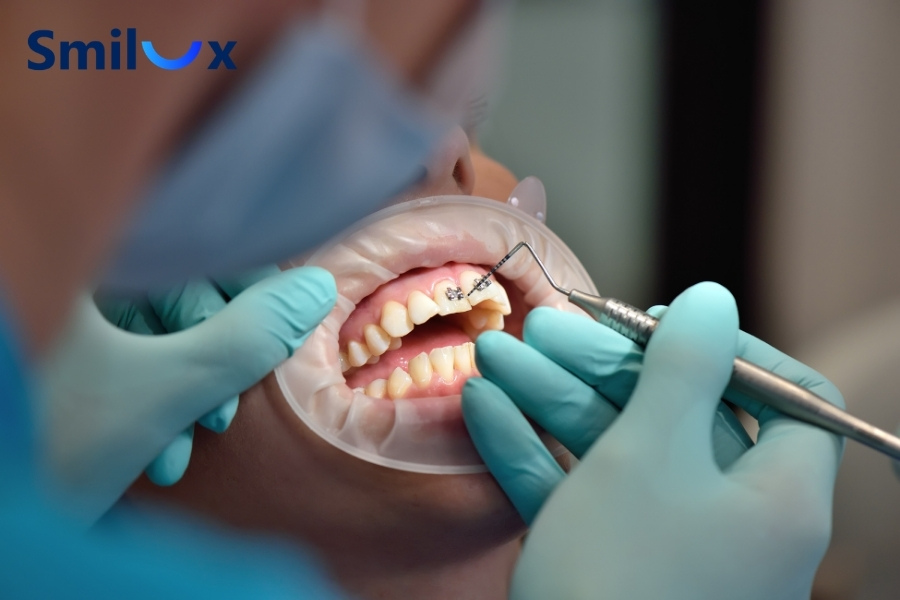
Braces do not directly affect the fetus. Orthodontic force only acts on the teeth, periodontal ligaments, and alveolar bone to gradually move the teeth into their proper positions. This process does not affect the uterus, does not change fetal development, and does not directly affect other organs in the mother’s body.
However, pregnancy is a stage when the mother’s body goes through many hormonal, health, and dietary changes. Therefore, although braces themselves are not dangerous to the fetus, pregnant women may still experience some effects, such as:

If you are wearing braces and find out that you are pregnant, you should inform your orthodontist as soon as possible. The orthodontist will check the condition of your teeth, gums, orthodontic appliances, tooth movement progress, and overall health to decide whether you can continue wearing braces or whether the plan needs to be adjusted.
From a professional perspective, pregnancy is not an absolute contraindication for braces. However, during pregnancy, the mother’s body undergoes many hormonal changes, which can make the gums more sensitive, swollen, inflamed, or prone to bleeding if oral hygiene is not maintained properly. Therefore, braces adjustments, appliance placement, tooth extraction, or other dental procedures need to be considered more carefully by the dentist.
If the pregnant woman’s health is unstable, she often feels tired, has poor appetite, experiences severe morning sickness, or has difficulty maintaining oral hygiene, the orthodontist may reduce orthodontic force, extend the interval between follow-up visits, or temporarily postpone certain non-essential procedures. If the appliances feel bulky, uncomfortable, or make chewing difficult, the orthodontist will adjust them to reduce discomfort and lower the risk of gum inflammation.
If the pregnant woman’s health is stable, her oral condition is good, and the orthodontic process is progressing smoothly, the orthodontist may continue monitoring the braces with lighter force. The mother should attend follow-up visits as scheduled, maintain thorough oral hygiene, follow a nutritious diet, and inform the orthodontist immediately if she experiences severe pain, swollen gums, bleeding gums, or loose or broken appliances.
During the first and third trimesters of pregnancy, dentists usually limit non-essential procedures such as tooth extraction, dental X-rays, or interventions that may cause stress for the mother. If dental care is necessary, the orthodontist may coordinate with the obstetrician to help ensure safety for both the mother and the fetus.
Pregnant women should never remove braces, stop wearing orthodontic appliances, or skip follow-up appointments on their own. Stopping orthodontic care improperly can cause the teeth to move in the wrong direction, prolong the braces timeline, and affect the final results. The safest approach is to visit the orthodontist directly so they can evaluate your condition and recommend the most suitable plan for each stage of pregnancy.
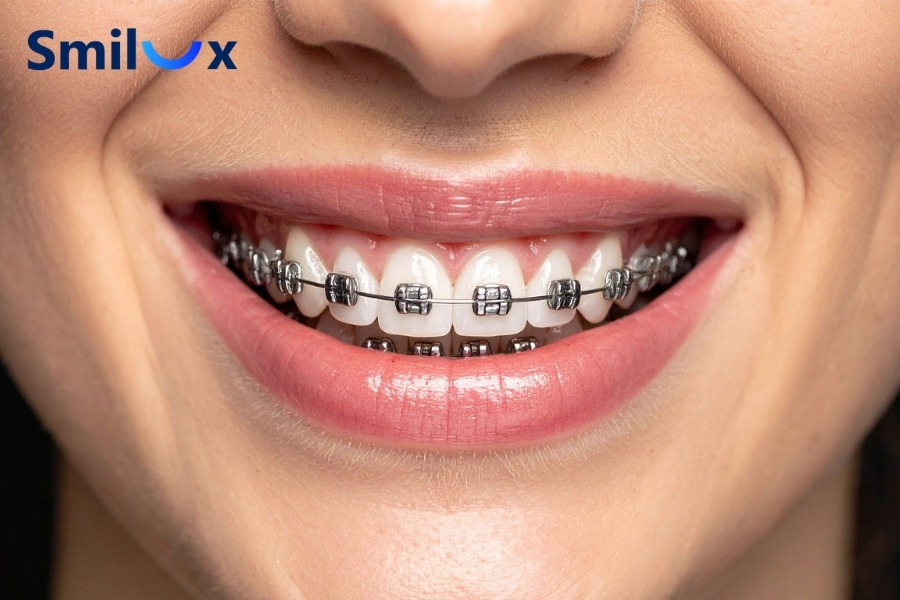
The second trimester is usually the stage when pregnant women feel more comfortable, morning sickness decreases, and eating becomes more stable. If the mother’s health is good and her oral condition is well controlled, the dentist may continue monitoring the braces process with appropriate orthodontic force.
Pregnant women should keep the following notes in mind:


At What Age Can You Get Braces? Learn with Smilux about the appropriate age for orthodontic treatment, the “golden time” that allows teeth to move more easily, and cases that require a dental examination before getting braces.
Learn about the causes, warning signs, management methods, and preventive measures for Bone Loss With Braces from Smilux Dental dentists to better protect your teeth, gums, and alveolar bone.

Can I Swim With Braces? Learn advice from Smilux dentists on swimming during orthodontic treatment, how to protect your brackets and aligners, and how to maintain proper oral hygiene so your braces treatment progress is not affected.
Can I Whiten My Teeth While Wearing Braces? Smilux Dental dentists explain the best time to whiten your teeth during orthodontic treatment, the risks to avoid, and how to care for your teeth to help reduce staining and sensitivity while wearing braces.