
1. Home
  2. »
  3. Braces Knowledge
  4. »
  5. Does orthodontic mini-screw placement hurt?

Does orthodontic mini-screw placement hurt? Smilux explains

Orthodontic mini-implant placement is an important adjunct in orthodontic treatment, helping improve anchorage control and potentially shorten treatment time. However, many patients still wonder, Does orthodontic mini-implant placement hurt? and what they should keep in mind before the procedure.

In the article below, the dental team at Smilux Dental will help you better understand the process, so you can feel more confident before starting your orthodontic journey. Read on for more detailed information.

Does orthodontic mini-screw placement hurt? Smilux explains

What is orthodontic mini-screw placement?

Before answering the question “Does orthodontic mini-screw placement hurt?”, let’s take a closer look at this technique with the dental team at Smilux Dental.

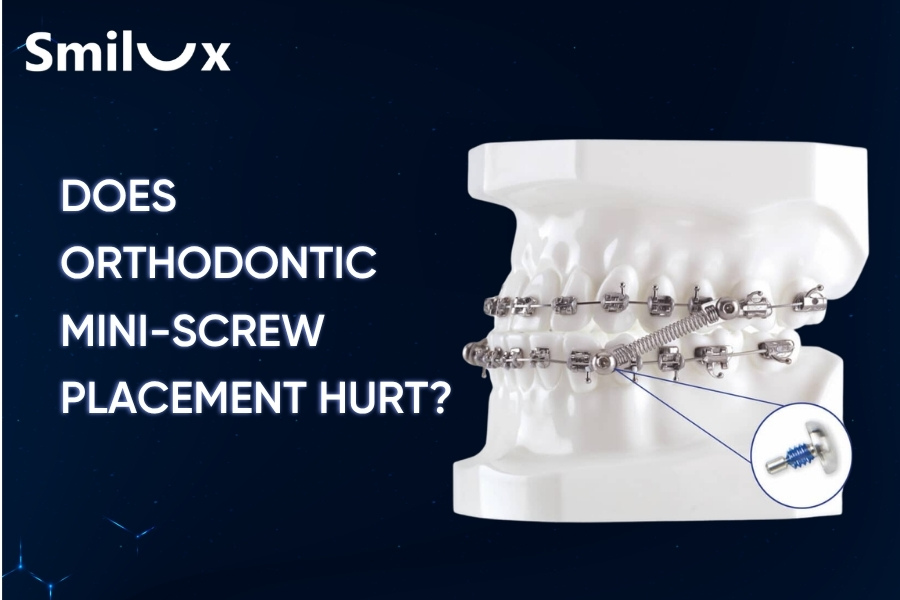
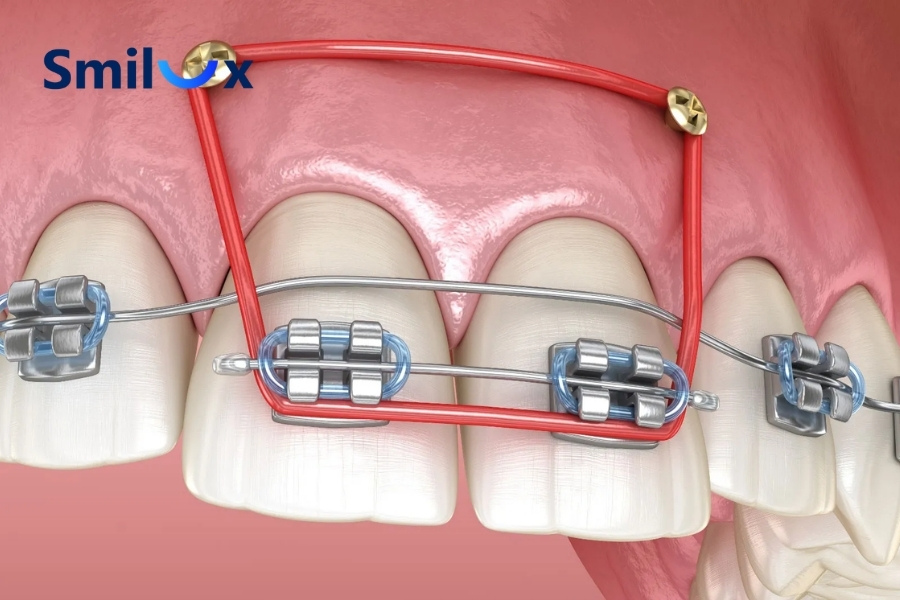
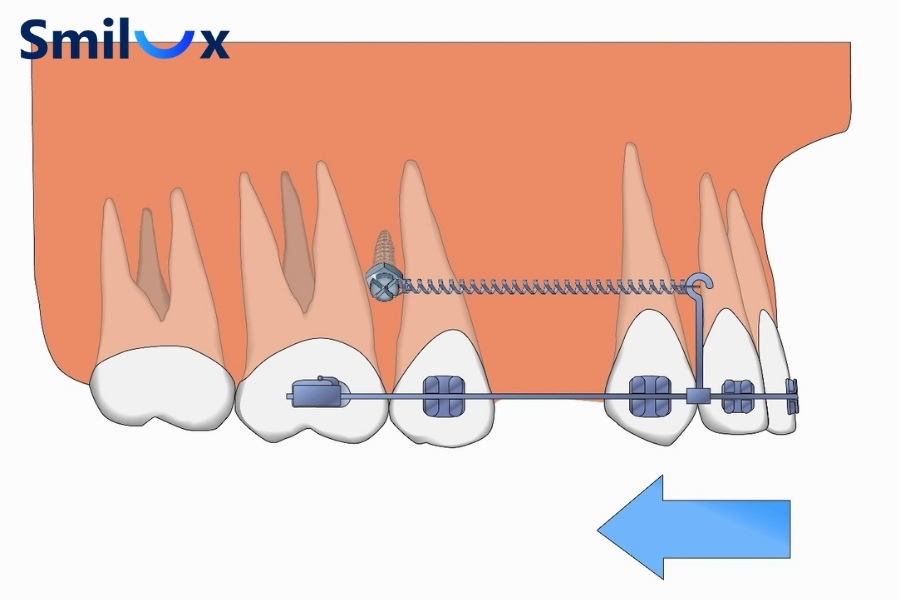
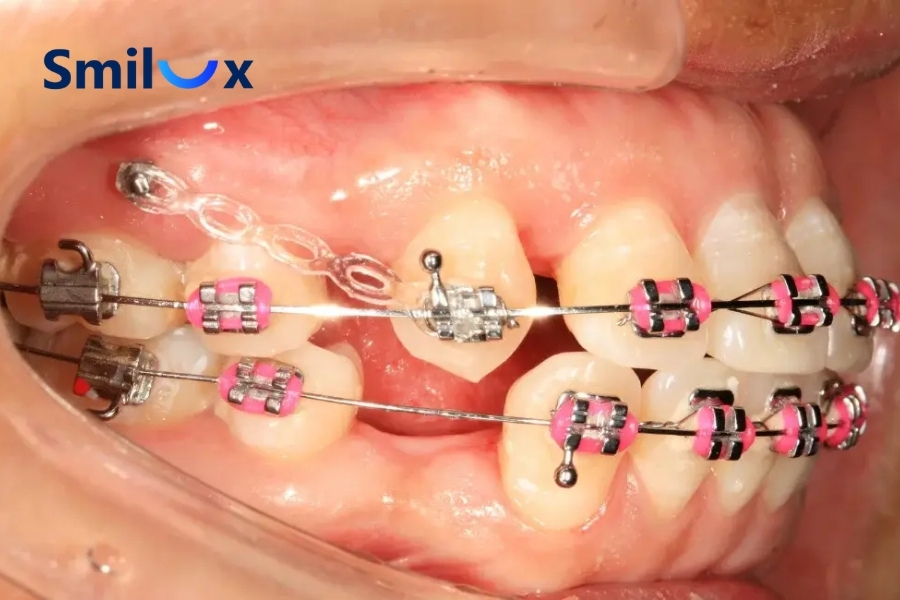
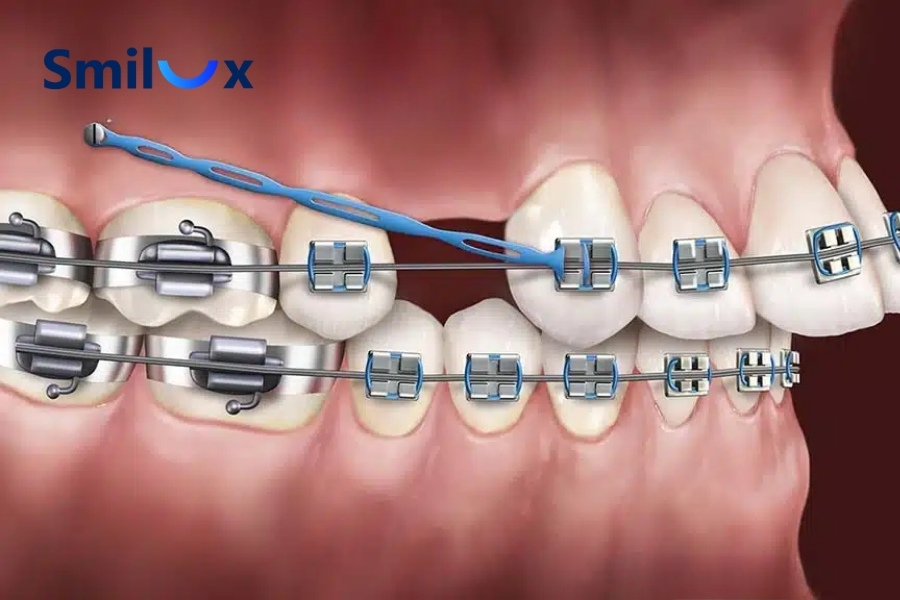
An orthodontic mini-screw (also known as a mini-screw or temporary anchorage device – TAD) is a very small titanium screw that is inserted into the jawbone during orthodontic treatment. Its purpose is to create a stable anchorage point, allowing orthodontists to control tooth movement with greater precision.

With this fixed anchor, teeth can be guided into the desired position without affecting adjacent teeth. This improves treatment stability, reduces unwanted movement, and significantly enhances overall orthodontic outcomes. In many cases, it can also help shorten the treatment duration compared to conventional methods.

Orthodontic mini-implants are commonly indicated in more complex cases, such as severe protrusion, gummy smile correction, or when space closure is required after tooth extraction. They are also useful when stronger anchorage control is needed, especially in cases involving significant tooth misalignment.

However, not every patient requires mini-implant placement. For mild crowding or simple bite issues, conventional orthodontic techniques can still achieve effective results without additional anchorage devices.

Minivis là vít Titanium nhỏ được đặt vào xương hàm để tạo điểm neo

Benefits of orthodontic mini-screw (TADs)

During orthodontic treatment, mini-screw (TADs) are prescribed to enhance anchorage control, especially in cases where tooth movement is more challenging. This technique offers several notable benefits:

  • Provides stable anchorage, allowing teeth to move in the intended direction according to the treatment plan.
  • Acts as a fixed anchor point, improving the efficiency of orthodontic appliances and enhancing overall bite accuracy after treatment.
  • Minimizes unwanted tooth movement, helping prevent deviations during the alignment process.
  • May shorten treatment time, typically by approximately 3 to 9 months, depending on the complexity of the case.
  • Supports space closure after tooth extraction, ensuring teeth move evenly and align properly along the dental arch.
  • Made of biocompatible titanium, which is safe for the body, minimizes irritation, and is well-suited for the oral environment.

Minivis giúp kiểm soát lực kéo, đưa răng về đúng vị trí nhanh và chính xác hơn.

Does orthodontic mini-screw placement hurt?

This is a common concern among patients who are recommended this procedure. In reality, orthodontic mini-implant placement is generally well-tolerated, as the dentist will apply local anesthesia to the gum tissue and underlying bone before the procedure. As a result, you will typically not feel pain during the insertion, only slight pressure at most.

After the anesthesia wears off, you may experience mild soreness or a slight feeling of tightness around the placement site. The level of discomfort varies from person to person, but it is usually very manageable. In most cases, this sensation lasts only a few hours to about one day, then gradually subsides and does not significantly affect daily activities.

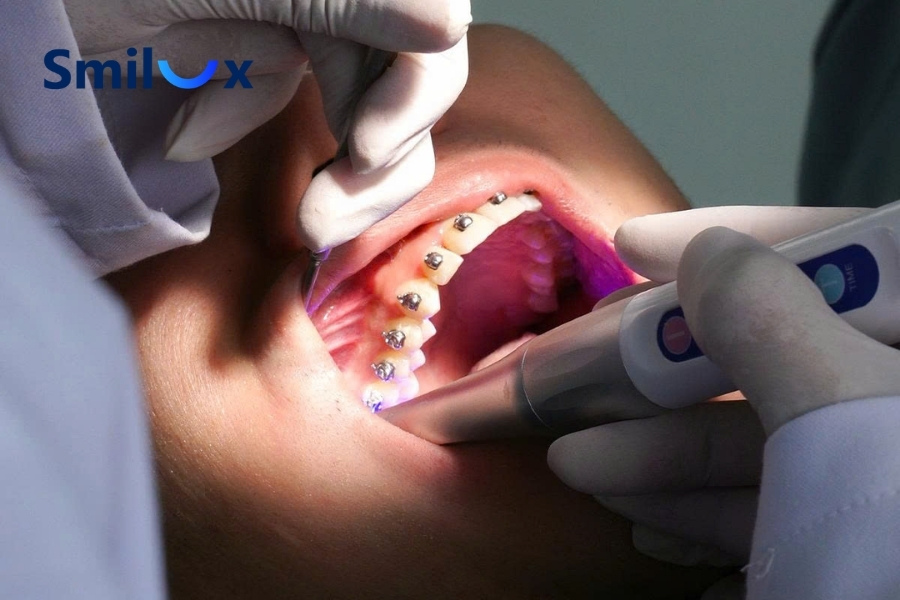
Cắm vít niềng răng diễn ra nhẹ nhàng, chỉ ê nhẹ trong thời gian ngắn

>>> Read more: Do braces hurt? Which stage of orthodontic treatment is the most uncomfortable?

What factors affect pain during orthodontic mini-screw placement?

The level of pain during orthodontic mini-screw placement varies from person to person and depends on several different factors. Specifically as follows:

Jawbone density

With softer jawbone, the placement process is generally smoother, requiring less force, so patients typically experience only mild soreness that subsides quickly. In contrast, if the jawbone is denser, greater force may be needed during insertion, which can lead to more noticeable discomfort in the initial period.

In some cases, the mini-screw may come into contact with the cheek mucosa, causing slight irritation or mild swelling. However, this condition usually occurs only within the first few hours and gradually improves as the oral tissues adapt.

Mini-screw placement site

The placement site is one of the factors that can affect whether orthodontic mini-screw placement is painful. Depending on the dental condition and treatment plan, the orthodontist may place the mini-screw between the tooth roots (commonly in the premolar or molar regions) or in other areas such as above the anterior teeth, beneath the nasal floor, or in the chin region.

Areas near the incisors and canines tend to be more sensitive due to thinner soft tissue and a higher concentration of nerve endings. Therefore, after the anesthesia wears off, the feeling of soreness or irritation may be more noticeable compared to other regions.

Vị trí đặt vít ảnh hưởng đến cảm giác đau sau khi cắm

Individual pain tolerance

The sensation after orthodontic mini-screw placement varies from person to person, as it depends on both physical condition and psychological state at the time of the procedure.

For patients in good health with strong adaptability, the post-placement sensation is usually limited to mild soreness that subsides quickly. In contrast, if the body is fatigued or not in optimal condition, the level of discomfort may be more noticeable during the initial period.

In addition, psychological factors directly influence whether orthodontic mini-implant placement is perceived as painful. When a patient feels overly anxious or fearful, the body tends to become more sensitive, making the discomfort feel more pronounced than it actually is.

Clinical technique and the orthodontist’s expertise

When performed by an experienced orthodontist, the mini-screw placement site is accurately determined and the procedure is carried out gently, minimizing trauma to the surrounding tissues. As a result, post-placement discomfort is typically mild, and the risk of complications is reduced.

In contrast, if the placement site is not ideal or the technique is not properly executed, the area may experience increased soreness or prolonged pain.

Tay nghề bác sĩ quyết định cắm vít niềng răng có đau không

How to reduce pain after orthodontic mini-screw placement

After mini-screw placement, if you experience mild soreness or slight discomfort, you can refer to the following tips shared by Smilux Dental:

  • Use medication as prescribed: Your orthodontist may prescribe pain relievers and anti-inflammatory medication after the procedure. If the discomfort is mild, your body may adapt without needing much medication. However, if the discomfort becomes more noticeable, you should take the medication as directed to help reduce swelling at the placement site.
  • Apply a cold compress externally: You can gently apply an ice pack to the outside of your cheek at the placement site. Each session should last about 10 to 15 minutes, repeated several times a day to help reduce swelling and relieve discomfort.
  • Follow a proper diet: During the first 2 hours, you should limit eating and drinking to allow the area to stabilize. Prioritize soft, easy-to-swallow foods such as porridge, soup, and milk. Additionally, include foods rich in vitamins C, D, and calcium to support healing. Avoid hard, chewy, sticky, spicy, or strongly colored foods, as they may put pressure on the mini-implant or irritate the oral mucosa.
  • Avoid alcohol and tobacco: Stimulants can delay healing and increase the risk of infection, so they should be avoided during this period.
  • Do not touch the mini-screw: Avoid using your tongue or teeth to push, touch, or play with the mini-screw. These habits may displace it, cause discomfort, and affect the orthodontic process.
  • Brush gently: When maintaining oral hygiene, use a soft-bristled toothbrush and brush gently around the placement site to avoid damaging the surrounding tissues or or dislodging the mini-screw.

Chườm lạnh ngoài má 10–15 phút giúp giảm sưng và dễ chịu hơn

Safe and comfortable orthodontic mini-screw placement at Smilux Dental

Smilux Dental is proud to be a trusted dental clinic chosen by many patients throughout their orthodontic journey, helping them achieve a well-aligned smile and an ideal bite. The clinic brings together a team of highly qualified orthodontists with over 15 years of experience, successfully treating many complex cases, combined with BioLight orthodontic technology to optimize treatment outcomes.

Below are the outstanding advantages of BioLight technology at Smilux Dental:

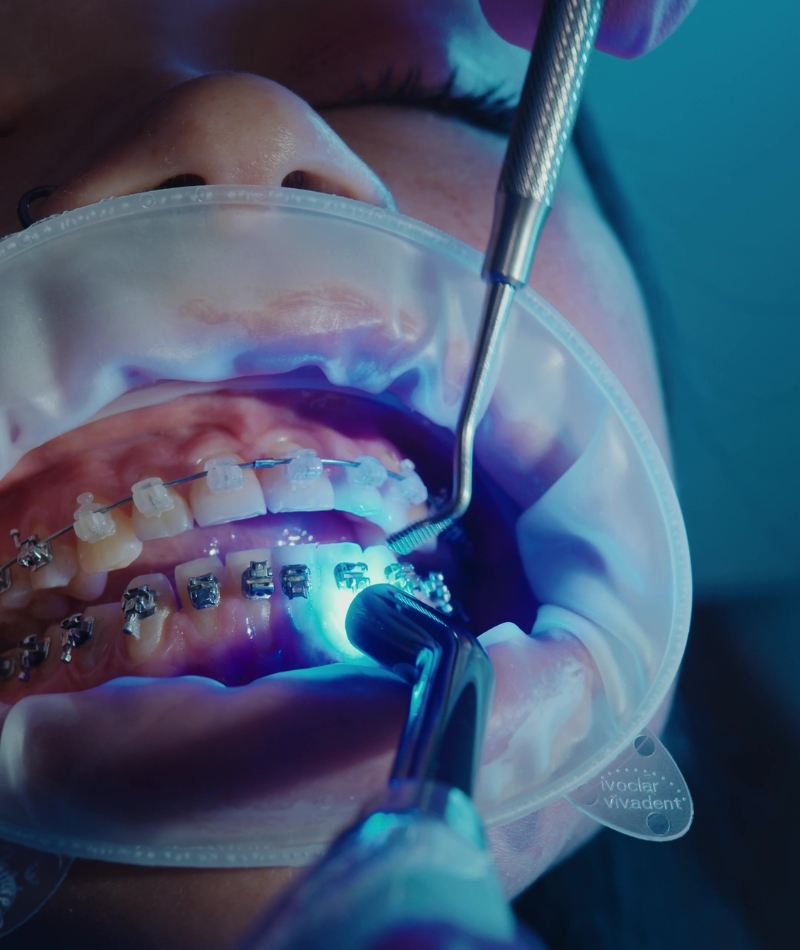
  • Reduces discomfort during orthodontic treatment: BioLight stimulates soft tissues and bone, helping to reduce soreness and allowing patients to adapt more easily after mini-screw placement or adjustments.
  • Accelerates tooth movement: The technology promotes bone remodeling, enabling teeth to move more efficiently and stably compared to conventional methods.
  • Shortens treatment time: With biological support mechanisms, overall orthodontic treatment time can be optimized, especially in cases requiring complex force control.
  • Supports faster recovery after procedures: Following procedures such as mini-screw placement or tooth extraction, the surrounding tissues heal more quickly, reducing swelling and prolonged discomfort.
  • Improves treatment stability: Teeth move in the correct direction with fewer unwanted deviations, leading to more precise and long-lasting results.
  • Safe and non-invasive: The technology uses low-level light, which does not damage tissues and ensures a high level of safety for patients.

uu diem cua biolight

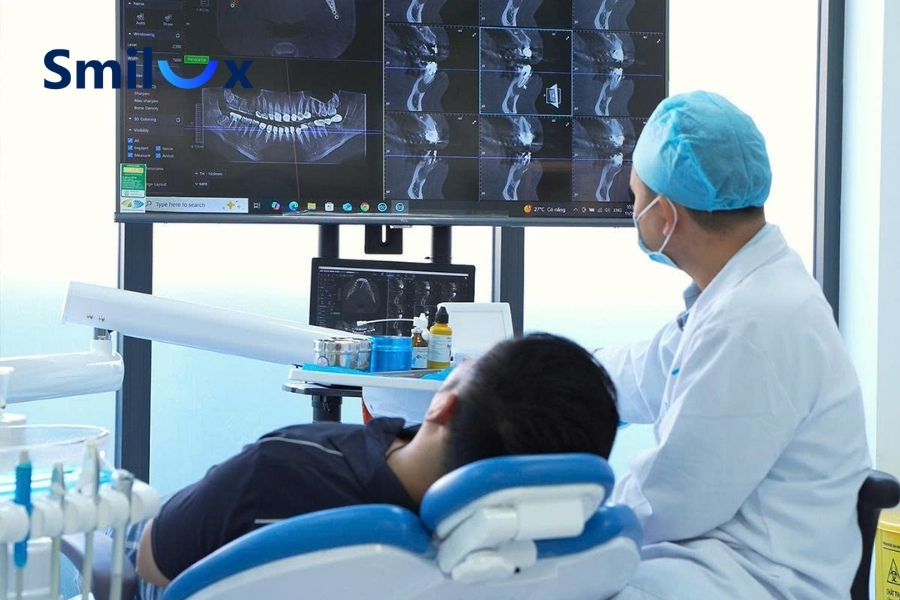
Each patient at Smilux Dental undergoes a thorough examination, including imaging and jawbone density assessment, before the procedure. This allows the orthodontist to determine the most appropriate mini-screw placement site, minimizing impact on surrounding tissues.

During the procedure, local anesthesia is applied to the treatment area, ensuring a gentle process with minimal discomfort for the patient.

To have your dental condition evaluated and receive a personalized treatment plan, please fill out the form below. Our team will assist you in scheduling an appointment at your earliest convenience.

BOOK APPOINTMENT​

    Orthodontic mini-screw placement procedure at Smilux Dental

    Similar to orthodontic treatment, mini-screw placement at Smilux Dental is performed according to a standard medical protocol and directly carried out by an orthodontist with over 15 years of experience. Each step is carefully controlled to ensure accuracy and safety, including:

    • Examination and X-ray imaging: The orthodontist takes X-rays to assess the jawbone structure and accurately determine the most suitable mini-screw placement site.
    • Local anesthesia: The mucosal area is numbed, and local anesthesia is administered to ensure the procedure is as gentle and comfortable as possible.
    • Mini-screw placement into the jawbone: The orthodontist uses specialized instruments to insert the mini-screw into the predetermined position. The screw is secured through mechanical anchorage combined with biological stability.
    • Final check and completion: After placement, the orthodontist checks the stability of the mini-screw and provides care instructions to ensure a smooth treatment process.

    Quy trình gắn vít niềng răng tại Smilux Dental

    CONCLUSION

    In summary, if you are wondering, “Does orthodontic mini-screw placement hurt?”, you can feel reassured that the procedure is generally gentle thanks to the use of local anesthesia. After the procedure, the sensation is usually limited to mild soreness for a short period and will gradually subside. The level of discomfort may vary depending on individual factors such as pain tolerance, placement site, and the orthodontist’s expertise. However, when performed with proper technique, you can feel confident throughout your orthodontic treatment.

    At Smilux Dental, the mini-screw placement process is standardized and carefully controlled to minimize discomfort and ensure optimal results. For more information, please contact our HOTLINE at +84 866 251 379 for prompt assistance.

    bs hoàng danh ngân mới nhất

    PROFESSIONAL CONSULTATION: DR. HOANG DANH NGAN

    Dr. Hoang Danh Ngan, MSc., DDS., CHUWS, is one of the leading dental professionals at Smilux Dental, with over 15 years of clinical experience.

    ---------- Braces Knowledge ----------

    Does orthodontic mini-screw placement hurt?
    05May

    Does orthodontic mini-implant placement hurt? In the article below, Smilux Dental provides a detailed explanation of the level of discomfort during the procedure, the step-by-step placement process, and important considerations to help you feel more confident throughout your orthodontic treatment and achieve optimal results.

    Do braces hurt?
    04May

    Do braces hurt? Smilux dentists explain: Orthodontic treatment may cause mild discomfort during certain stages, but the intensity is typically low and remains well within the tolerance level of most patients.

    This site is registered on wpml.org as a development site. Switch to a production site key to remove this banner.