
Are Braces Results Permanent? Learn with Smilux Dental’s dentists how long braces results can last, why teeth may shift again after braces are removed, and how proper care and retainer wear can help protect your smile for the long term.
Orthodontic mini-implant placement is an important adjunct in orthodontic treatment, helping improve anchorage control and potentially shorten treatment time. However, many patients still wonder, Does orthodontic mini-implant placement hurt? and what they should keep in mind before the procedure.
In the article below, the dental team at Smilux Dental will help you better understand the process, so you can feel more confident before starting your orthodontic journey. Read on for more detailed information.

MỤC LỤC (TABLE)
ToggleBefore answering the question “Does orthodontic mini-screw placement hurt?”, let’s take a closer look at this technique with the dental team at Smilux Dental.
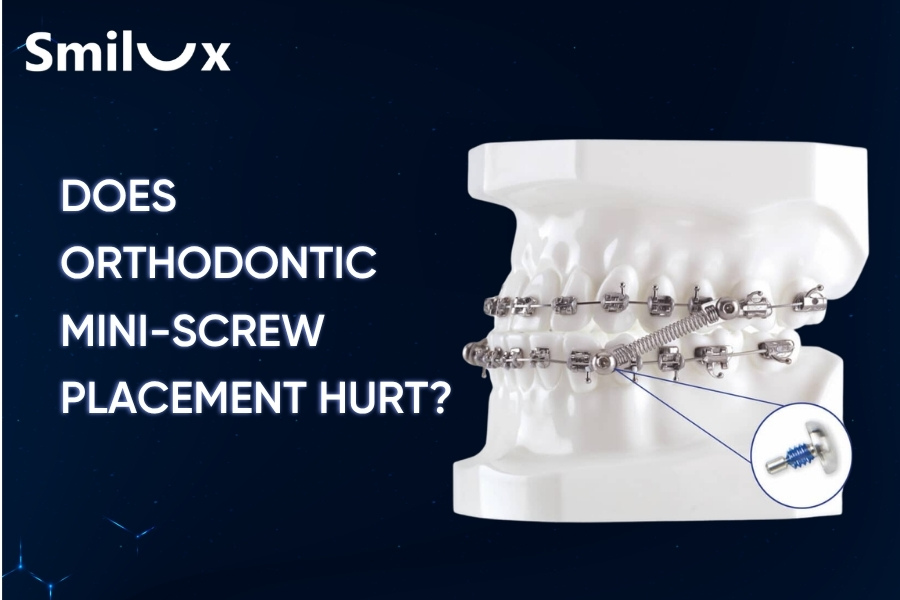
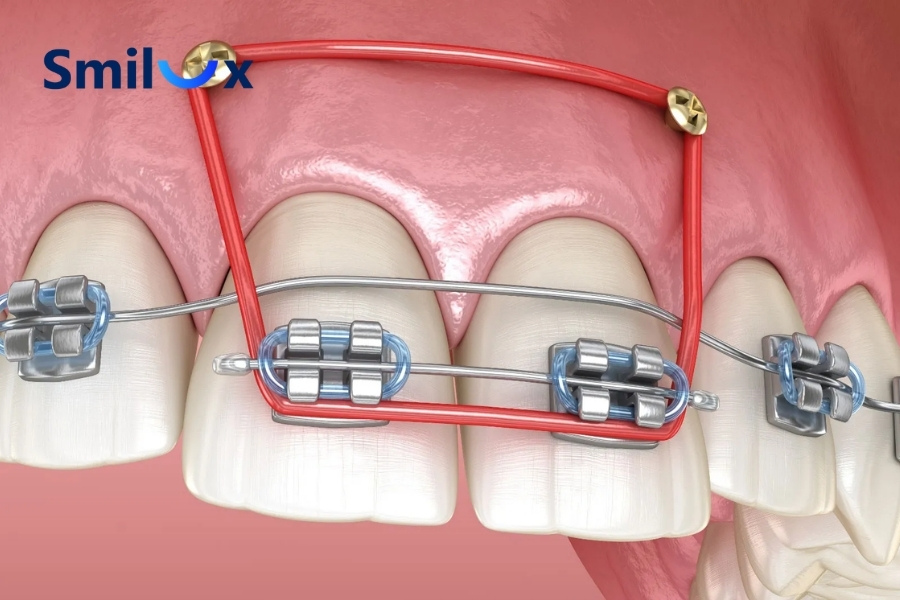
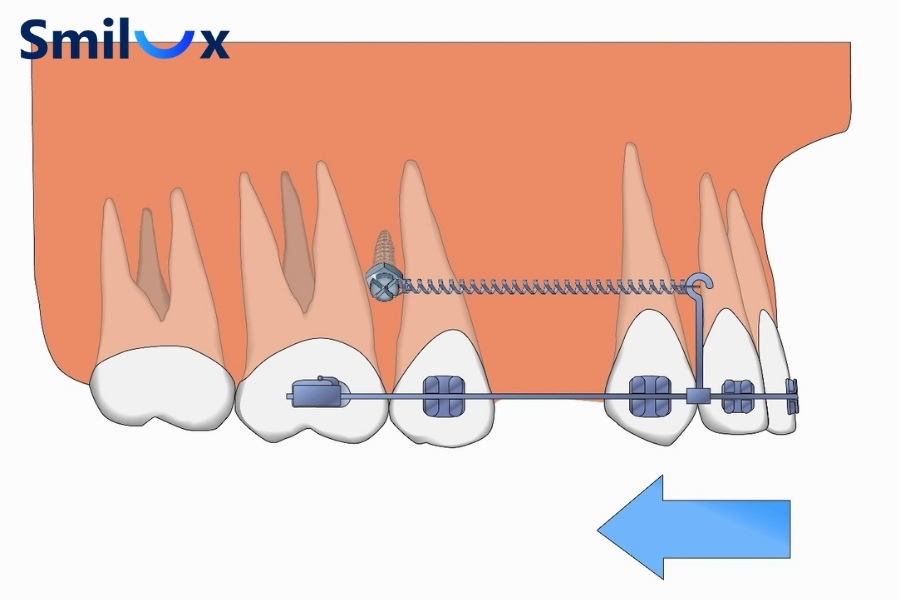
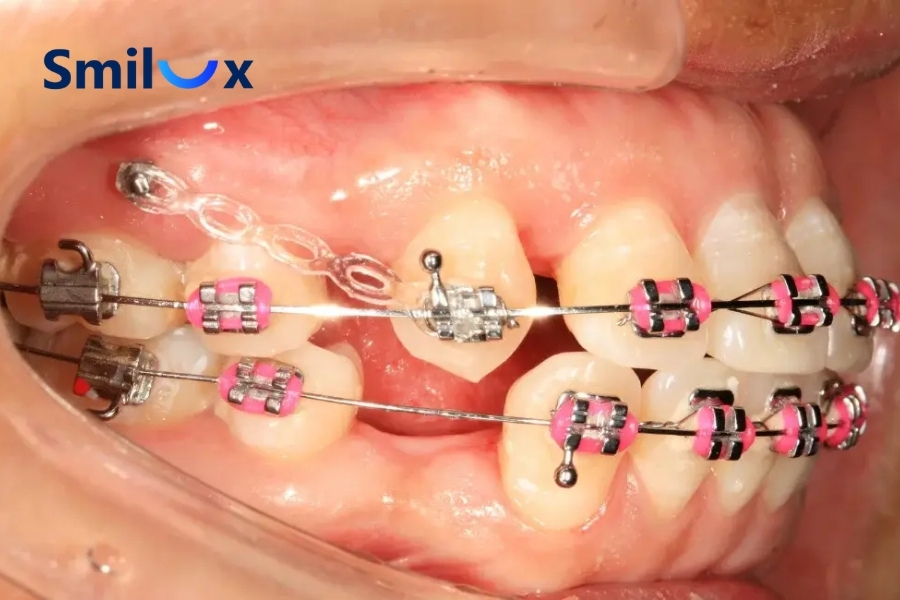
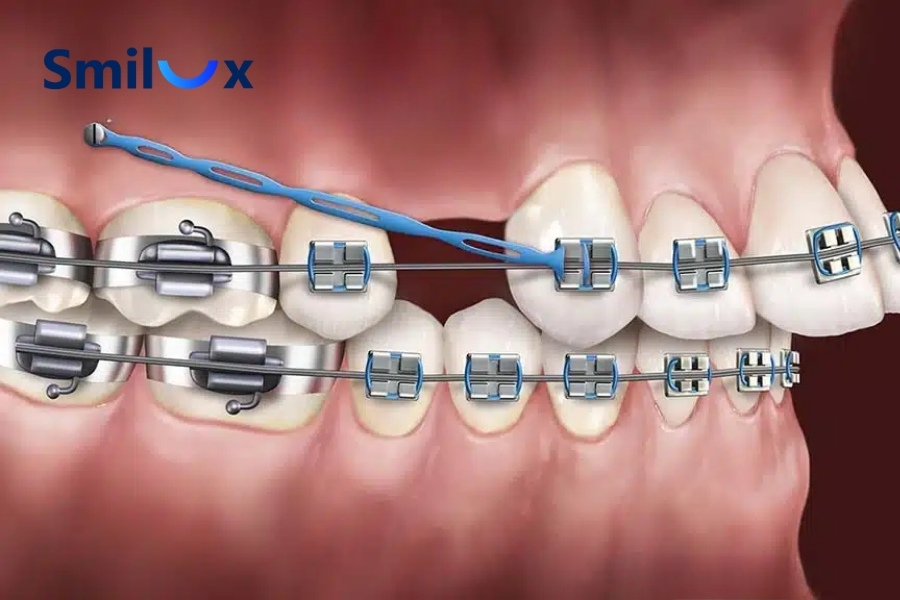
An orthodontic mini-screw (also known as a mini-screw or temporary anchorage device – TAD) is a very small titanium screw that is inserted into the jawbone during orthodontic treatment. Its purpose is to create a stable anchorage point, allowing orthodontists to control tooth movement with greater precision.
With this fixed anchor, teeth can be guided into the desired position without affecting adjacent teeth. This improves treatment stability, reduces unwanted movement, and significantly enhances overall orthodontic outcomes. In many cases, it can also help shorten the treatment duration compared to conventional methods.
Orthodontic mini-implants are commonly indicated in more complex cases, such as severe protrusion, gummy smile correction, or when space closure is required after tooth extraction. They are also useful when stronger anchorage control is needed, especially in cases involving significant tooth misalignment.
However, not every patient requires mini-implant placement. For mild crowding or simple bite issues, conventional orthodontic techniques can still achieve effective results without additional anchorage devices.
During orthodontic treatment, mini-screw (TADs) are prescribed to enhance anchorage control, especially in cases where tooth movement is more challenging. This technique offers several notable benefits:
This is a common concern among patients who are recommended this procedure. In reality, orthodontic mini-implant placement is generally well-tolerated, as the dentist will apply local anesthesia to the gum tissue and underlying bone before the procedure. As a result, you will typically not feel pain during the insertion, only slight pressure at most.
After the anesthesia wears off, you may experience mild soreness or a slight feeling of tightness around the placement site. The level of discomfort varies from person to person, but it is usually very manageable. In most cases, this sensation lasts only a few hours to about one day, then gradually subsides and does not significantly affect daily activities.

>>> Read more: Do braces hurt? Which stage of orthodontic treatment is the most uncomfortable?
The level of pain during orthodontic mini-screw placement varies from person to person and depends on several different factors. Specifically as follows:
With softer jawbone, the placement process is generally smoother, requiring less force, so patients typically experience only mild soreness that subsides quickly. In contrast, if the jawbone is denser, greater force may be needed during insertion, which can lead to more noticeable discomfort in the initial period.
In some cases, the mini-screw may come into contact with the cheek mucosa, causing slight irritation or mild swelling. However, this condition usually occurs only within the first few hours and gradually improves as the oral tissues adapt.
The placement site is one of the factors that can affect whether orthodontic mini-screw placement is painful. Depending on the dental condition and treatment plan, the orthodontist may place the mini-screw between the tooth roots (commonly in the premolar or molar regions) or in other areas such as above the anterior teeth, beneath the nasal floor, or in the chin region.
Areas near the incisors and canines tend to be more sensitive due to thinner soft tissue and a higher concentration of nerve endings. Therefore, after the anesthesia wears off, the feeling of soreness or irritation may be more noticeable compared to other regions.
The sensation after orthodontic mini-screw placement varies from person to person, as it depends on both physical condition and psychological state at the time of the procedure.
For patients in good health with strong adaptability, the post-placement sensation is usually limited to mild soreness that subsides quickly. In contrast, if the body is fatigued or not in optimal condition, the level of discomfort may be more noticeable during the initial period.
In addition, psychological factors directly influence whether orthodontic mini-implant placement is perceived as painful. When a patient feels overly anxious or fearful, the body tends to become more sensitive, making the discomfort feel more pronounced than it actually is.
When performed by an experienced orthodontist, the mini-screw placement site is accurately determined and the procedure is carried out gently, minimizing trauma to the surrounding tissues. As a result, post-placement discomfort is typically mild, and the risk of complications is reduced.
In contrast, if the placement site is not ideal or the technique is not properly executed, the area may experience increased soreness or prolonged pain.
After mini-screw placement, if you experience mild soreness or slight discomfort, you can refer to the following tips shared by Smilux Dental:
Smilux Dental is proud to be a trusted dental clinic chosen by many patients throughout their orthodontic journey, helping them achieve a well-aligned smile and an ideal bite. The clinic brings together a team of highly qualified orthodontists with over 15 years of experience, successfully treating many complex cases, combined with BioLight orthodontic technology to optimize treatment outcomes.
Below are the outstanding advantages of BioLight technology at Smilux Dental:
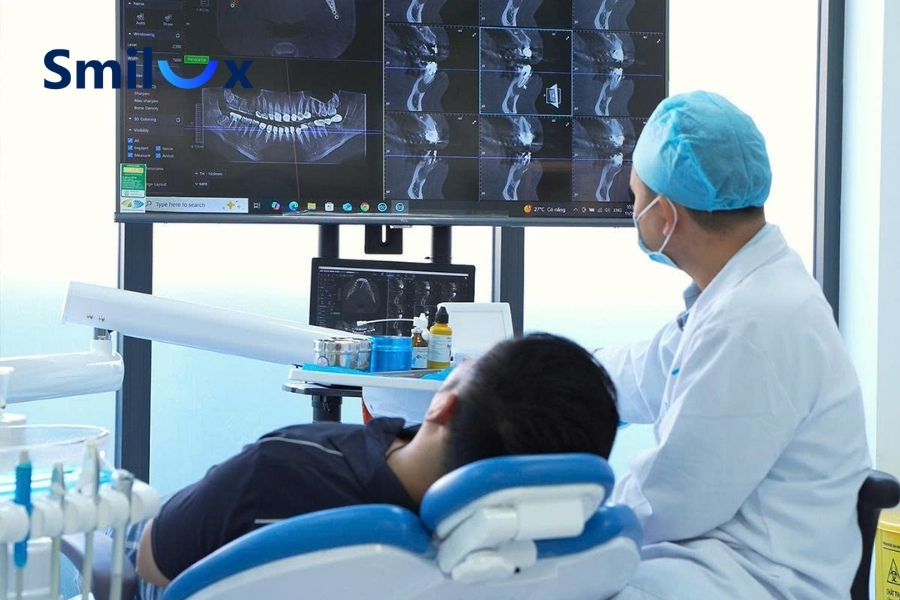
Each patient at Smilux Dental undergoes a thorough examination, including imaging and jawbone density assessment, before the procedure. This allows the orthodontist to determine the most appropriate mini-screw placement site, minimizing impact on surrounding tissues.
During the procedure, local anesthesia is applied to the treatment area, ensuring a gentle process with minimal discomfort for the patient.
To have your dental condition evaluated and receive a personalized treatment plan, please fill out the form below. Our team will assist you in scheduling an appointment at your earliest convenience.
BOOK APPOINTMENT
Similar to orthodontic treatment, mini-screw placement at Smilux Dental is performed according to a standard medical protocol and directly carried out by an orthodontist with over 15 years of experience. Each step is carefully controlled to ensure accuracy and safety, including:
In summary, if you are wondering, “Does orthodontic mini-screw placement hurt?”, you can feel reassured that the procedure is generally gentle thanks to the use of local anesthesia. After the procedure, the sensation is usually limited to mild soreness for a short period and will gradually subside. The level of discomfort may vary depending on individual factors such as pain tolerance, placement site, and the orthodontist’s expertise. However, when performed with proper technique, you can feel confident throughout your orthodontic treatment.
At Smilux Dental, the mini-screw placement process is standardized and carefully controlled to minimize discomfort and ensure optimal results. For more information, please contact our HOTLINE at +84 866 251 379 for prompt assistance.
PROFESSIONAL CONSULTATION: DR. HOANG DANH NGAN
Dr. Hoang Danh Ngan, MSc., DDS., CHUWS, is one of the leading dental professionals at Smilux Dental, with over 15 years of clinical experience.
---------- Braces Knowledge ----------
Are Braces Results Permanent? Learn with Smilux Dental’s dentists how long braces results can last, why teeth may shift again after braces are removed, and how proper care and retainer wear can help protect your smile for the long term.
Can Braces Cause Sunken Cheeks? Let Smilux Dental help you understand the causes of sunken cheeks during the braces process and how to improve this condition in the article below.
Does orthodontic mini-implant placement hurt? In the article below, Smilux Dental provides a detailed explanation of the level of discomfort during the procedure, the step-by-step placement process, and important considerations to help you feel more confident throughout your orthodontic treatment and achieve optimal results.
Do braces hurt? Smilux dentists explain: Orthodontic treatment may cause mild discomfort during certain stages, but the intensity is typically low and remains well within the tolerance level of most patients.
CONTACT
ABOUT SMILUX
DENTAL KNOWLEDGE